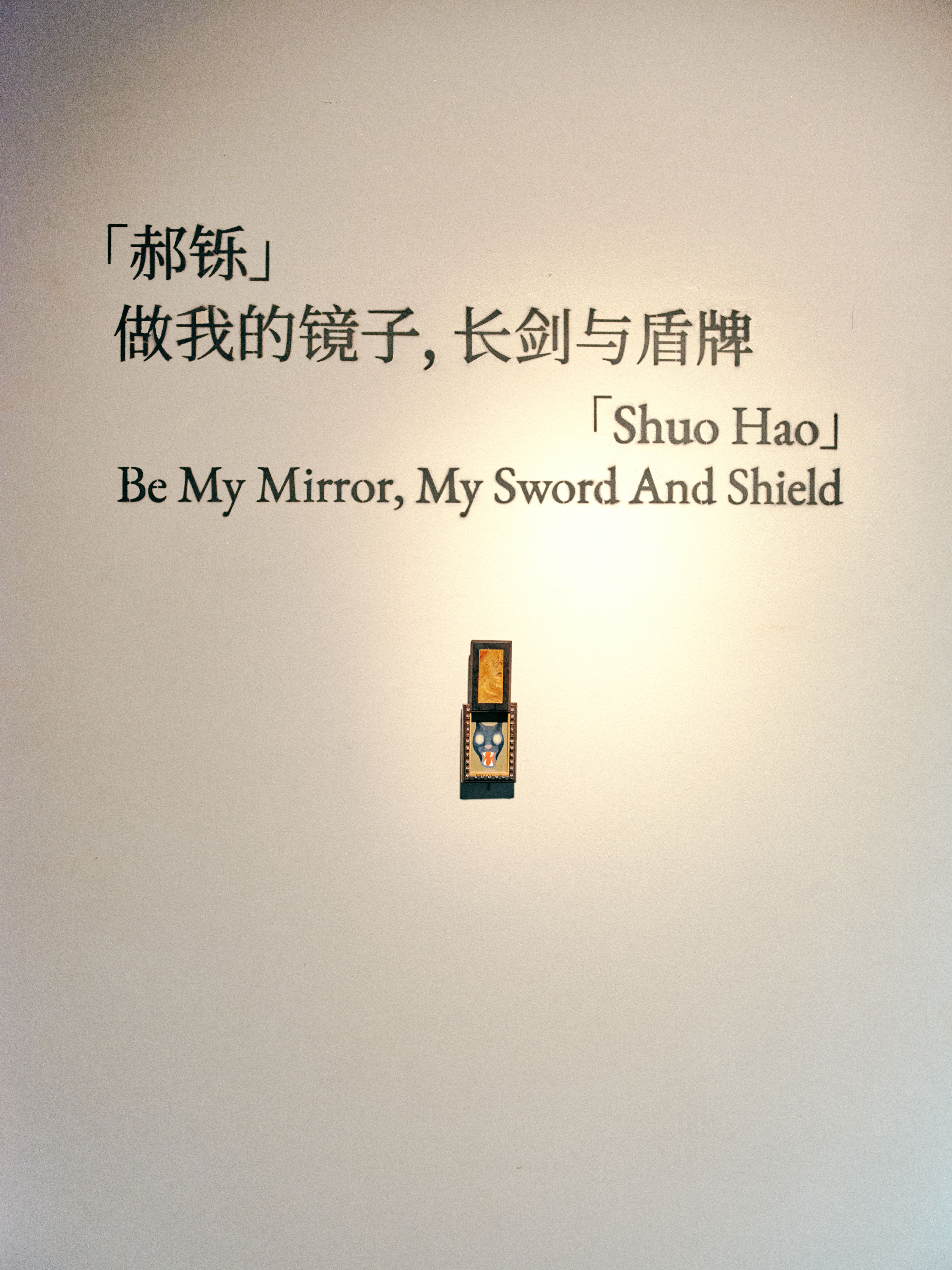
Shuo Hao
Be my mirror, my sword and shield
July 11 - August 9, 2026
Monday - Sunday, 10:00 - 18:00
15 Taojiang Road, Xuhui District, Shanghai
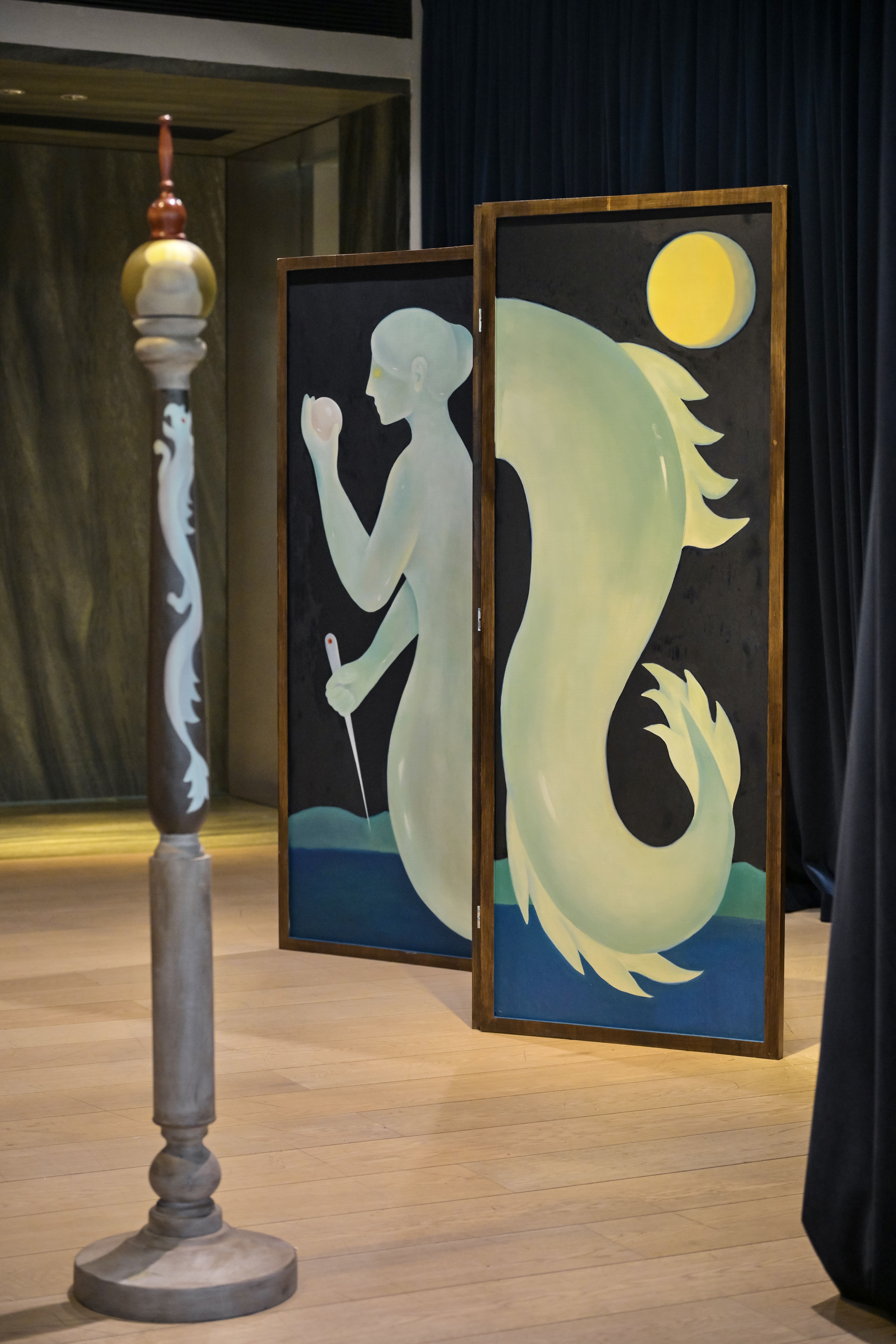
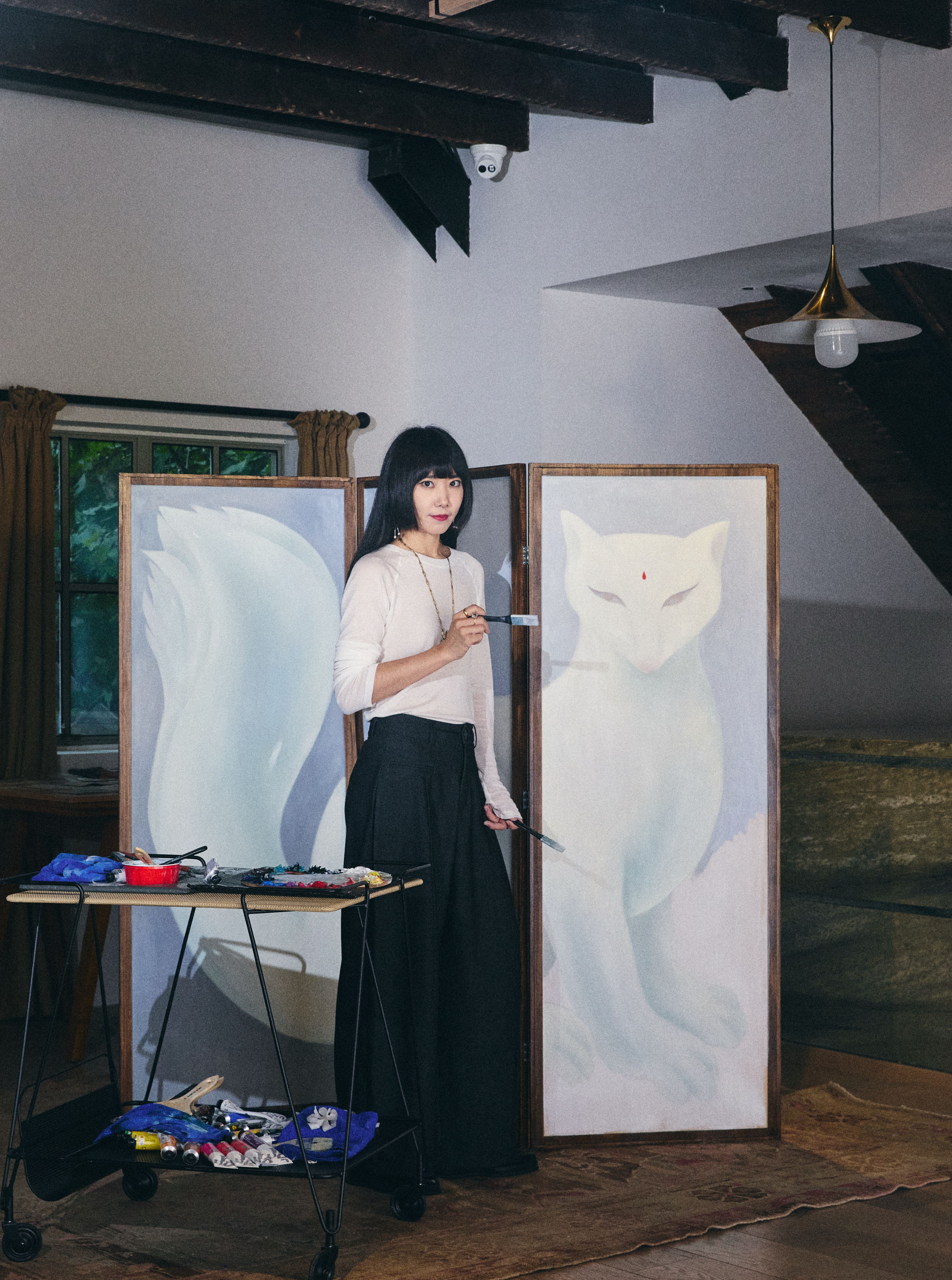
From July 11 to August 9, 2026, VILLA tbh will present Be my mirror, my sword and shield, the culminating exhibition of Shuo Hao’s project developed during the tbh Artist Residency Program. The exhibition takes its title from a lyric in Viva la Vida, one of the artist’s favorite songs: “be my mirror, my sword and shield.” In Shuo Hao’s artistic universe, the figure of Medusa is ultimately forged into a shield, while the compass in Nüwa’s hand functions as a sword. Facing one another, the two figures become mirrors for each other. The convergence of mirror, sword, and shield symbolizes a female alliance across Eastern and Western mythologies and cultures.
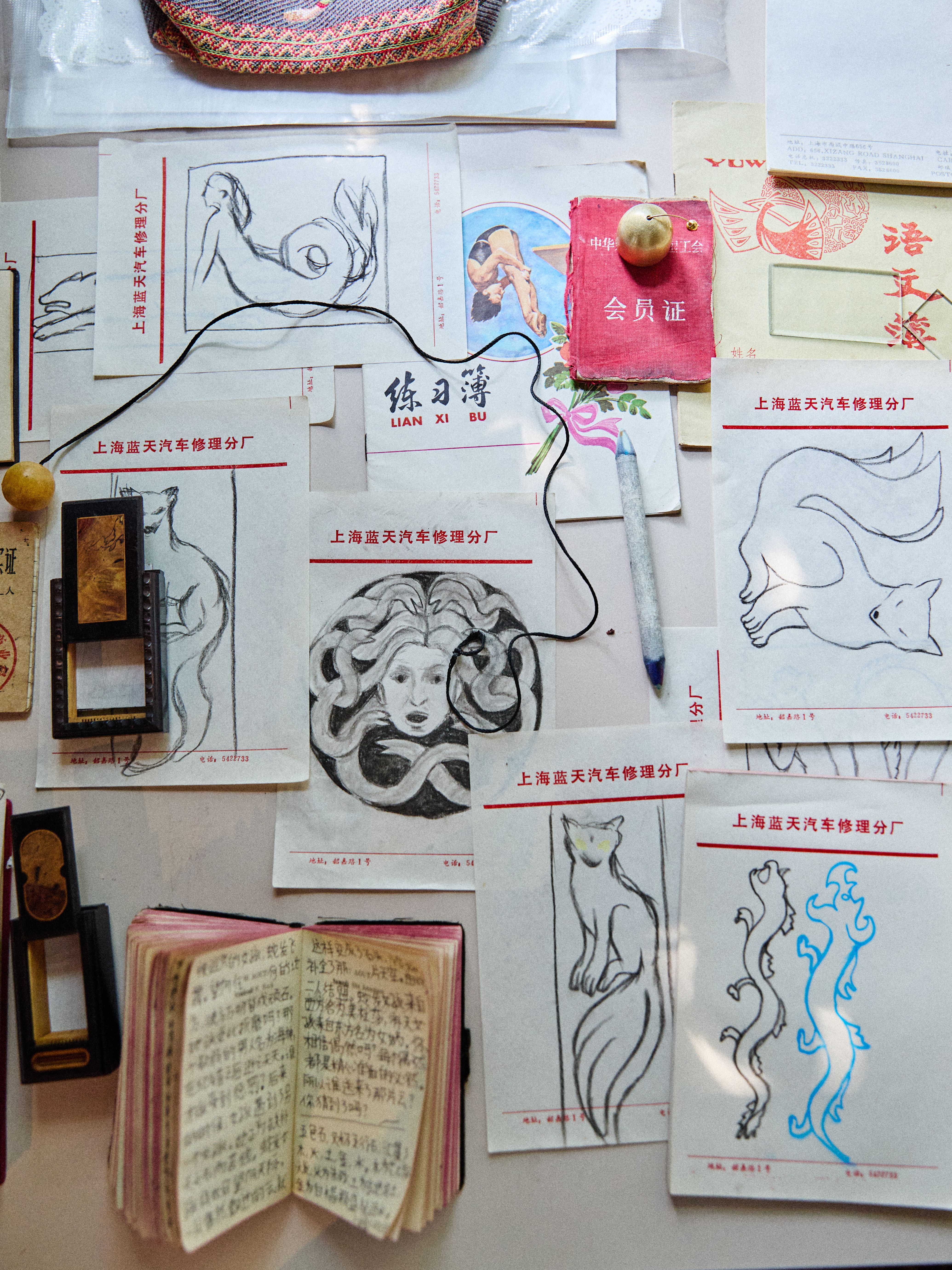
The exhibition begins with a short story penned by the artist. In Greek mythology, Medusa is cursed after Poseidon’s violation in Athena’s temple. With her serpent hair and the power to petrify anyone who meets her gaze, she is reduced to a monster to be hunted. Here, Shuo Hao seeks to vindicate her figure: Medusa’s curse is no longer a punishment, but a creative force. Meanwhile, the Eastern creator goddess Nüwa is searching for the stones needed to mend the heavens. As Medusa lifts her gaze to the sky, a cloud is turned into solid stone, allowing the firmament to be repaired. Through a single gaze, an alliance is formed. Two women from East and West—long misunderstood, demonized, or deified—find in each other’s lack a form of answer.
Born in China and long based in France, Shuo Hao has developed an interdisciplinary practice in which painting, text, furniture, and antique objects form an organic whole. A bed, a floor lamp, or an insect box may all serve as vessels for her painting. Through the dismantling and reconstruction of these objects, she detaches them from their original functions, then restores and regenerates them through her signature moonlit palette: milky white, jade green, deep blue, and red.
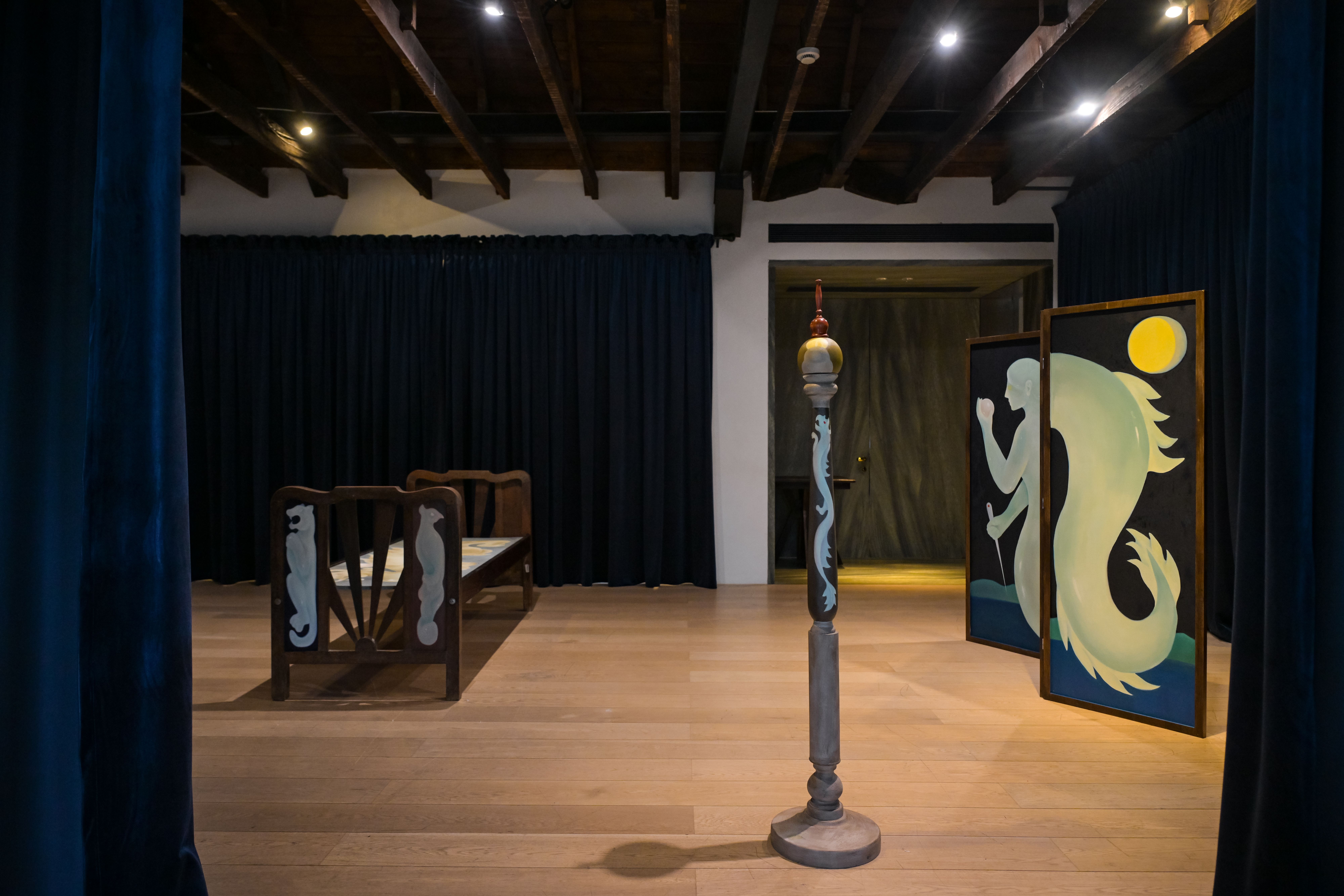
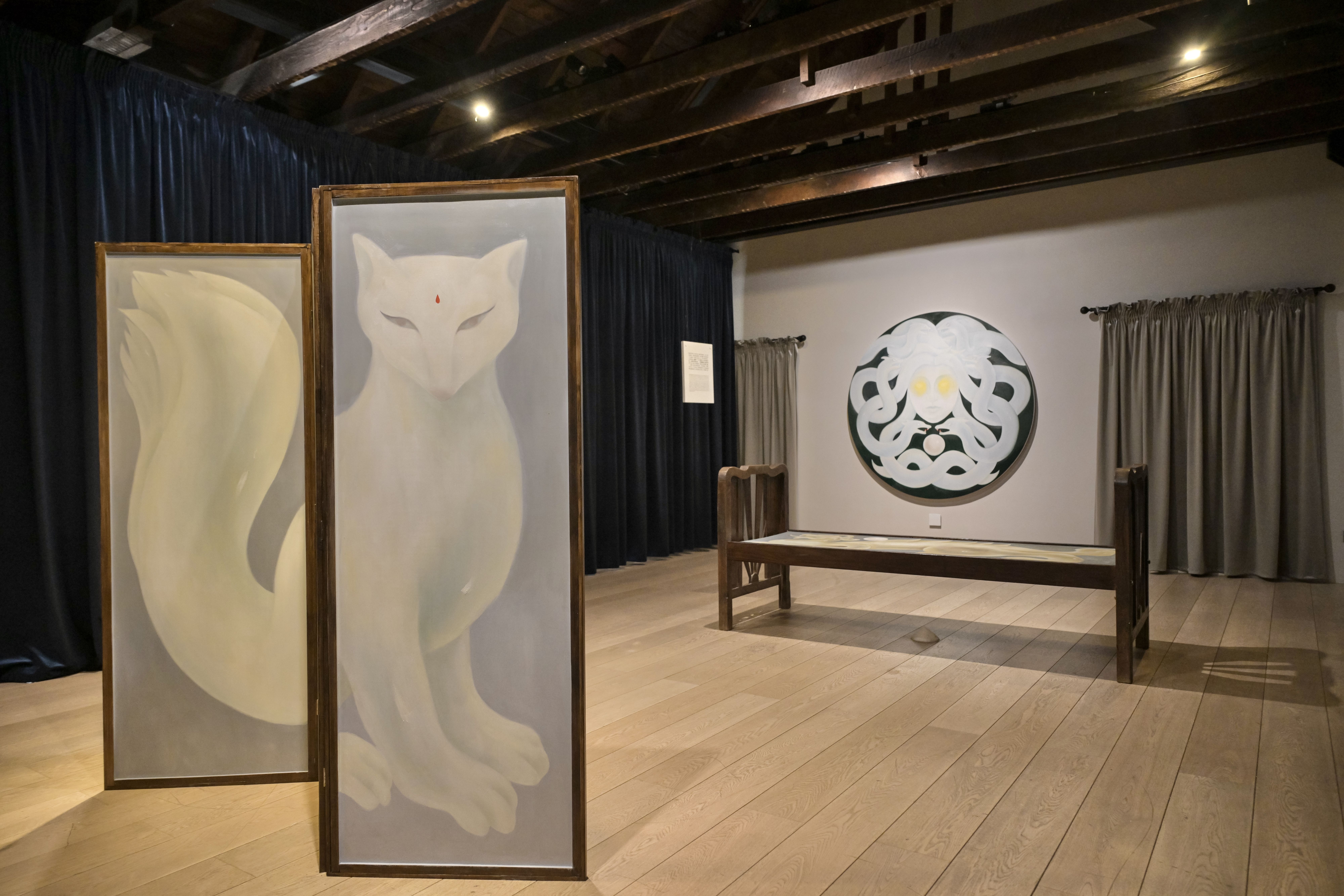
Five works comprise the core of the exhibition. Rather than standing as isolated paintings, they form a coherent whole: a carefully arranged energetic matrix that aligns with the theory of the Five Phases (wuxing ), bringing forth a cosmological image within the gallery space. Medusa’s Shield is positioned in the west of the formatio and associated with Metal. Nüwa and the Nine-Tailed Fox is situated in the southeast, a site of rising Wood energy. Fire Totem, positioned in the south, channels Fire. Amidst billowing flames, the dragon—Nüwa’s guardian beast in legends of her flight across the sky—signifies power while also serving as an extension of her divinity.
Meanwhile, Seated Qilin Dragon and Tiger manifests as a feng shui bed. It is encircled by the Azure Dragon, White Tiger, Vermilion Bird, and Black Tortoise, which align with the Four Symbols (sixiang ), and evokes Wood, Metal, Fire, and Water respectively. The yellow qilin seated at the center represents Earth, thereby completing the Five Elements. As a messenger, the qilin carries the heaven-mending stone from Medusa to Nüwa. The work functions both as a transitional node in the mythological narrative and as the nexus of the exhibition’s energetic field.
The four works, anchored by the feng shui bed, complete the spatial configuration of the Five Phases. Medusa’s curse is transmuted into heaven-mending stones; the mythical beasts assume the task of transmission; Nüwa wields her compass to repair the sky, with the dragon and fox standing guard. In this shared space, Eastern and Western mythologies enter into an energetic passage of connection and convergence.
“Do you believe in coincidence? Every coincidence is a necessity long prepared. Now guess: who sent that cloud, the stone-to-be that filled the heavens?” Hao concludes the story with a lingering question. In her narrative, the encounter between Medusa and Nüwa is no coincidence, but a destiny that traverses time and space. Where, then, did that drifting cloud come from? The answer may lie within the exhibition itself—between the intertwining of serpent and dragon, within the shared gaze of the two female figures, waiting to be discovered by each viewer.