Motors
When two trains move forward at the same time on parallel tracks, there is sometimes, for the passenger looking out the window, a brief suspended moment when the opposite train stabilizes and freezes in front of the passing landscape. A miraculous moment of shared stillness that, for an instant, creates an image. An unstable, precarious image, on the verge of coming apart.
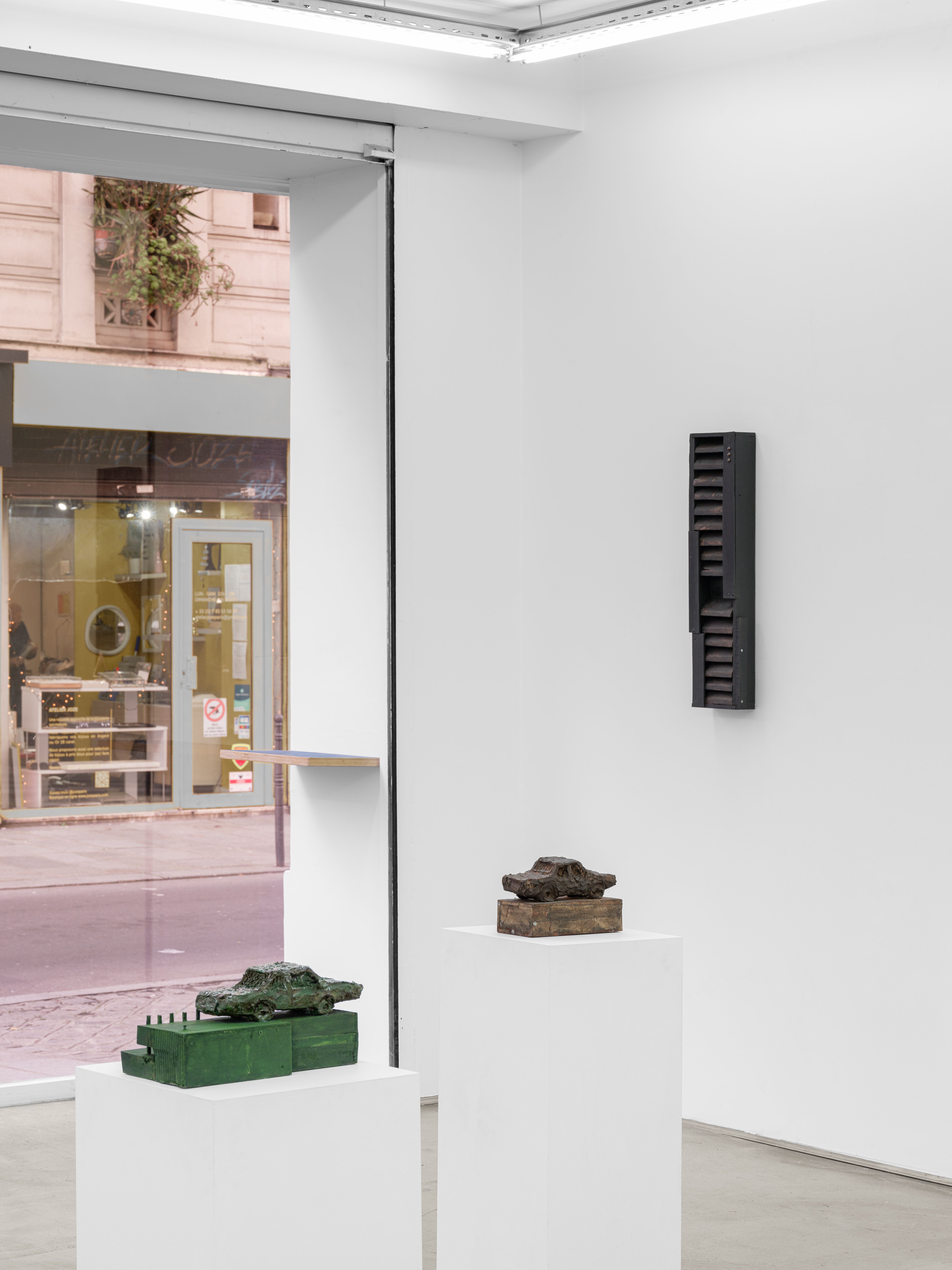
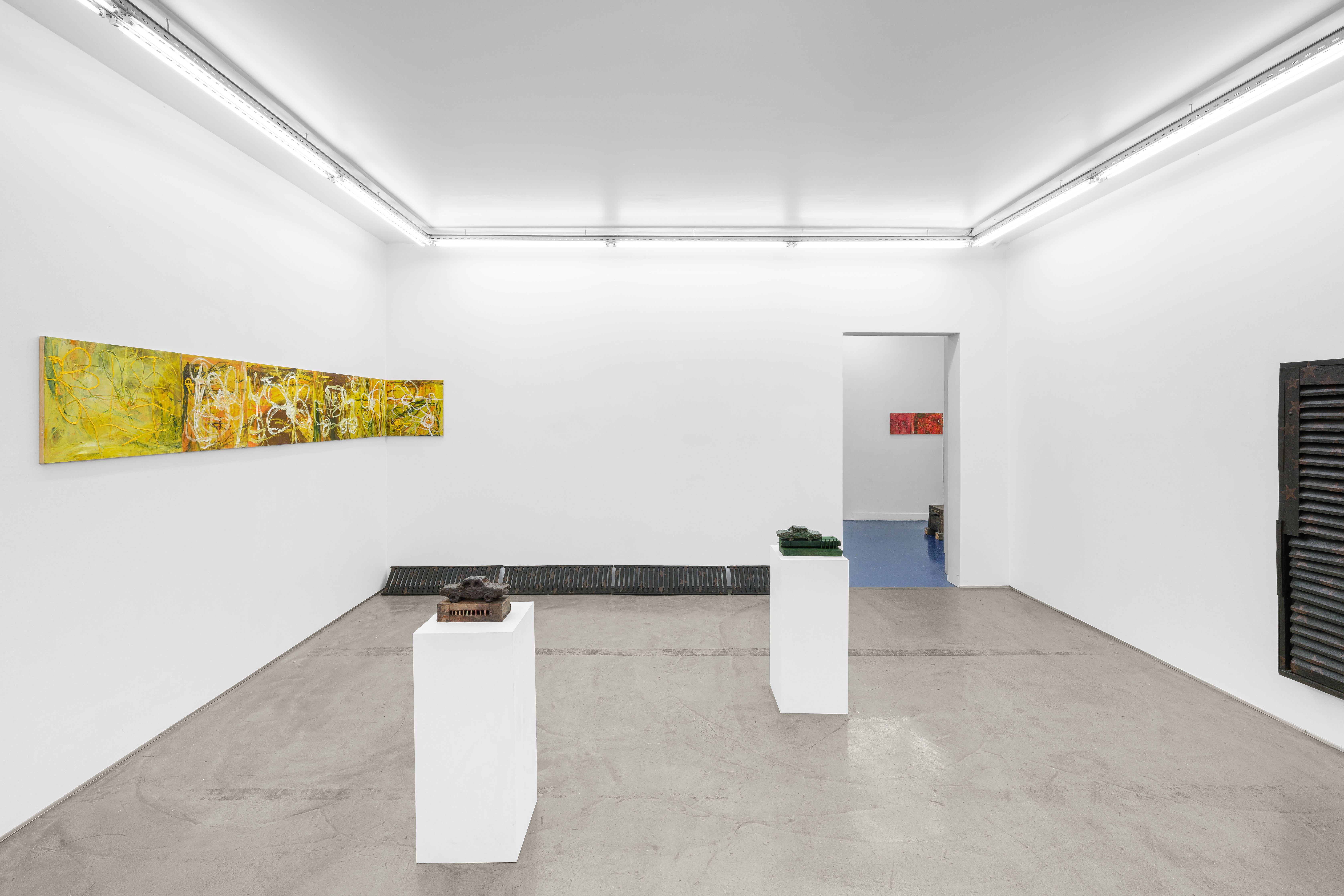
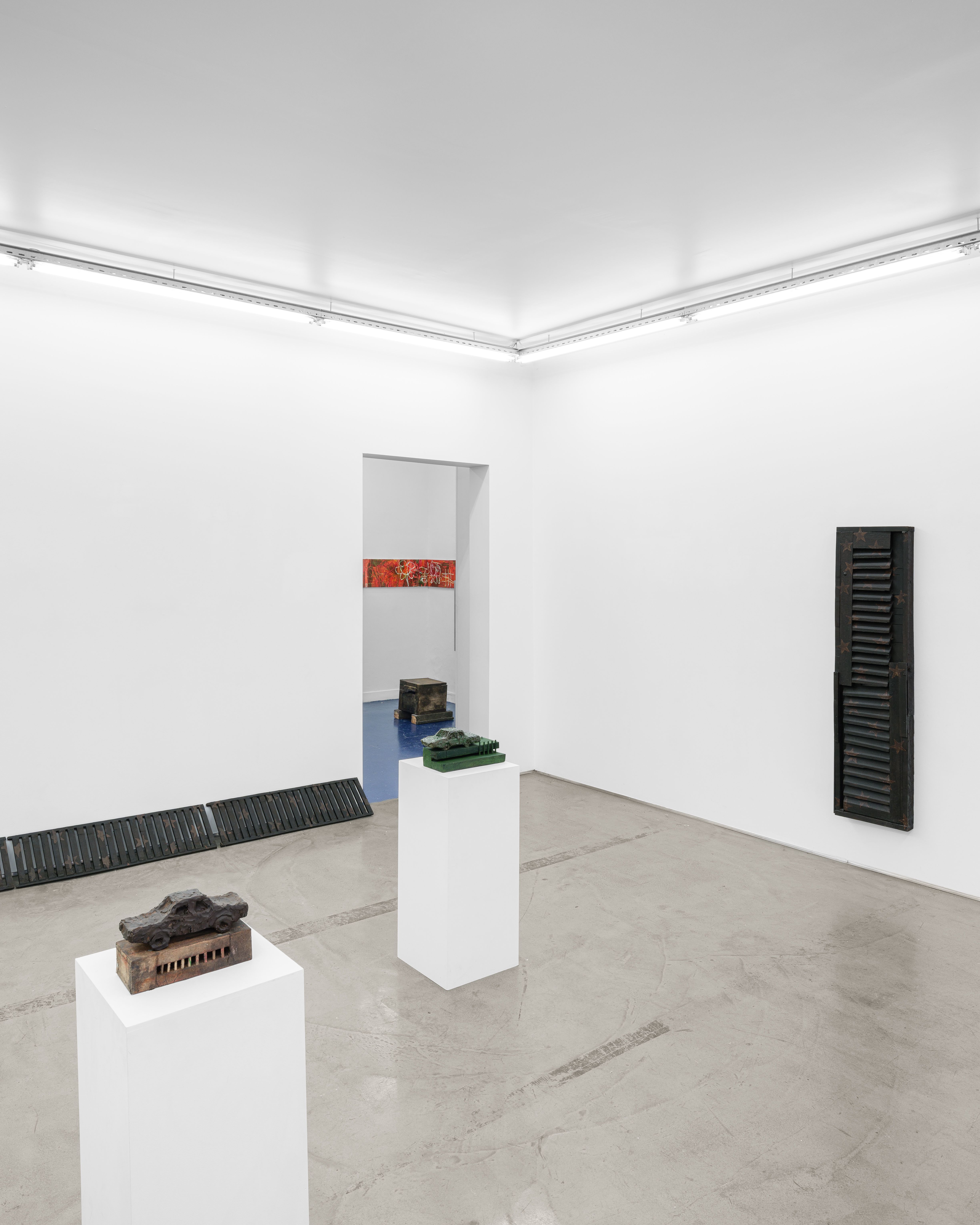
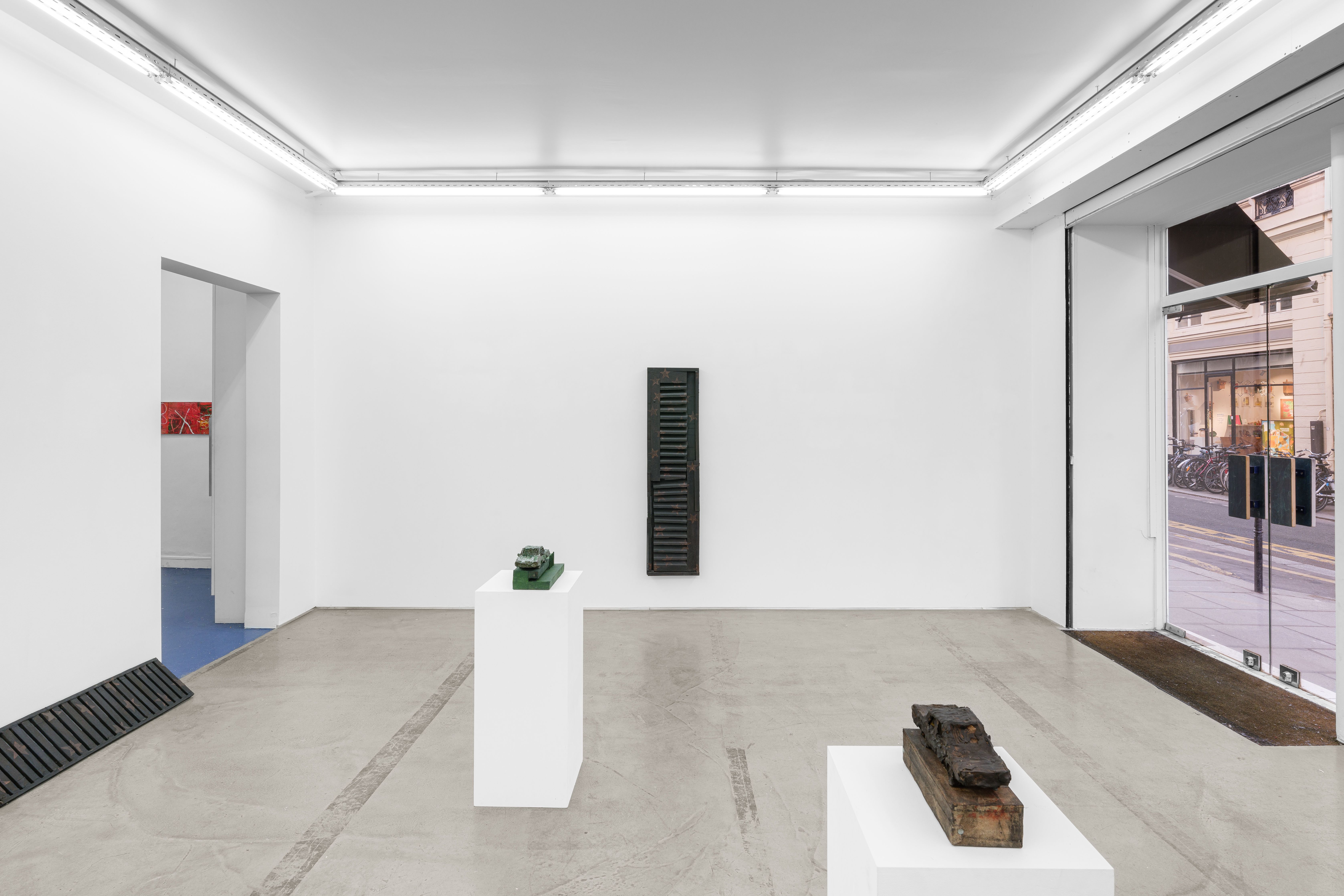
It is this same feeling of in-betweenness that Hélène Labadie’s little cars offer: less petrified than kneaded, shaped by a tactile speed that dents their surface, deforms their material, polishes it so that a few flashes of light gleam like winks. And isn’t it, after all, the fate of every true image—the kind that leaves a mark and insists—to be always on the threshold of slipping away, of undoing itself, or metamorphosing? Motionless and animated at the same time. By themselves, by us.
These cars, more or less unstuck and off-centered from their massive base, do not seem to move forward or backward, to be arriving somewhere or leaving—and it is not even certain that they touch the ground. Still, they move. From the inside, probably: as if they were formed, touch after touch, from a dough of memory thickening as one sticks more souvenirs to it. Those, for example, of all those cars driving through the no man’s lands of American road movies, coming from nowhere or going there.
The openwork grids at the bottom of the bases—scansions of irregular horizontal or vertical lines—evoke air vents, the scale markings found at the bottom of road maps, or a succession of thread-like strokes, as in Étienne-Jules Marey’s chronophotographs. Each time, again, one can see movements in them: a rush of air, a distance to cover, an animated figure. Motors for the eye and for the imagination.
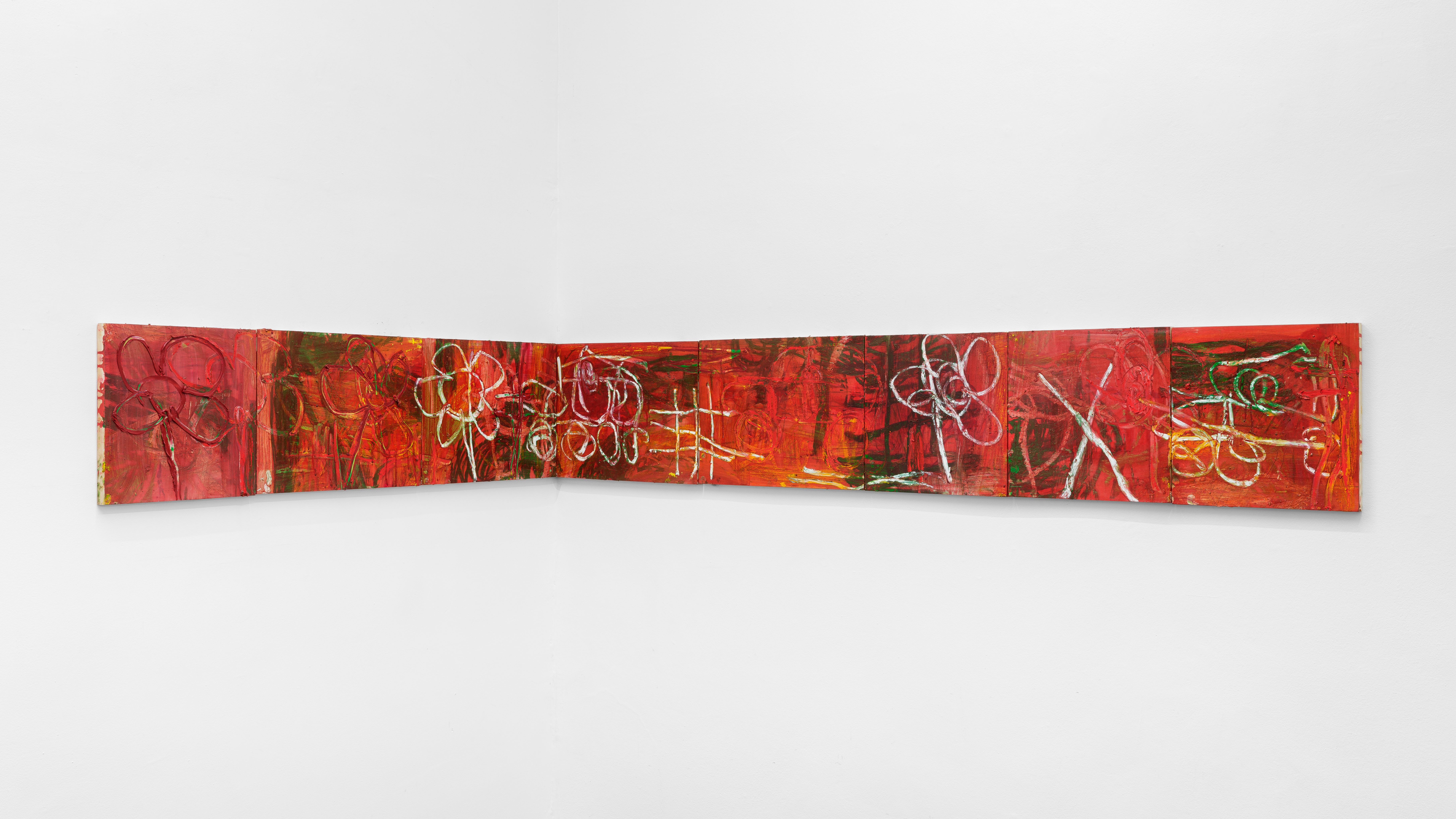
At first glance, nothing connects these pieces to Julian Farade’s paintings with their vivid, blazing symbols, except perhaps a certain frieze-like spread. One must come closer and examine the panels to notice that the uniformity of the surface is broken and connected, that figures are transferred from one to another like snapshots taken at different instants. Look at each panel again, let the image slowly develop, and you will give relief to the figures, you will see them layered into different superimposed strata. Horizontal unfolding of time, unfolding of time in depth: every image takes its time to mature, for the one who made it as much as for those who will look at it. In short: give the image duration and depth, and you will turn it into a film shot.
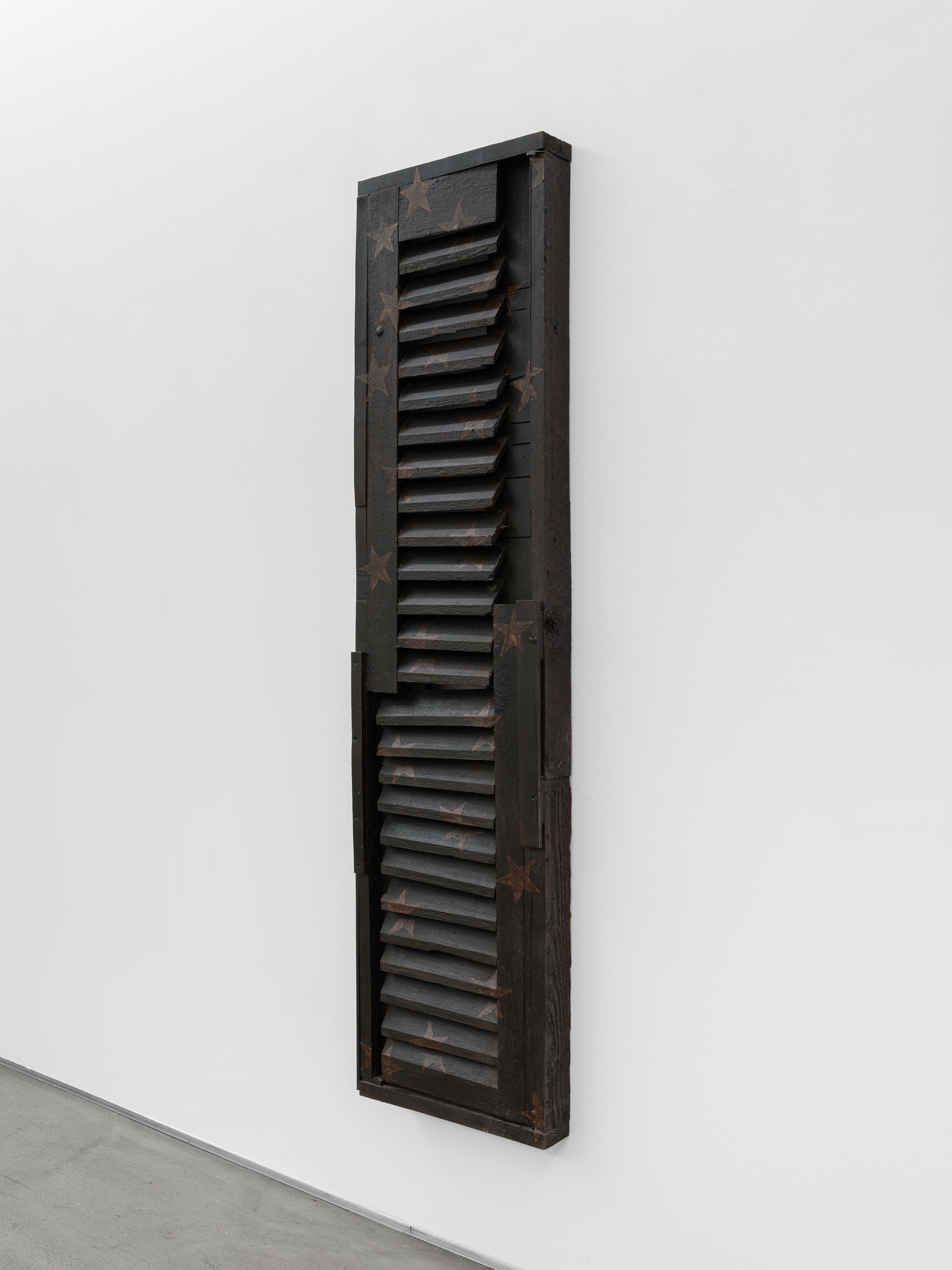
Cinematic scenography, to quote a film by old Fritz Lang, has something to do with a “secret behind the door,” which makes us fantasize treasures or tombs behind every inaccessible façade. David Lynch’s cinema excels in such enclosed spaces—lodges or blue boxes—that are so many Pandora’s boxes for desire. Here, the fragments of reassembled furniture (shutter, grille, mailbox), with their closed blinds like modest eyelids, seem to veil a secret we try to decipher on their surfaces covered with brown or black waxed strips, the lingering trace of grime, dust, or fire on which faded stars sometimes delicately appear.
Do we see night and day in the same way? If Hélène Labadie’s sculptures have a nocturnal character, Julian Farade’s paintings are luminous like cinema screens. It takes enough attention to want to cross through the thickness of the image, to go beyond the mirages of recognition. With a strange rhythm: the rapid speed of eye movements identifying and animating figures paradoxically requires a certain slowness, the slowness of letting them unfold in the imagination. Paintings and cushions ask us to rest on their surface, to form our visions with the elements provided.
This way of letting the viewer “edit” their own film is familiar to the cinephile, whose strange habit is to move through a film, less by following the story or the dialogue, than by jumping from shot to shot: from one viewpoint to another, from an object to a face, from a face to what it looks at. By approaching this experience, the unique pieces of Hélène Labadie and Julian Farade manage to multiply the viewpoints upon themselves.
Pierre Eugène