What binds us to filth is hunger.
The body’s greed, opening and contracting on the occasion with the first games.
A rictus only idiots and animals come to tear off with full teeth.
The same way one tears a child’s wisdom.
Filth is a mode of existence that inverts the formula: shit = money.
An irreverent alchemy.
Whoever would sell you a pre-established recipe for defilment, or a dazzling dramaturgy, has ''mithridatized'' themselves against pure danger, as the Momo* used to say.
When it becomes a theater of seduction, filth sees its stage circumbscript, meticulously cleaned after every act by foreign hands.
For the noisy pleasure of spectacle, we stain the walls and our past.
Smirking, we overturn everything that can be overturned—the top and the bottom, the beautiful and the vulgar, the back and the front, the empty and the full…
We reclaim materials, cram them so as to leave to time, to accident, the task of contaminating them in return. Nothing, ostensibly, resists.
Everything ebbs, swells and grimaces.
But when it shouts too loud with the mouth, the being eventually falls silent.
It is the hallmark of ritual to be within everyone’s reach, yet remain ungraspable, to require a rhythm, a commitment of all senses, a humble and orgiastic faith.
So place yourself preferably in a discreet corner, fists closed in a kind of combat stance, listening to the swarming that haunts the room. There, if you follow the vanishing lines of the silhouettes offering themselves to every contorsion, you will be able to clench your jaw and squat, legs slightly spread apart. Your eardrum taut like a drum, a fetid little music might pierce through it.
The oozing of a promise whose sulfurous tongue lurks in the memory of your muscles, in the souvenir of what once came to renew your complicity with this remnant of earth.
Cy Lecerf Maulpoix
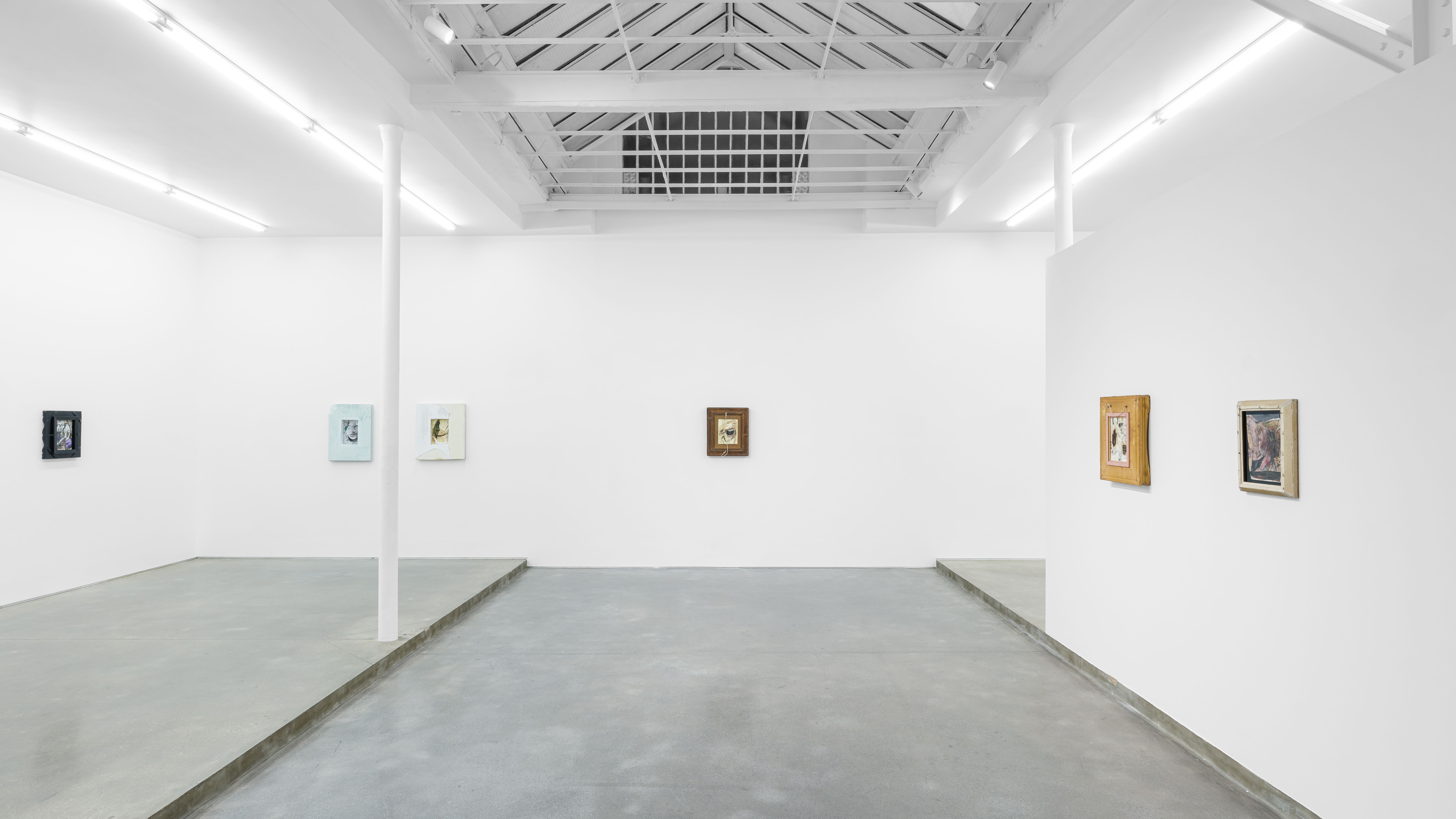
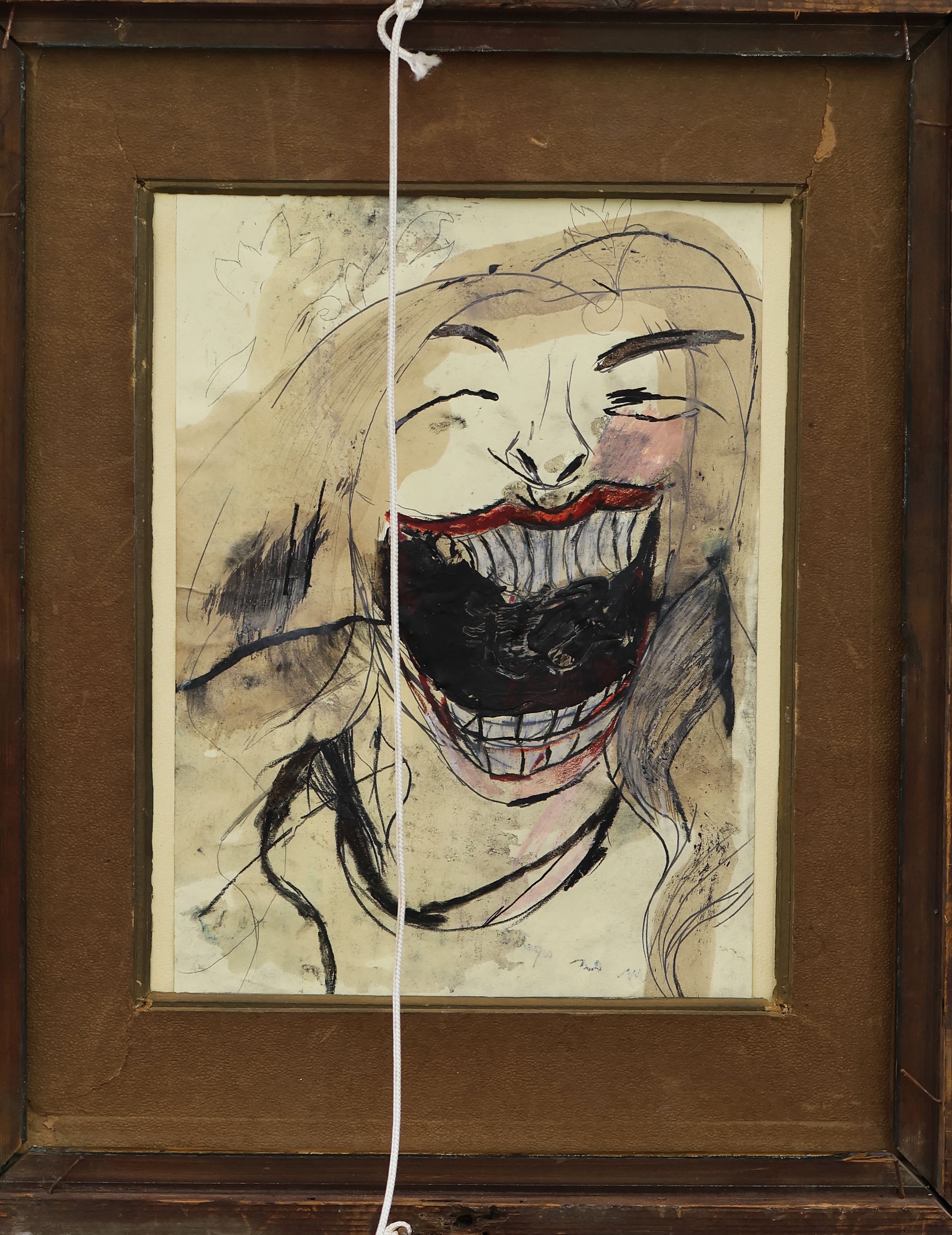
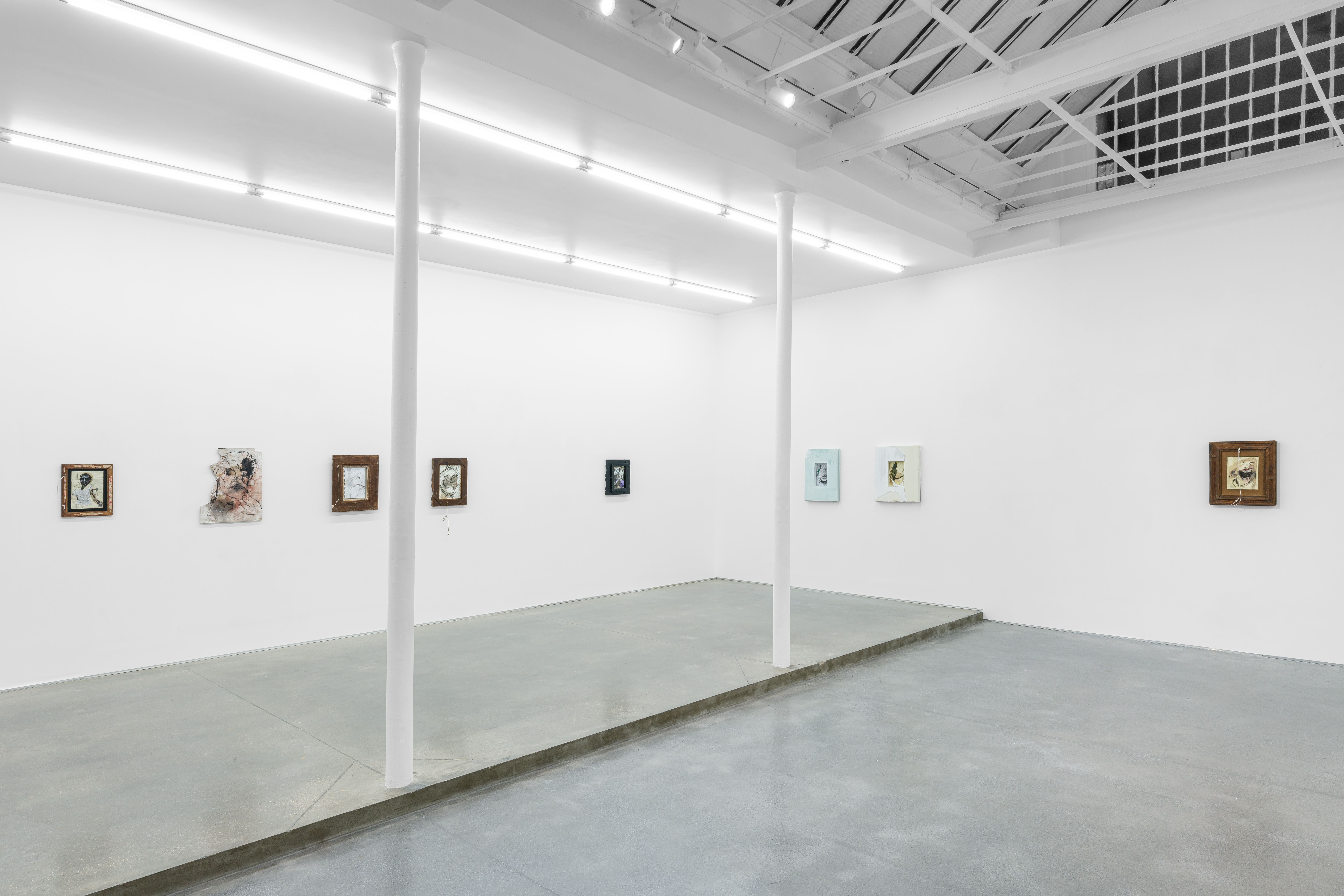
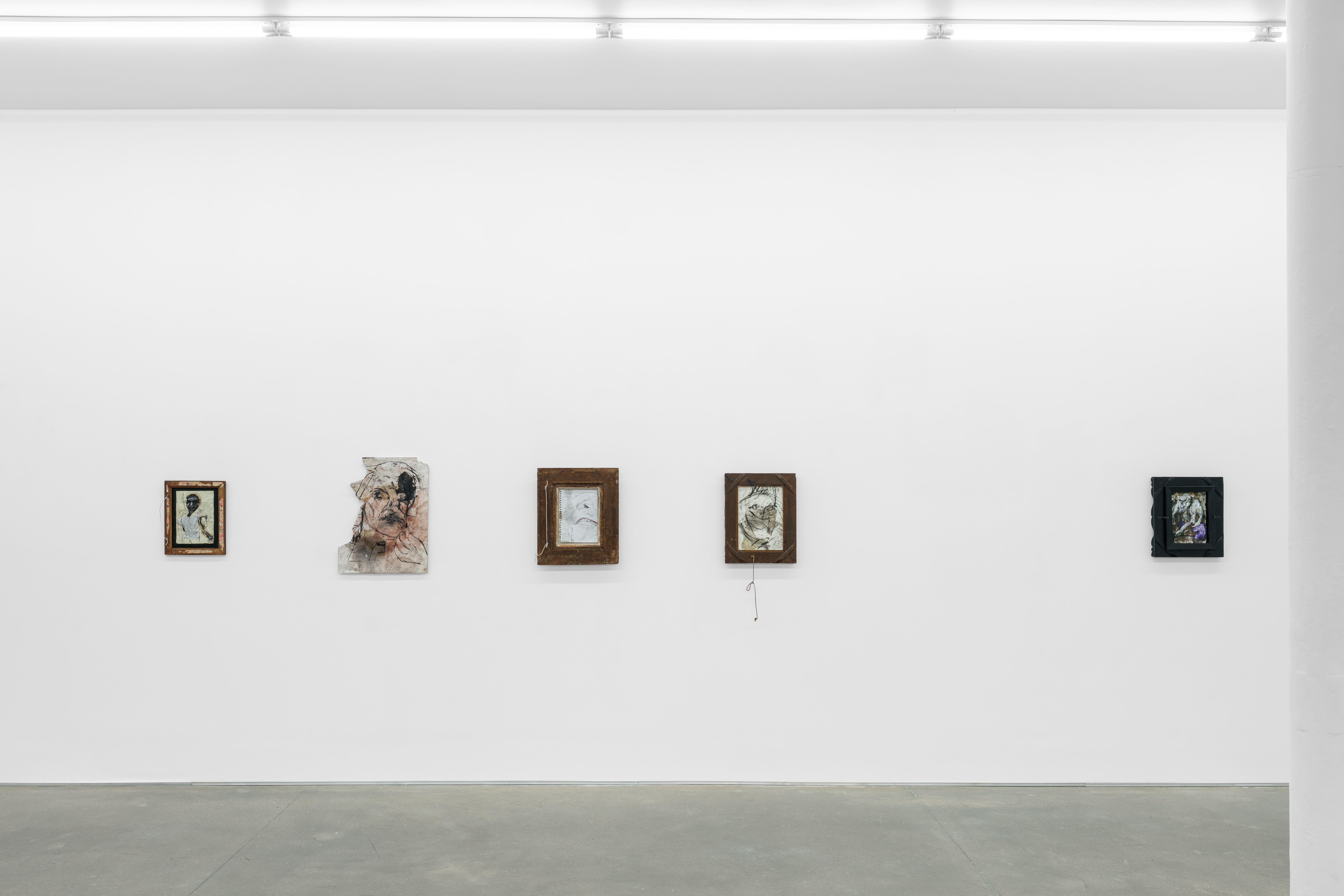
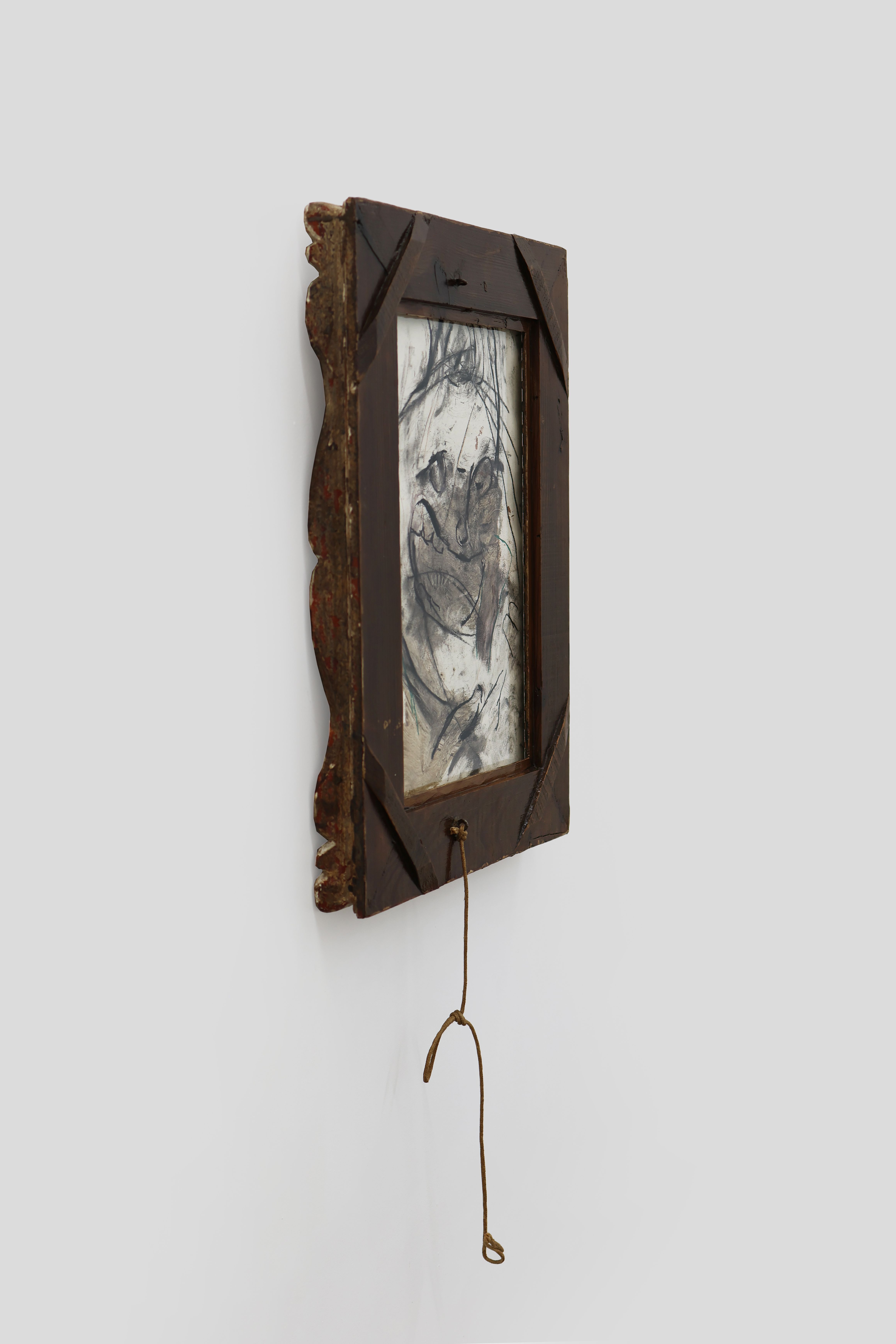
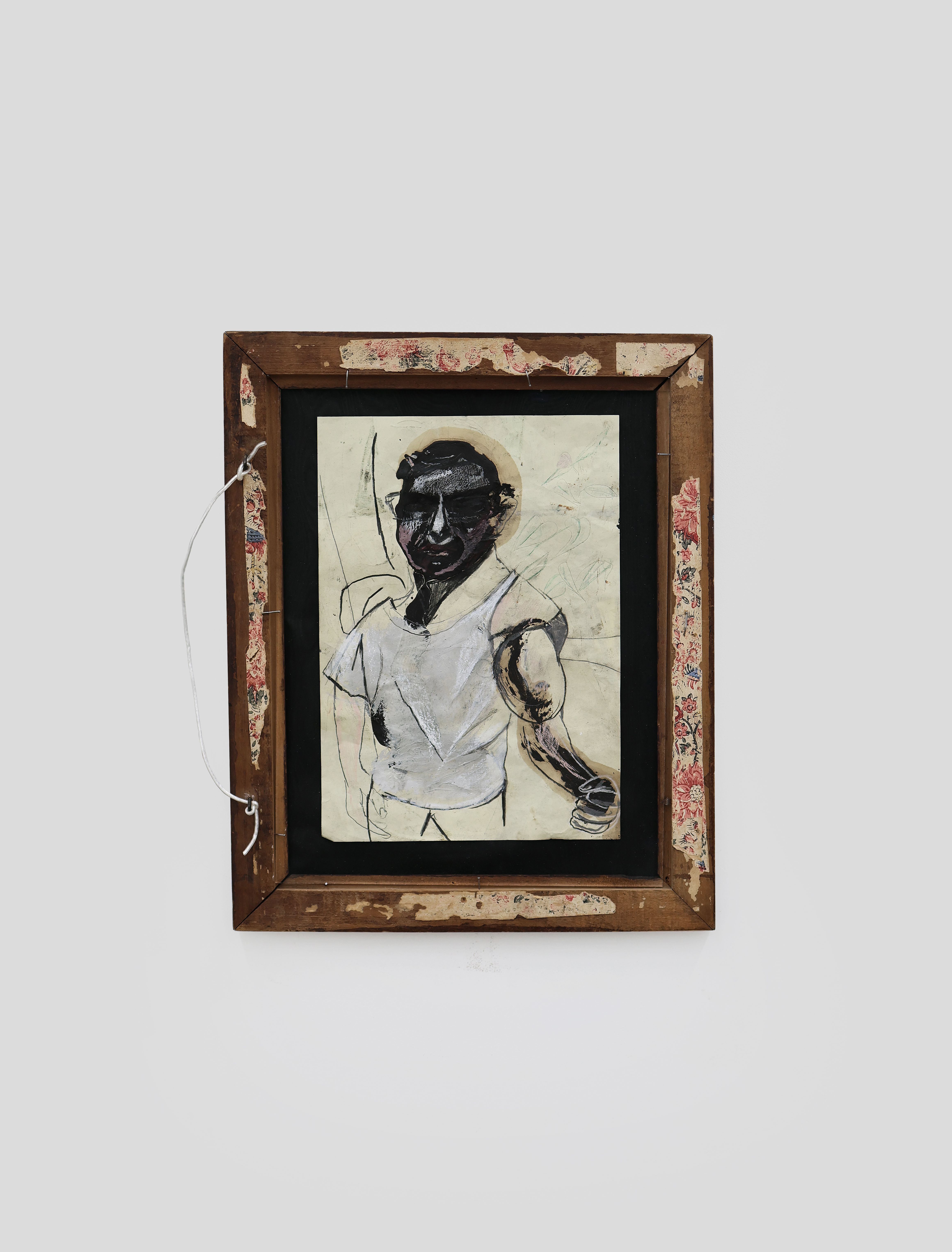
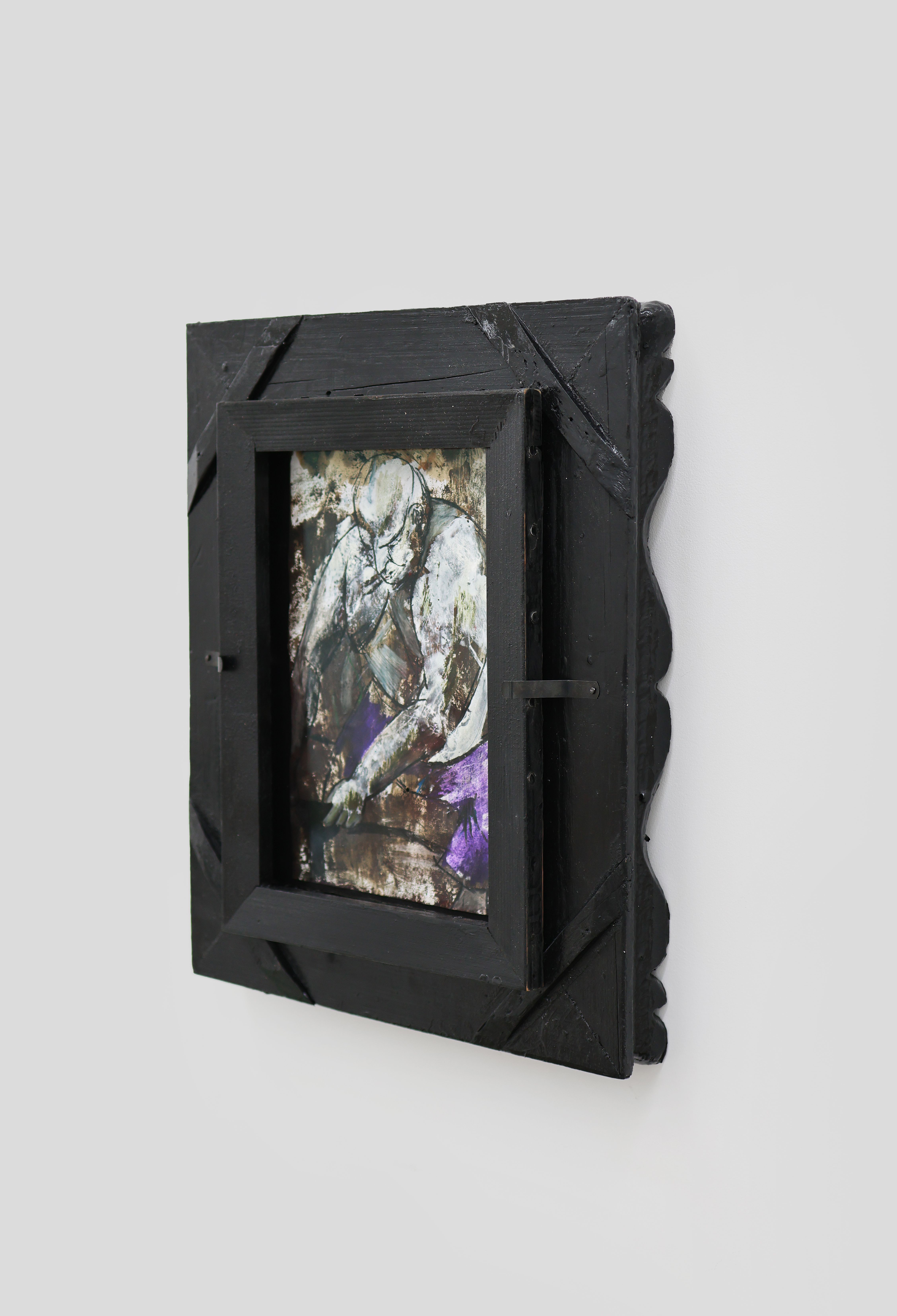
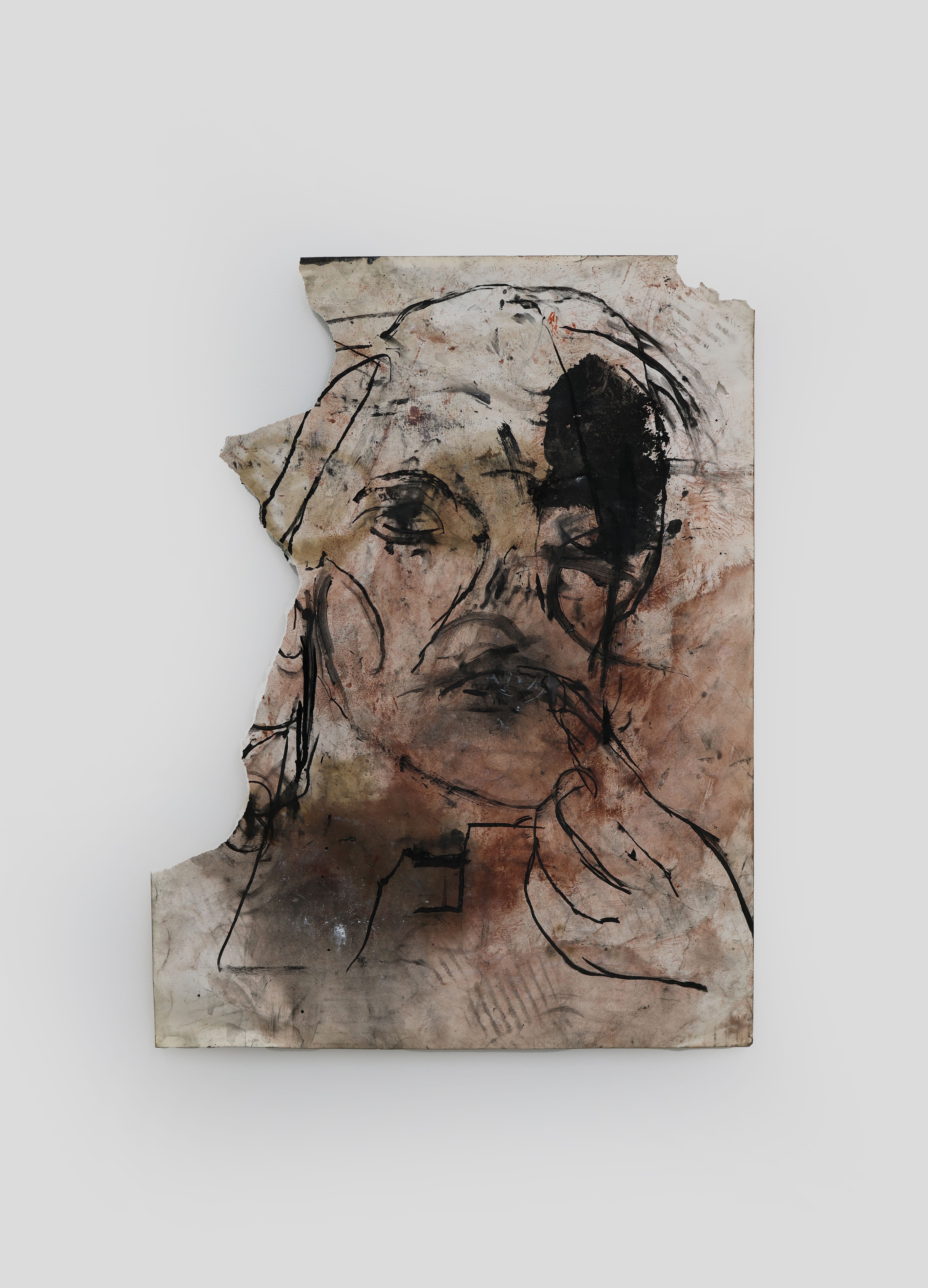
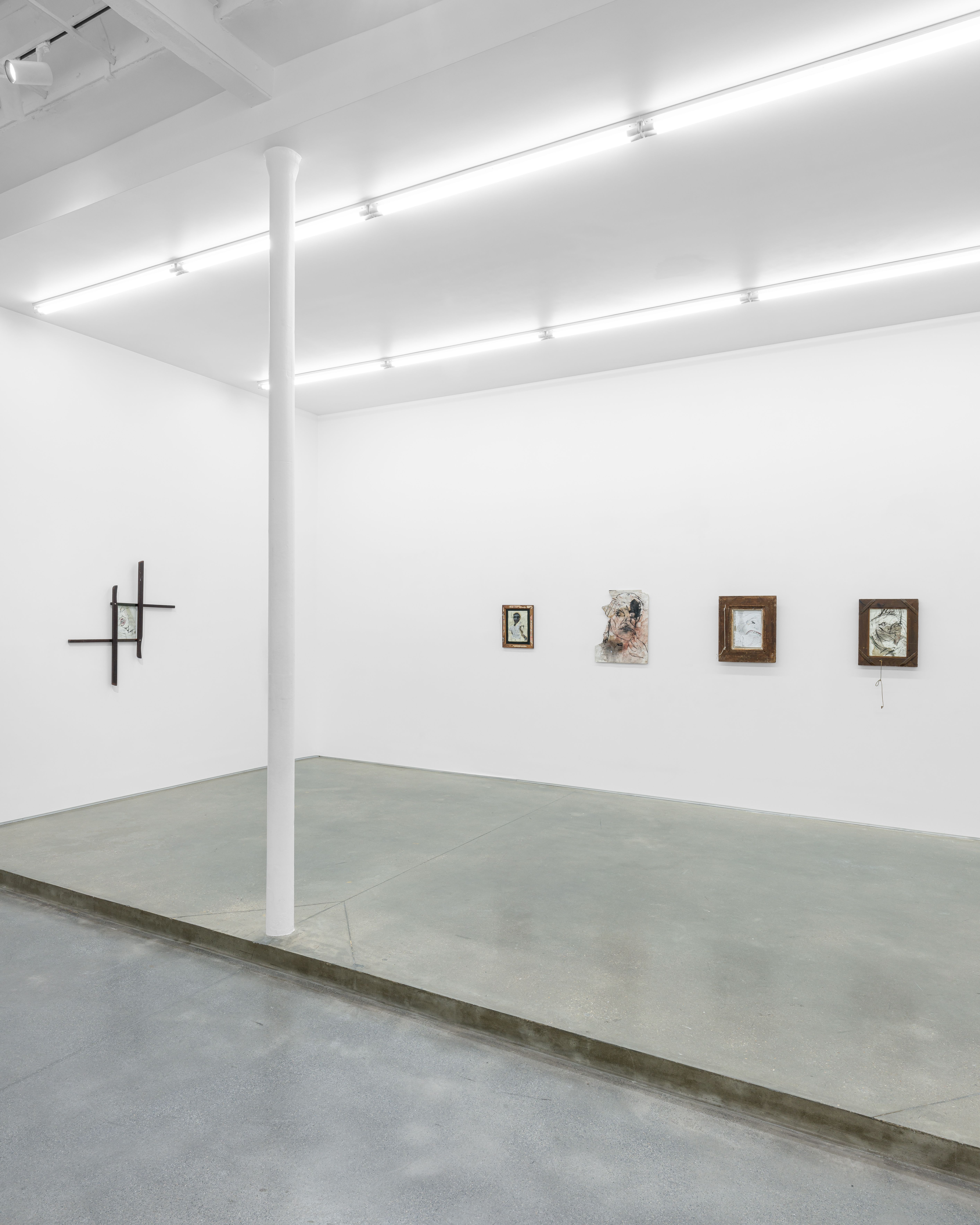
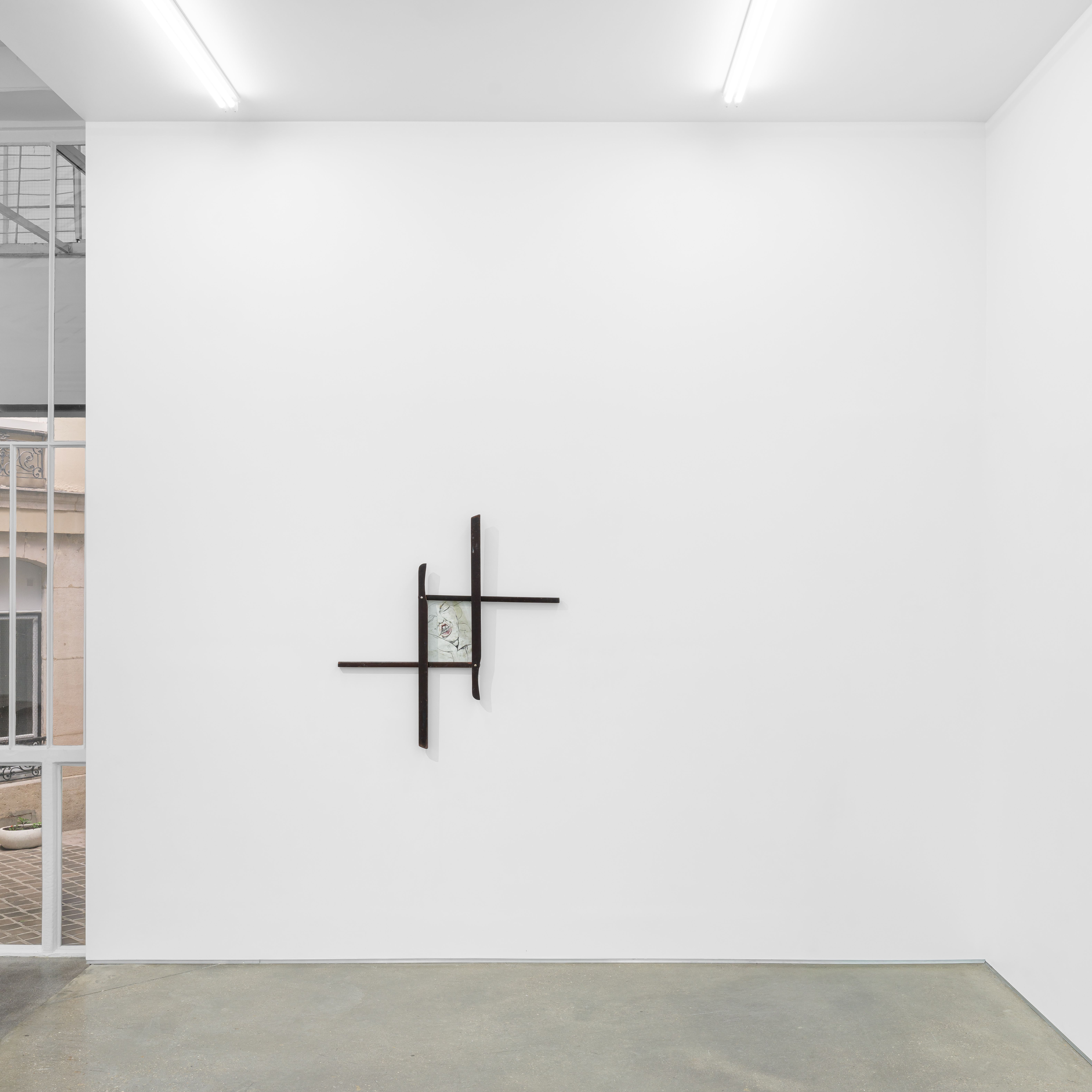
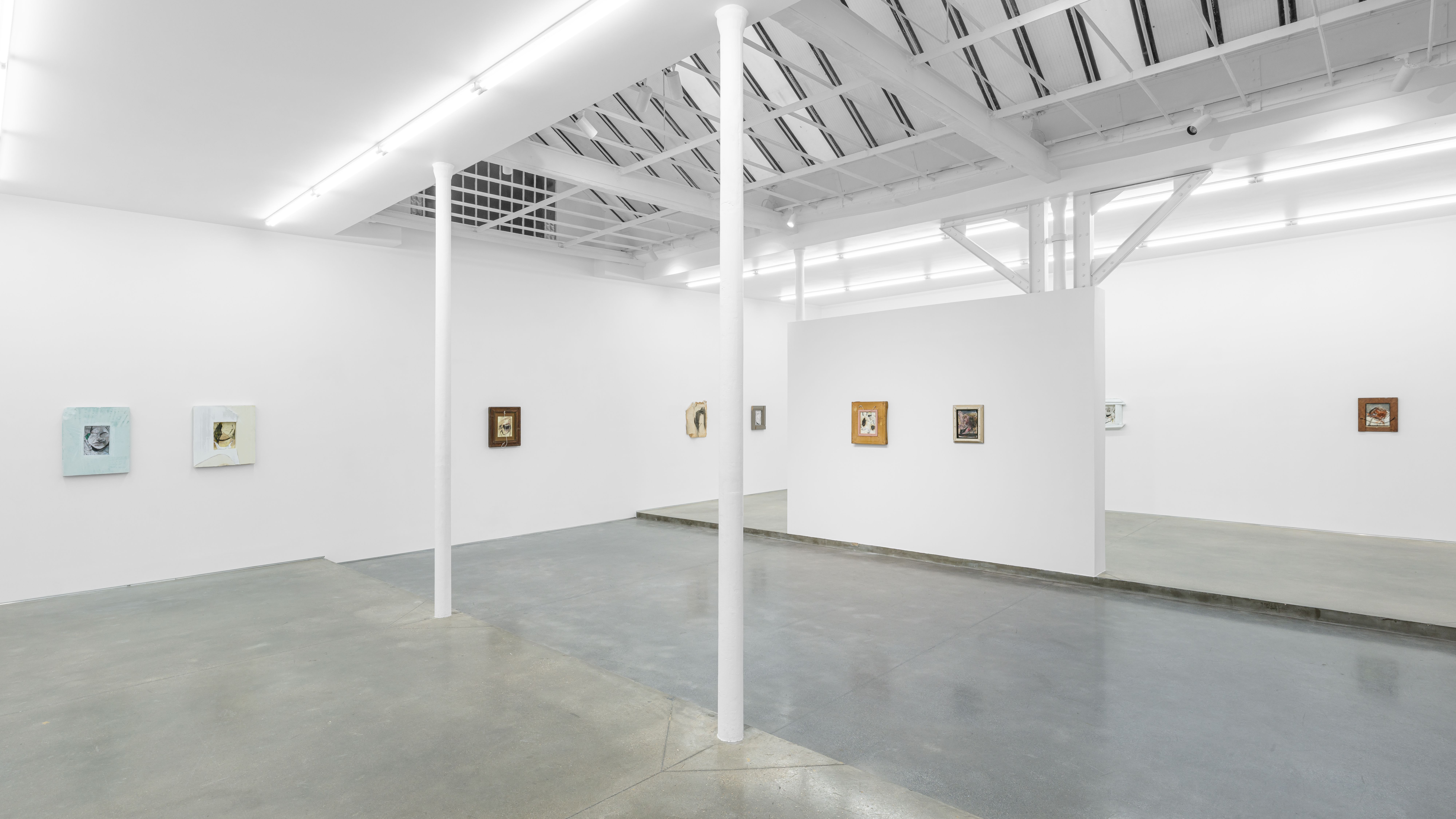
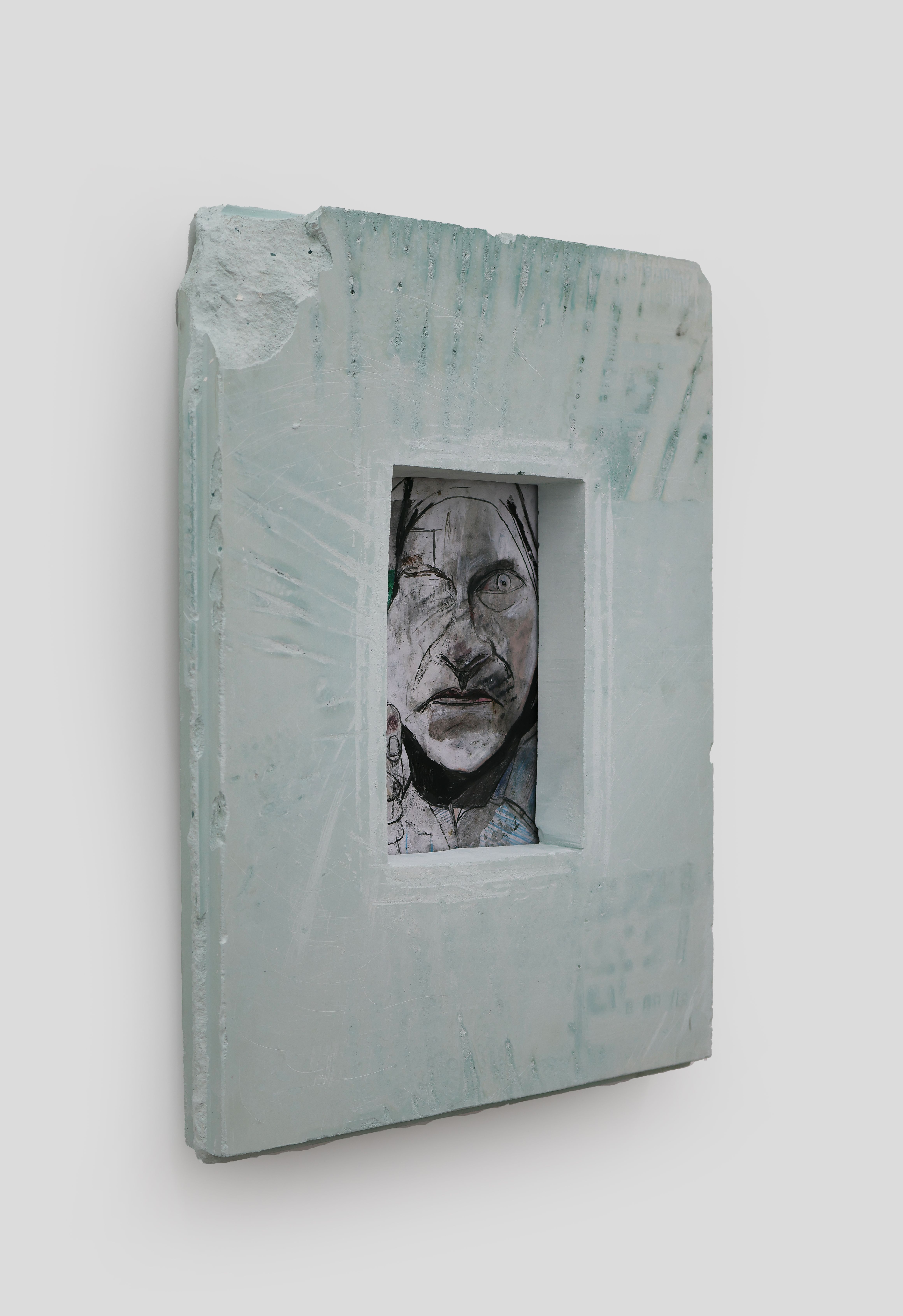
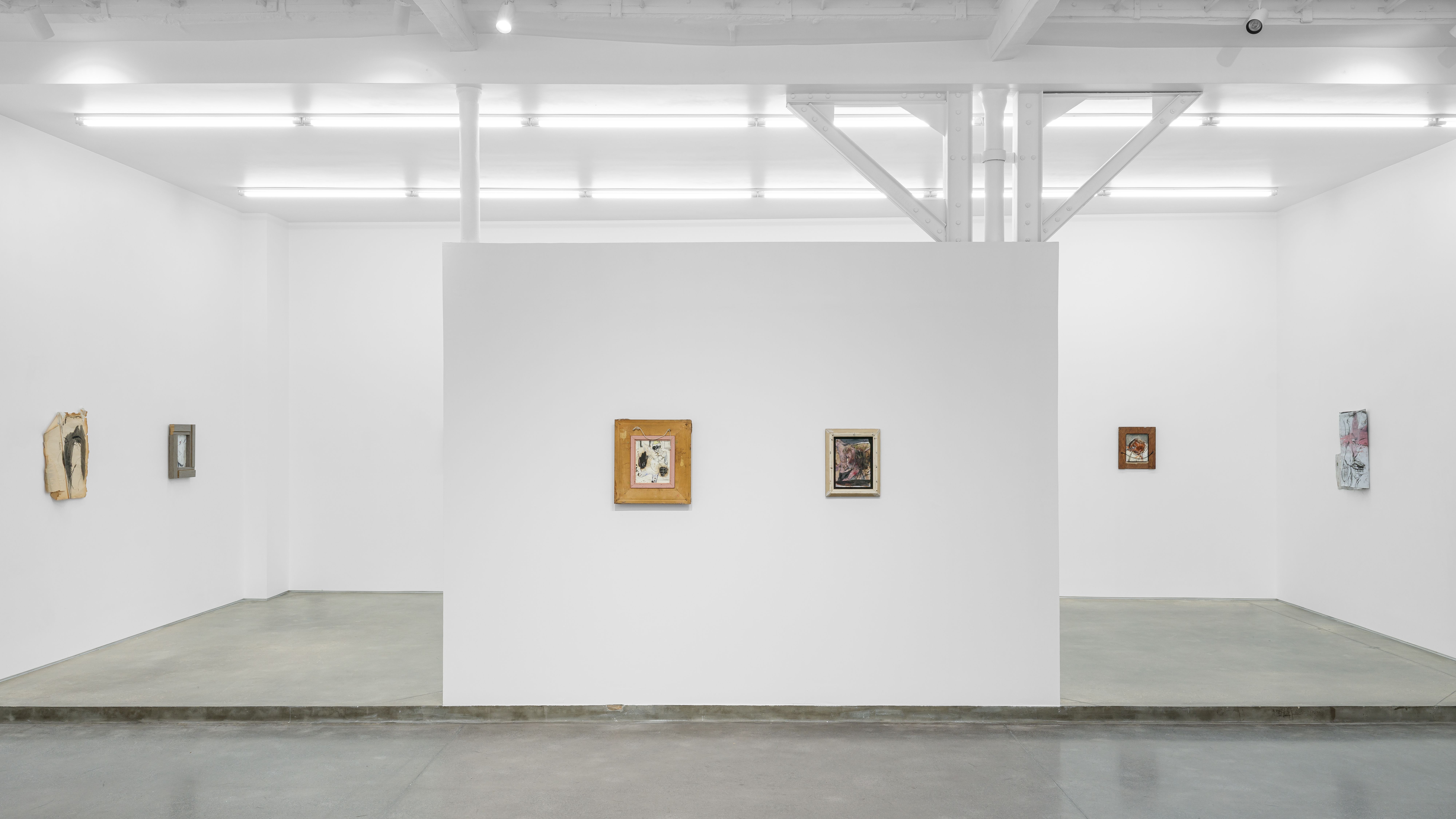
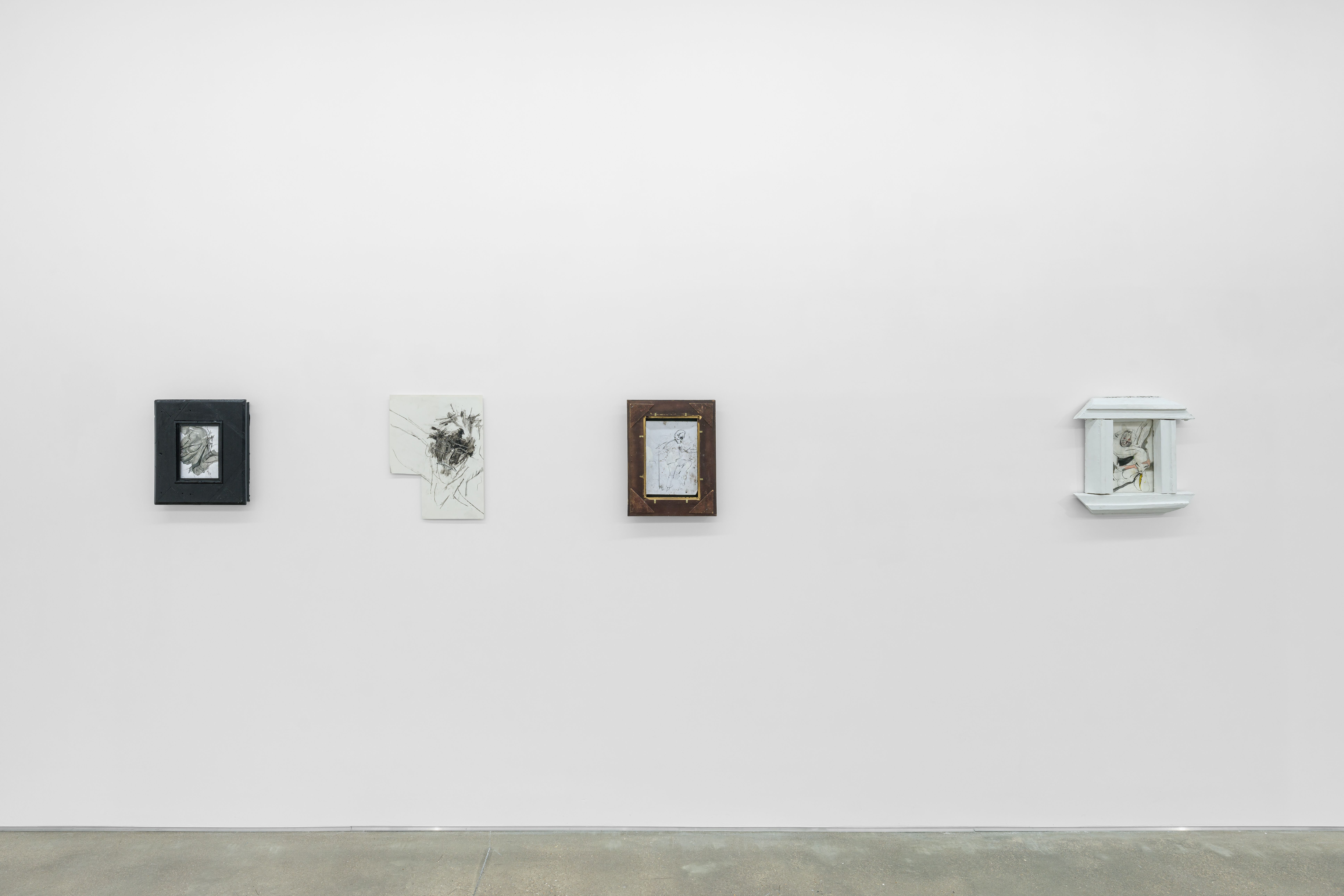
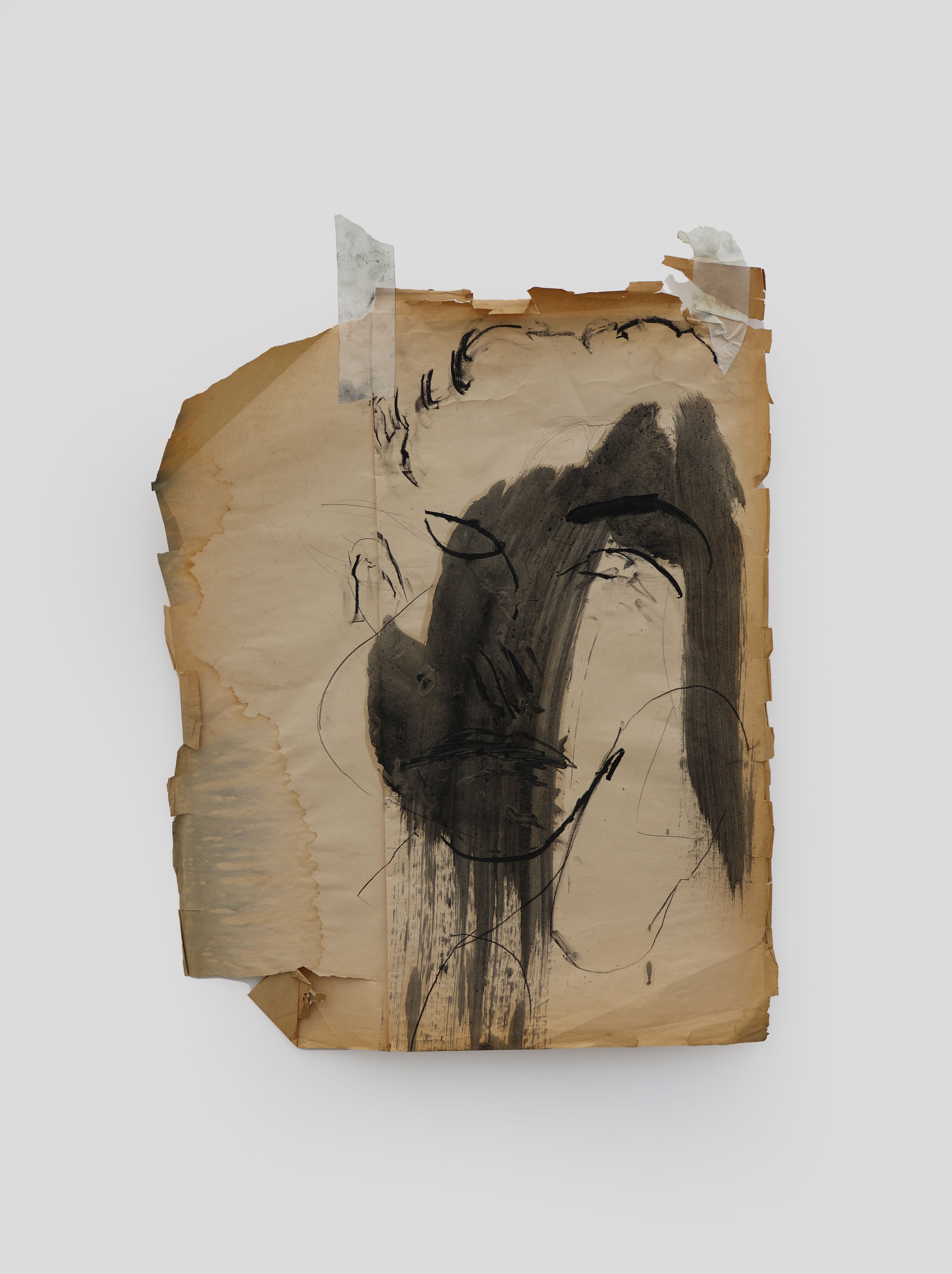
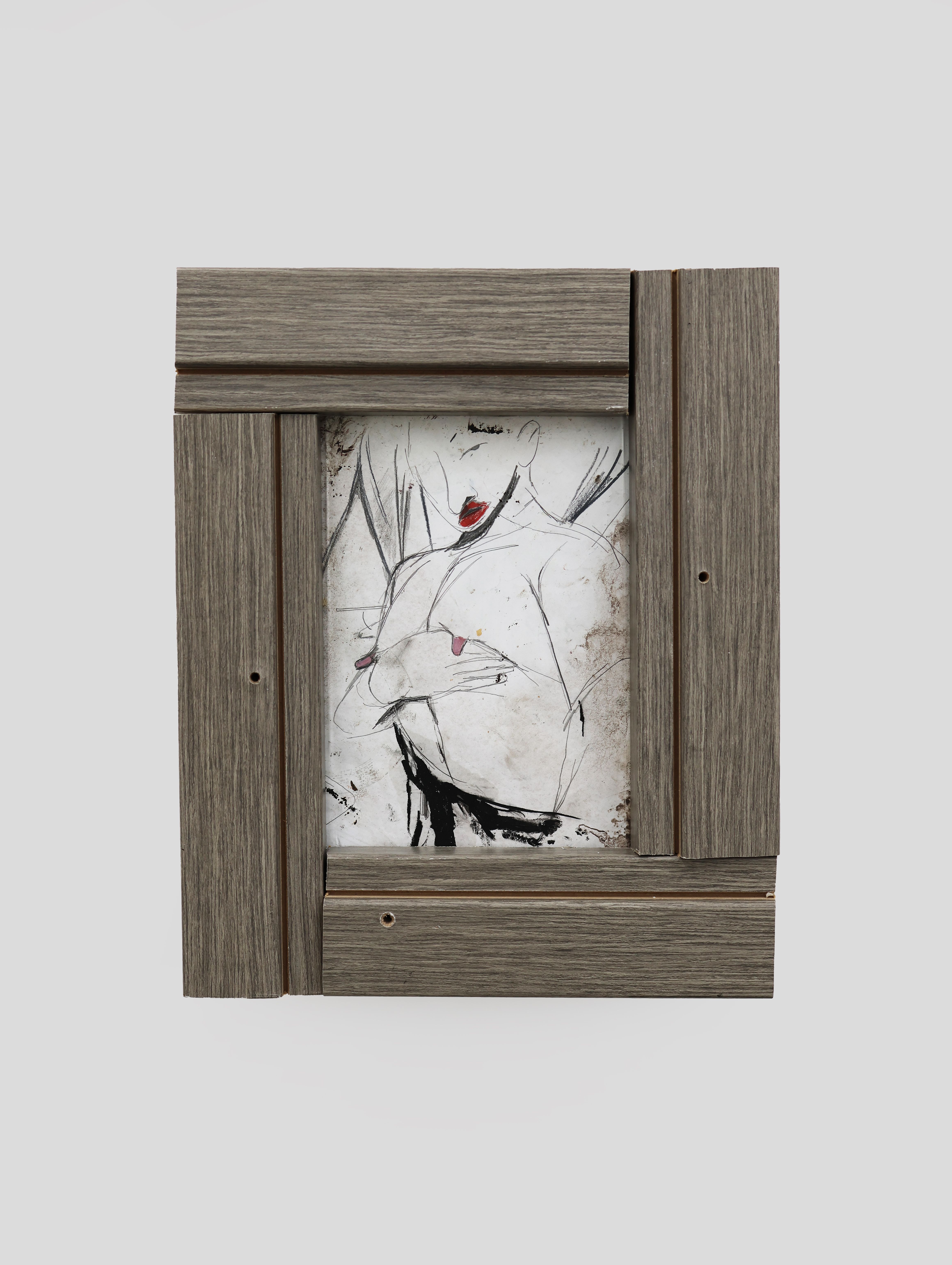
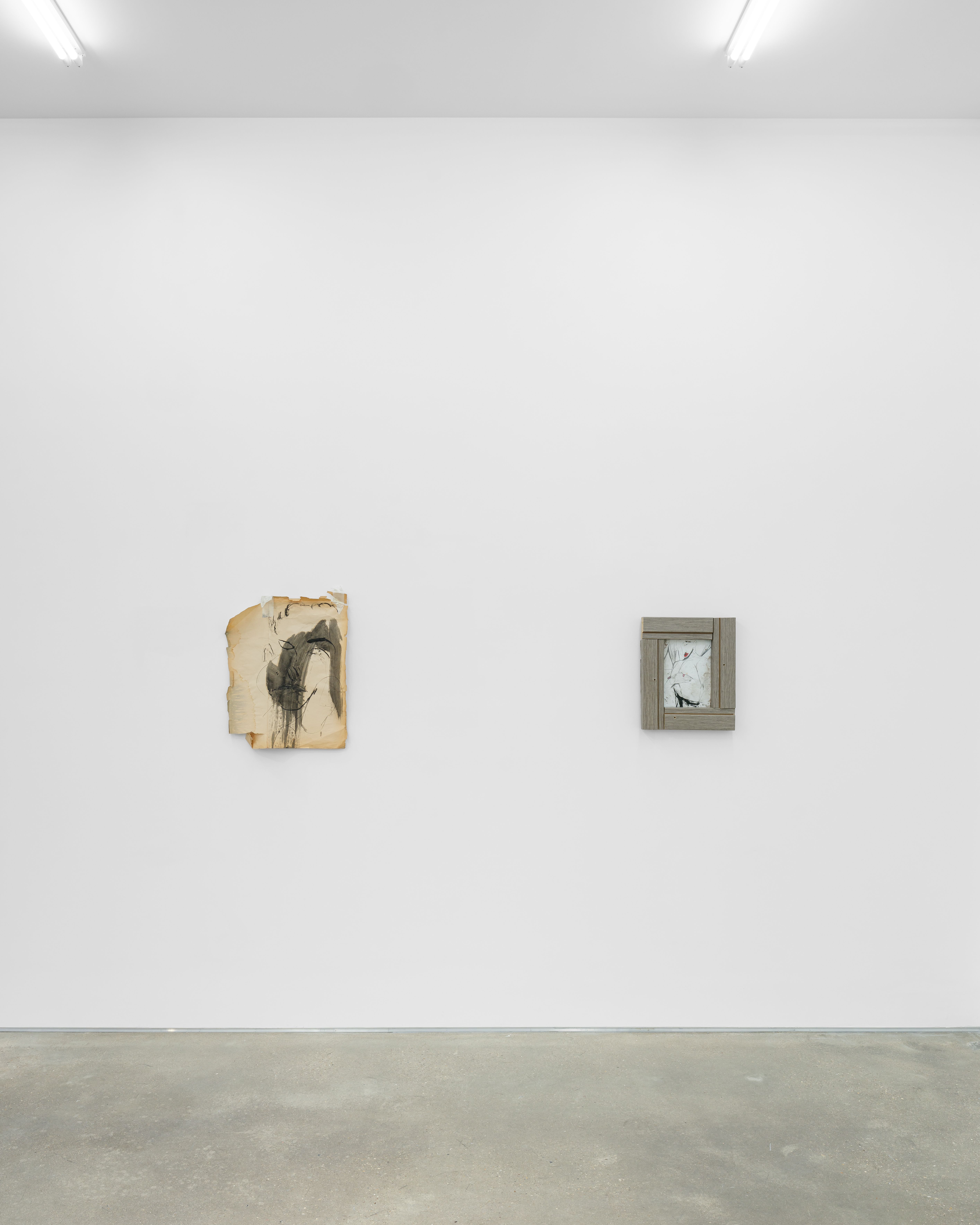
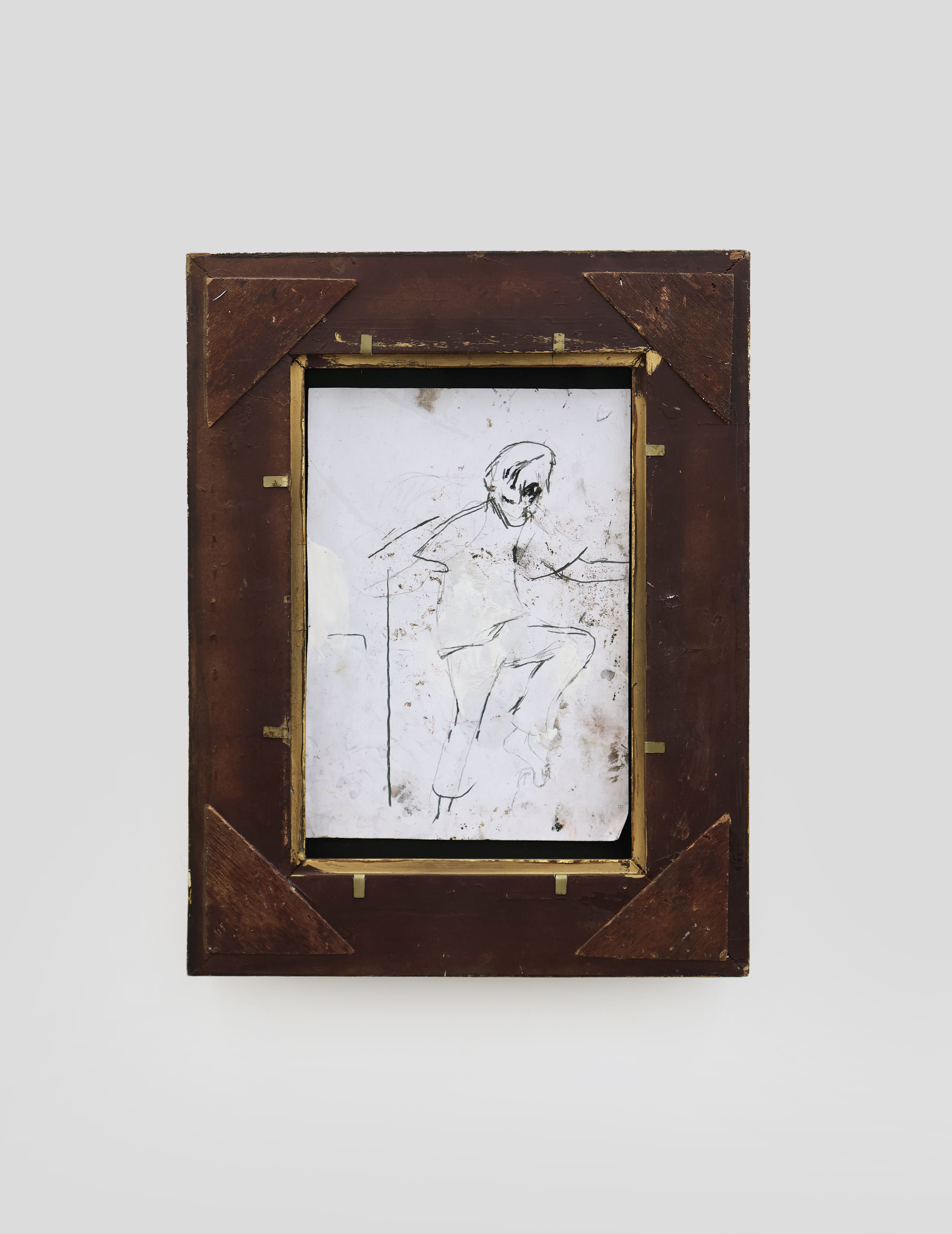
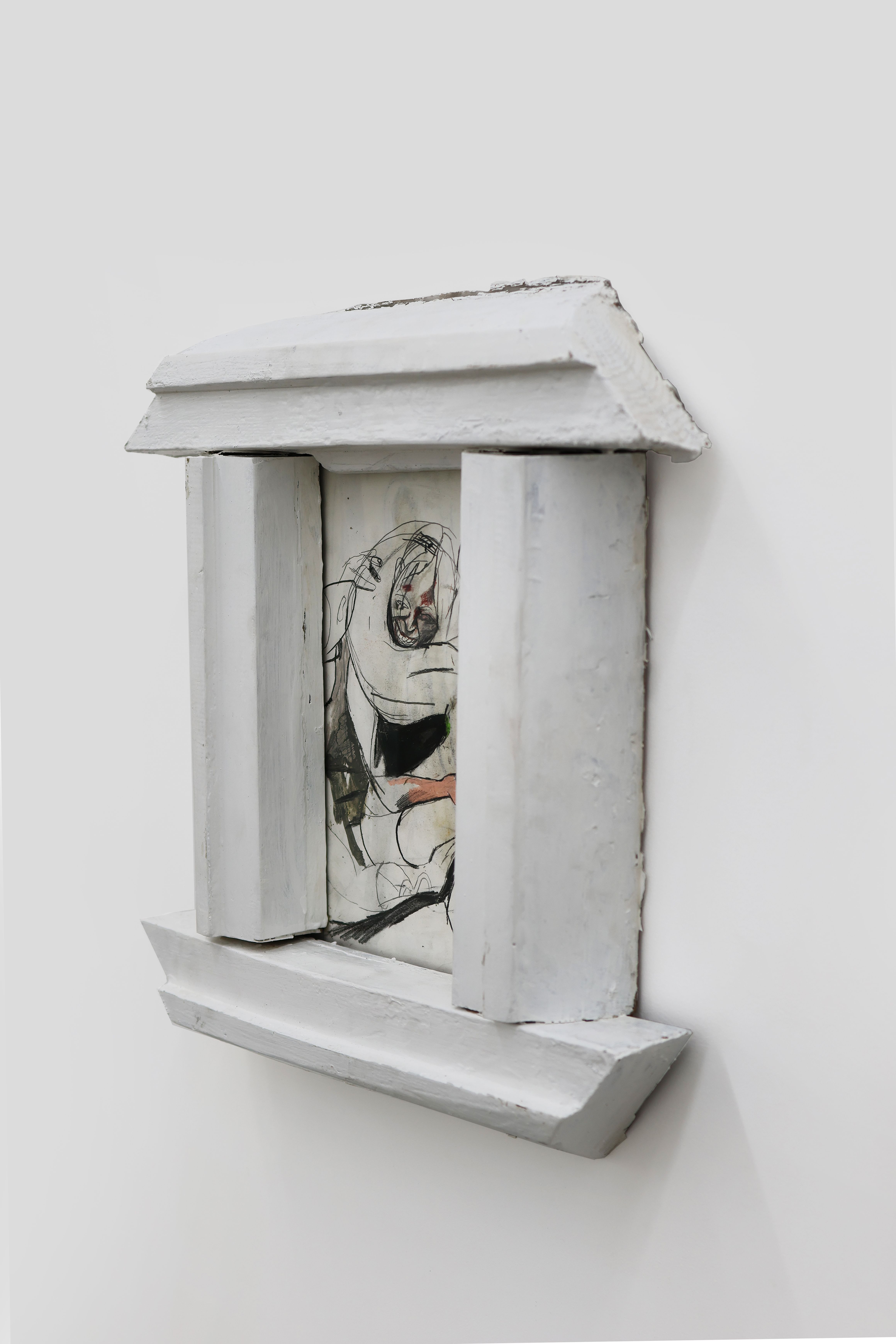
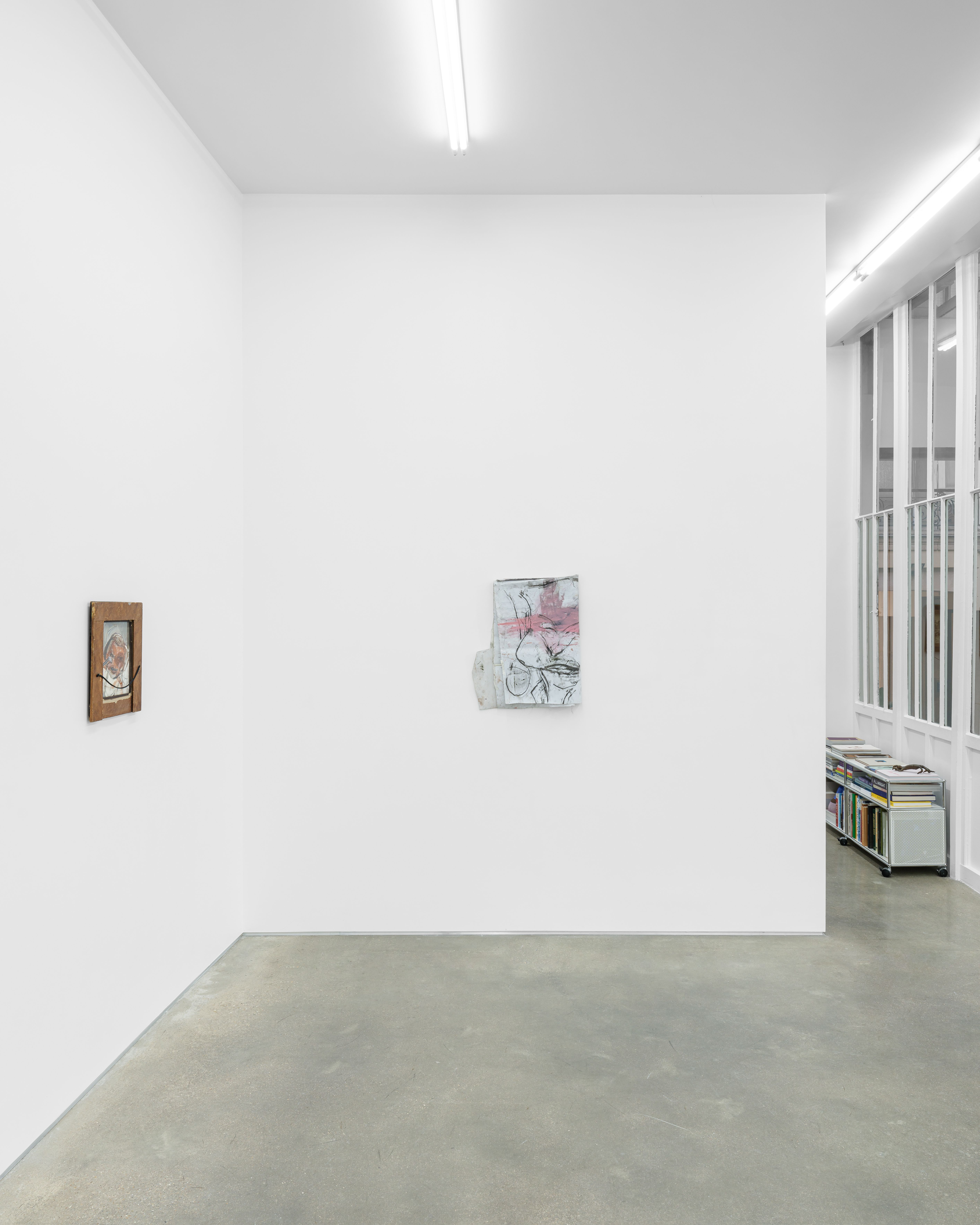
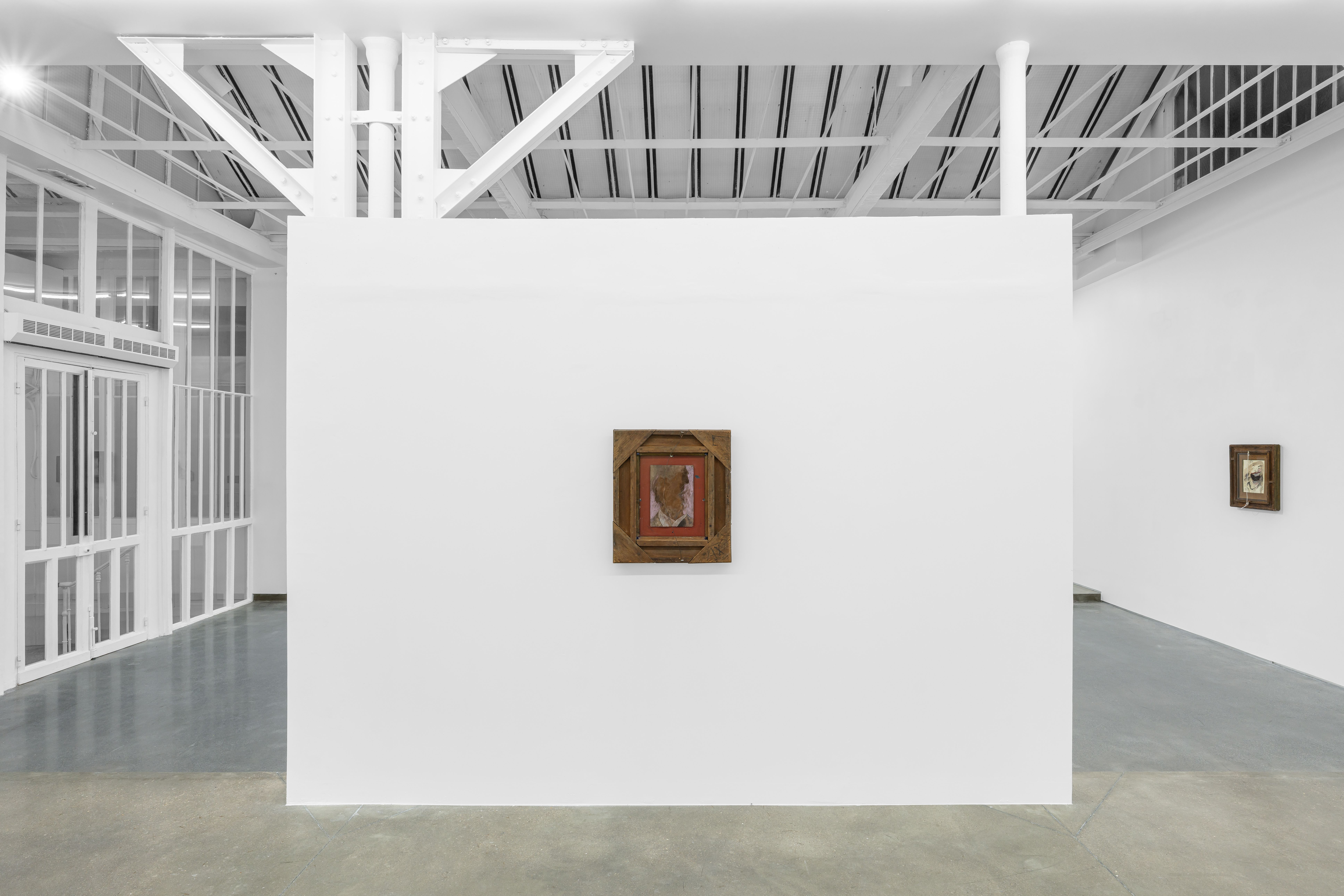
For his first solo exhibition at Galerie Derouillon, Emmanuel Béguinot presents a body of portraits that confronts us with an anxious intimacy, with violence and troubled passions usually kept in the shadows of appearances. The title of the exhibition, “Always Again”, operates as a mantra: an adverbial stammer endlessly repeating the cathartic act of drawing. Through line, Béguinot gathers fragmented thoughts and gives shape to the immediacy of sensation.
Béguinot’s figures are creatures of accident. Built from an accumulation of flaws, excesses and ruptures, some appear to spill beyond the frame (Mie temps), confront us with a gesture, or seem to be pulled out of the picture altogether (Washday). His treatment of materials similarly embraces contingency. The papers—sometimes found, sometimes already bearing traces of other drawings—are stained, rubbed and torn. The frames are assembled from architectural materials such as plaster, foam and MDF, or from elements of the domestic interior—mirror, leather, wood—while their structures and hooks remain exposed.
Yet there is nothing systematic about this disorder. The rhythm established by the framed works is repeatedly interrupted by drawings presented on loose sheets, and by sketched masks that confront the viewer with an even more immediate presence. The urgency of the line remains palpable and uncompromising, animated by these flayed, exposed states of mind. Paint, too, enters the compositions, excavating depths within the paper. Moving between oil and bitumen paint, Béguinot intensifies the physical presence of his figures, as in Dis Pater, the most mysterious—and perhaps the most hieratic—silhouette in the series, drawing us into the inner passions of a strange, extended family.
Drawing on Thomas Bernhard (Konrad!), Nosferatu (I am an appetite), and Facemaxxing videos (Sitz!/ I put my face on), Béguinot’s works locate their beauty precisely in this tension: “in the laughter they can provoke, which they embrace through figures returned from madness, as much as in the degradation they expose without grandiloquence, with a deliberately claimed sense of the trivial.” The frames are turned inside out, as is good taste itself—the bourgeois order of the family portrait, posed within the carefully arranged interior. The figures’ deformities emerge from somewhere deep within them. A sealed-off domesticity, no longer knowing what to do with its own propriety, opens onto windows looking out onto teeming, unruly worlds.
Marion Coindeau