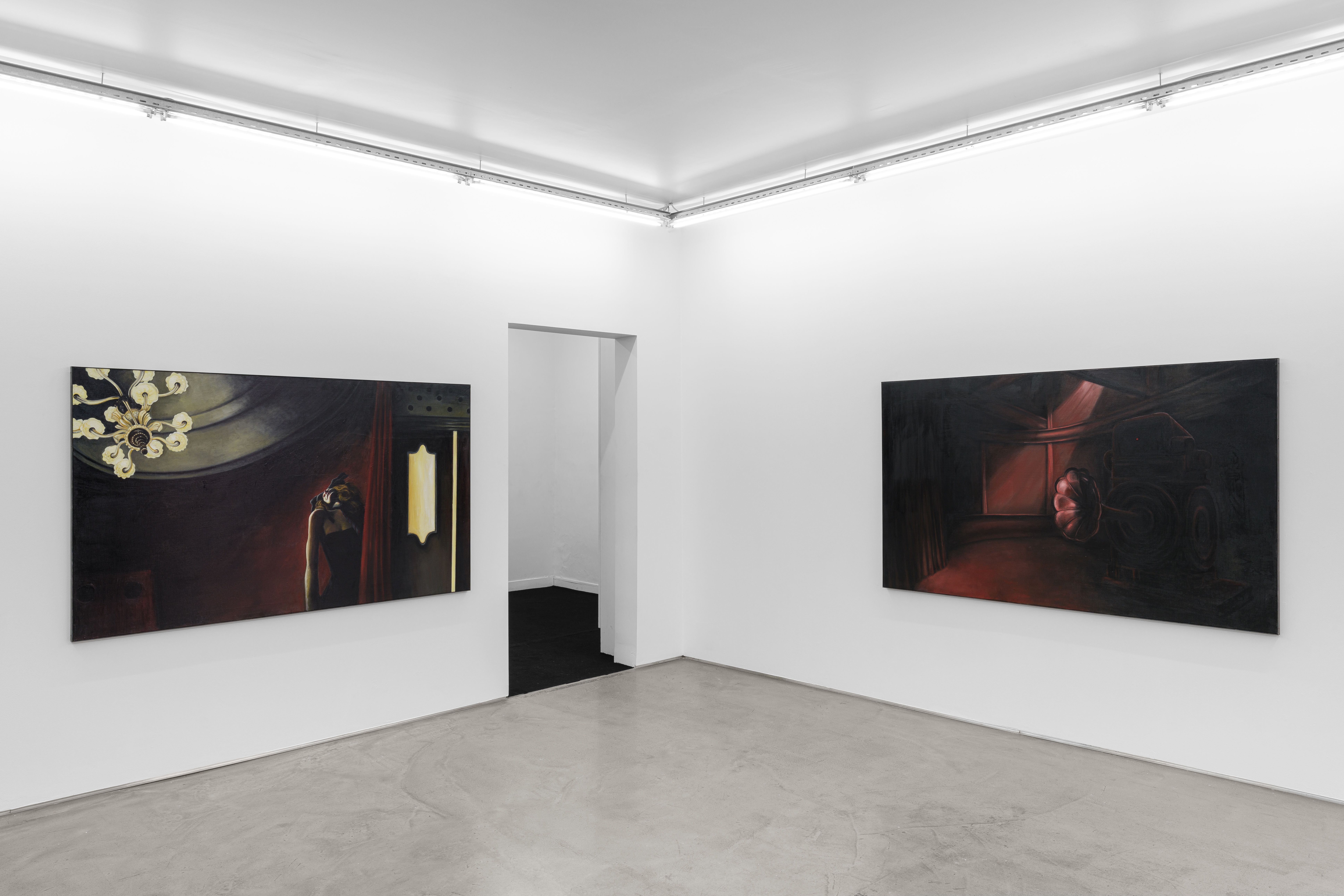
Augustin Katz & William Basinski → Unentitled (study for a room)
Curated by Guillaume Blanc-Marianne
"If confusion is the sign of our times, at the root of that confusion I see a rift between things […]." Antonin Artaud, The Theatre and Its Double, 1938
There are melodies that seem to weep — mournful musics, essentially, worn thin by the extension of cruelty. One such melody opens on a long crescendo and exhausts itself in an equally long decrescendo, as though something were advancing inexorably, slowly loosening the "enormous congestion of feeling"1 that weighs it down. Mired in the very substance of air, it will succumb at last to dissipation, with no one knowing how to hold it back. This melody speaks of the liquidity of memory and chimes like a wound; it moves by the pneumatic of mirages, and tells of solitude upon the stage of tragedy; the feverish flicker of a single light and the depth of velvet, the smallest possible tremor in the earth and the collapse of an entire world.
William Basinski found it at the bottom of a drawer, where it had been sleeping since 1982, and named it Unentitled: unassigned, unfounded — illegitimate, in a sense. It immediately brought to mind a "moment of great shock that reverberates through time and memory."2 It returned him, equally, to the logic now governing the great chaos that is upending History; as though the latter were nothing but the private odeon of a few, unauthorized signatories, a stage on which to discharge their death drives and give free rein to their thirst for excess.
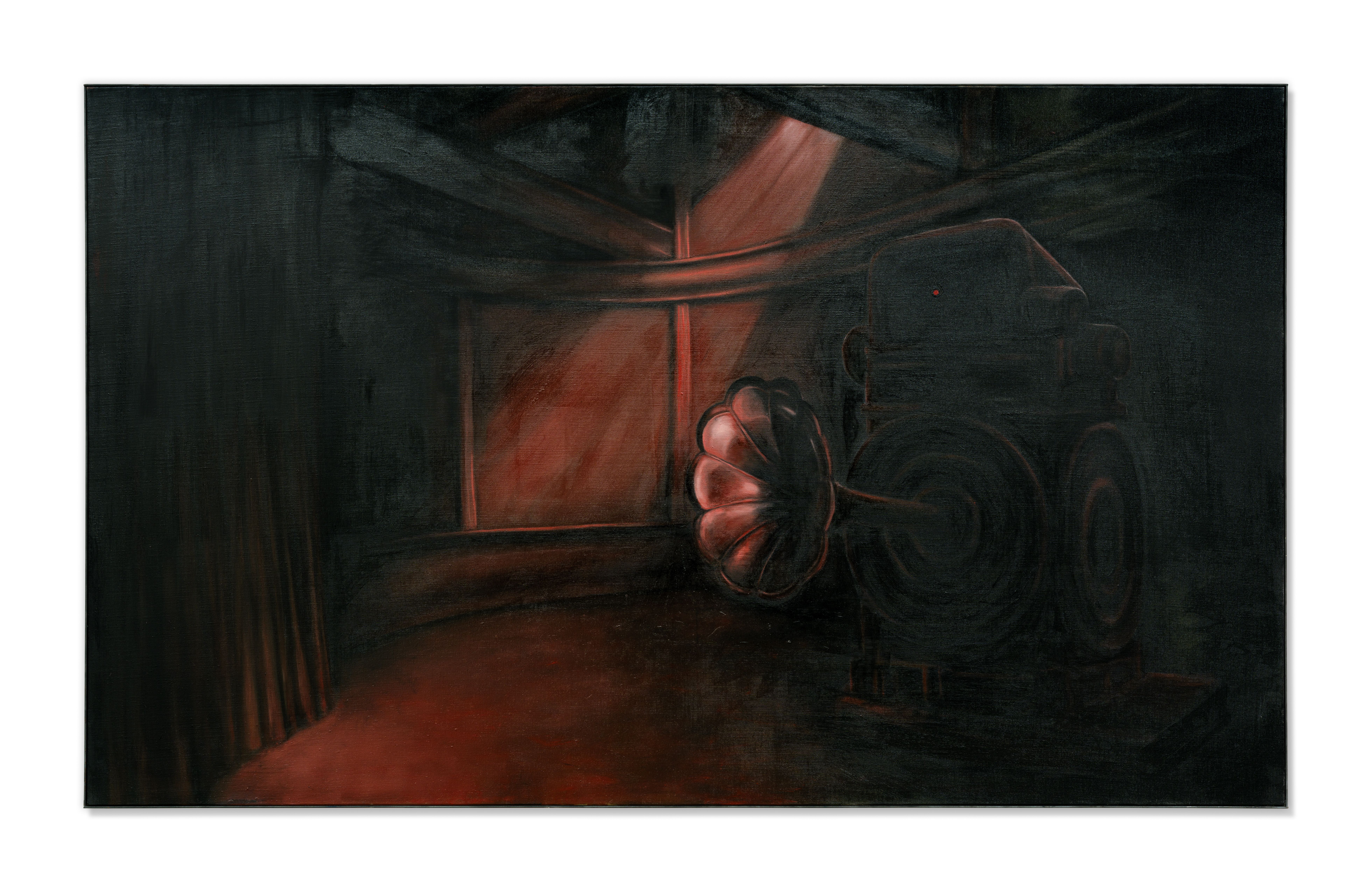
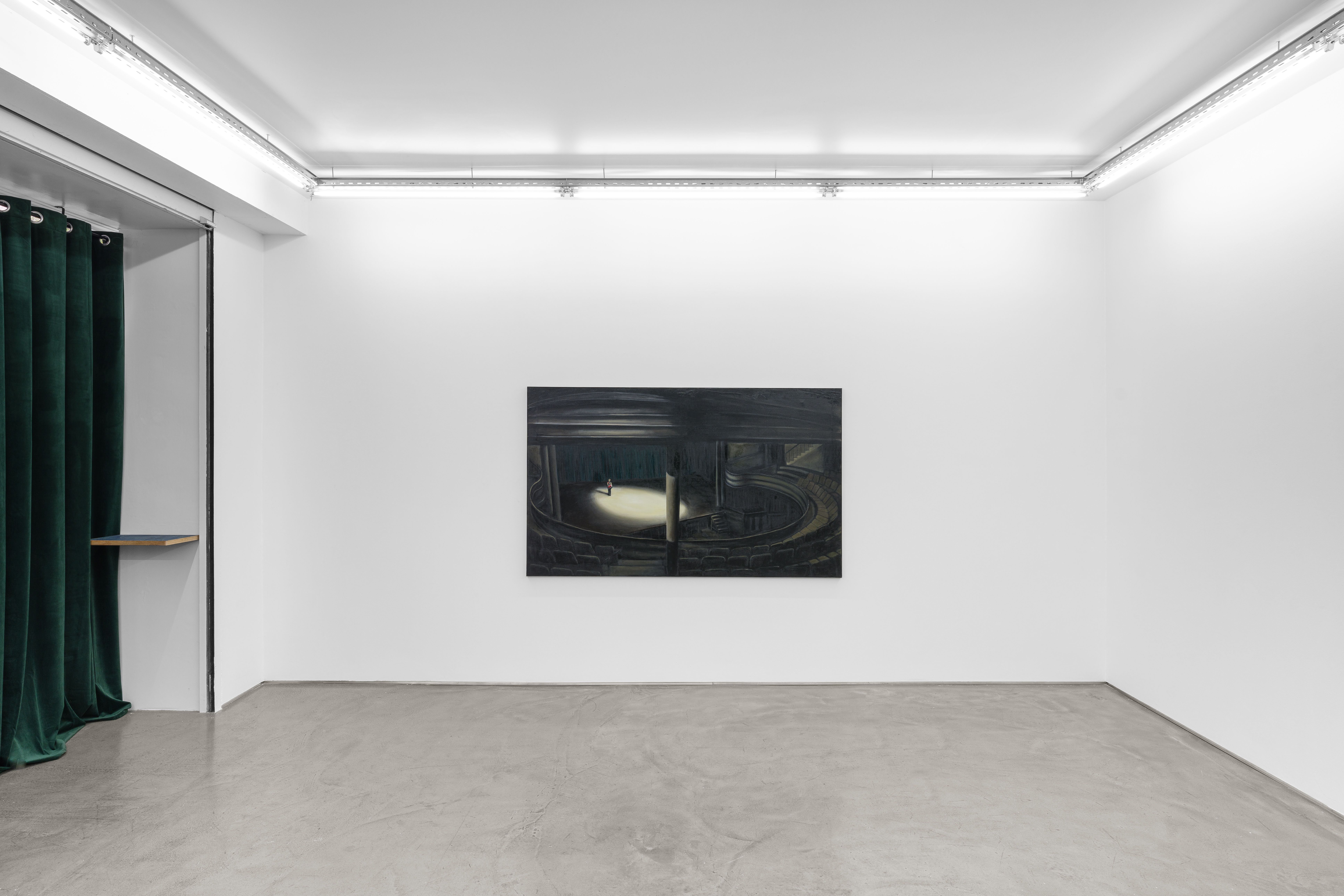
Augustin Katz, for his part, went rummaging through his dreams to give this melody a stage — to parade it through a space where spectacle becomes ritual and the script of the tragic yields to the magic of ceremony. The stage, and by extension the theater, is a place of rite, sacrifice, renunciation, catharsis. It is a place of cruelty and jubilation, one that has never quite shed the prospect of killing as it was once lived out in ancient arenas. The principle is simple enough; listen: it is a matter, as Peter Brook writes, of taking "any empty space and call[ing] it a bare stage. A man walks across this empty space whilst someone else is watching him, and this is all that is needed for an act of theater to be engaged."3 Everything, then, can be played out here. Yet theater, we read elsewhere, is a "self-destructive art," "written on the wind"4, as are the memories and dreams that a single nervous impulse is enough to disfigure.
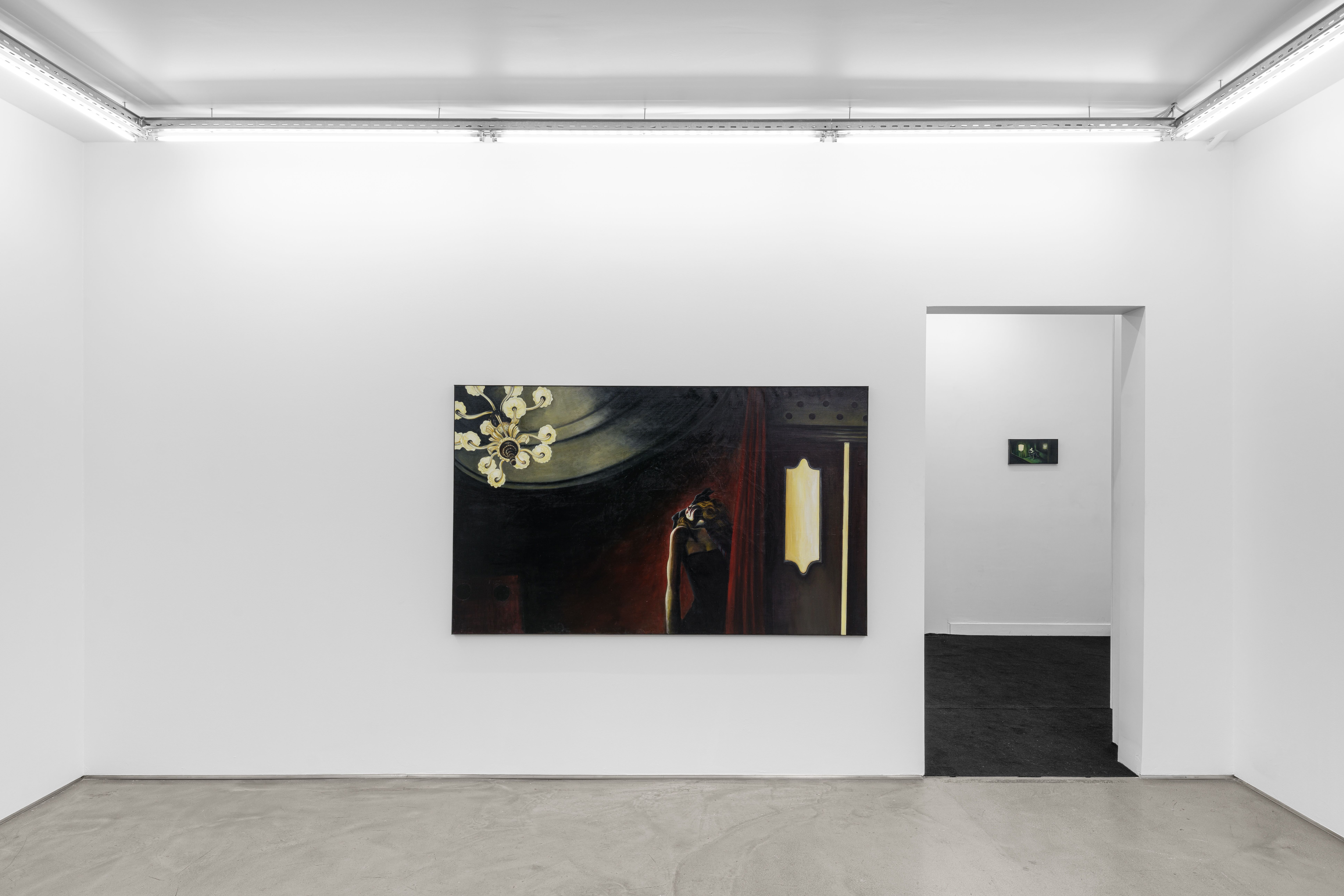
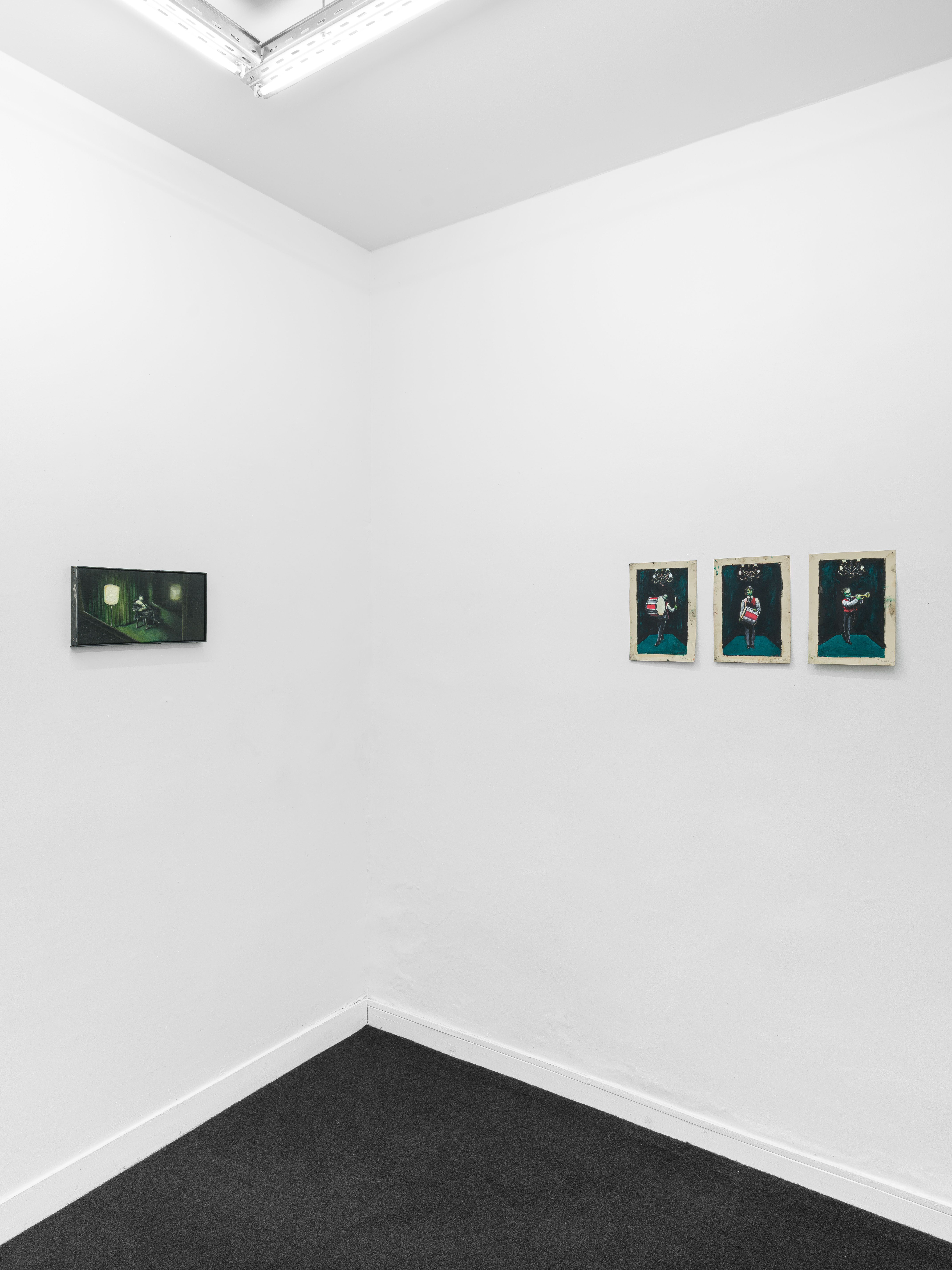
A heavy curtain falls and a whole world is swallowed whole, in this theater "in which fundamental principles appear fleetingly, like dolphins when they bob their heads up above the water before diving back down into the dark depths."5 The stage is deserted; the actors, evaporated. Settled in the middle of it all like an old wrinkled dog with an endless tear in its eye, only melancholy remains, holding its ground in this atmosphere of dilapidation. It occupies everything — immovable, marmoreal, filling the space with its gravity. Melancholy doesn't talk much; it seeps, makes itself felt; at best it rambles, goes in circles. Like that woman who is now nothing but the ghost of a star who has been booed off the stage, petrified in the pose she meant to make her signature, which has since become her swan song; paralyzed in a panic, in an ecstasy she never quite knew how to perform. A watchman has dozed off and rests in peace, he who has nothing left to watch over, somewhere in the vicinity of this hall that seems condemned never to be full, save with silent spirits burdened by their traumas. Waiting for a signal that will eventually never come, a small fanfare holds its silence, with all the restraint that implies, a mere nothing standing ready to shatter it.
It is midnight in the century; all have gathered for the encounter of Study for a Room, a magical, archetypal theater of humanity and of Unentitled, a desperate contemplation of the madness of the mighty ones and the helplessness of their victims. Here they are, then, in this small ballroom, misted with fallen memories and anonymous revenants, where at some point one might need to close one's eyes in order to see more clearly through the thickness of time, and to take the measure of its wear. In any case, let us admit it: images and melodies are a matter of ghosts, of haunting — as are the memories and dreams they insist on haunting in turn. They are "the remnant, the trace of all that those who came before us hoped and desired, feared and repressed."6 There will always be a thin layer of dust to recall it — the kind that settles on a gramophone as it chokes and sputters out a little music full of scars, which we shall listen to as "the funereal ostinato of our time."7
Guillaume Blanc-Marianne
1 Walter Benjamin, “La signification du langage dans le Trauerspiel et la tragédie” [1916], in Romantisme et critique de la civilisation, Payot:Paris, 2010, p. 67 (free translation).
2 William Basinski to Augustin Katz, march 10, 2026.
3 Peter Brook, The Empty Space, Atheneum:New York, 1968, p. 9.
4 Id., p. 15.
5 Antonin Artaud, “The Alchemical Theatre” in The Theatre and Its Double, London:Methuen Drama, 2024, p. 69.
6 Giorgio Agamben, Nymphes [2007], PUF: Paris, 2019, p. 90 (free translation).
7 Xavier Boissiel, “Précis de désintégration”, in Inculte, n°18, 2009, p. 154 (free translation).
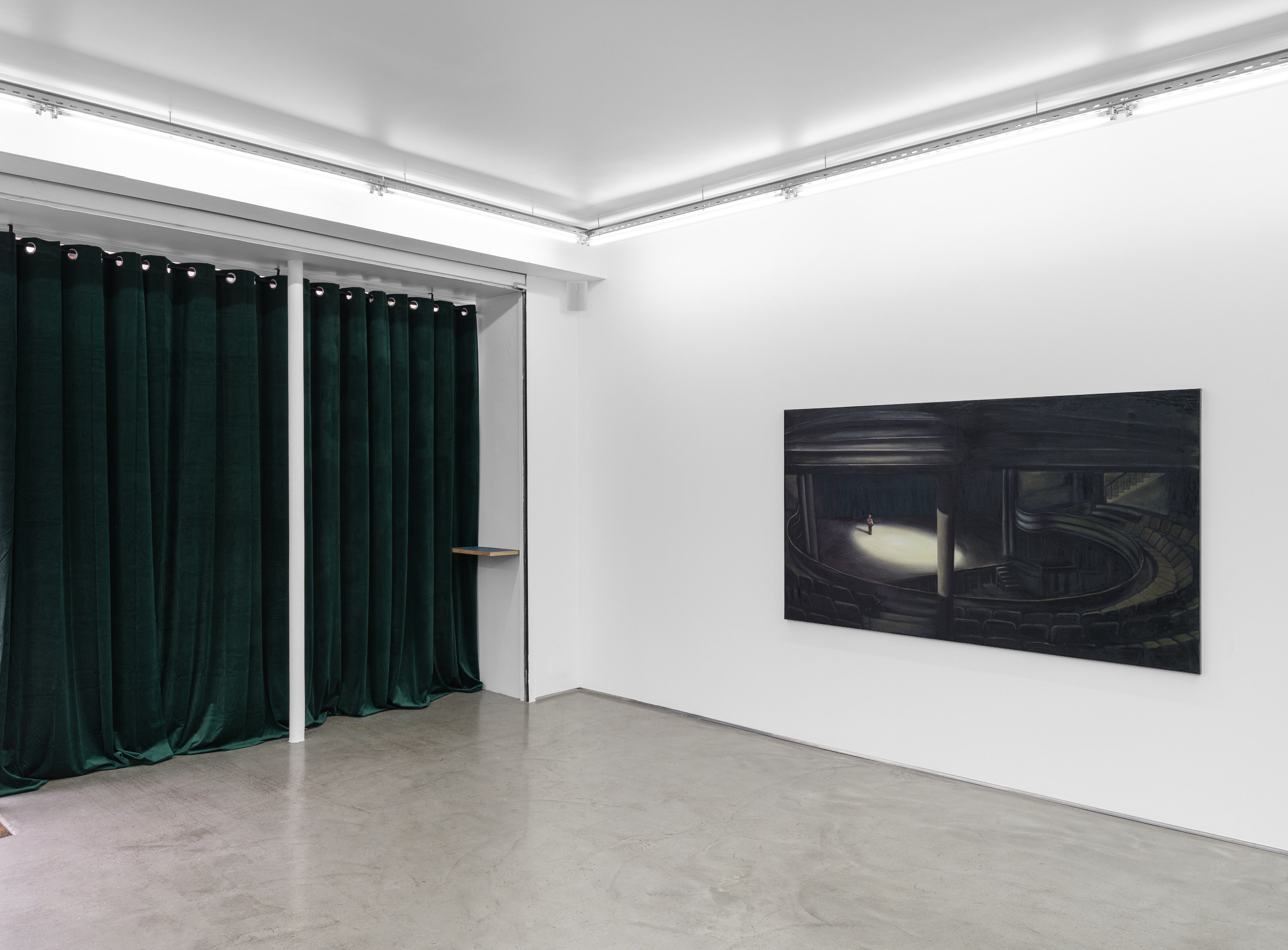
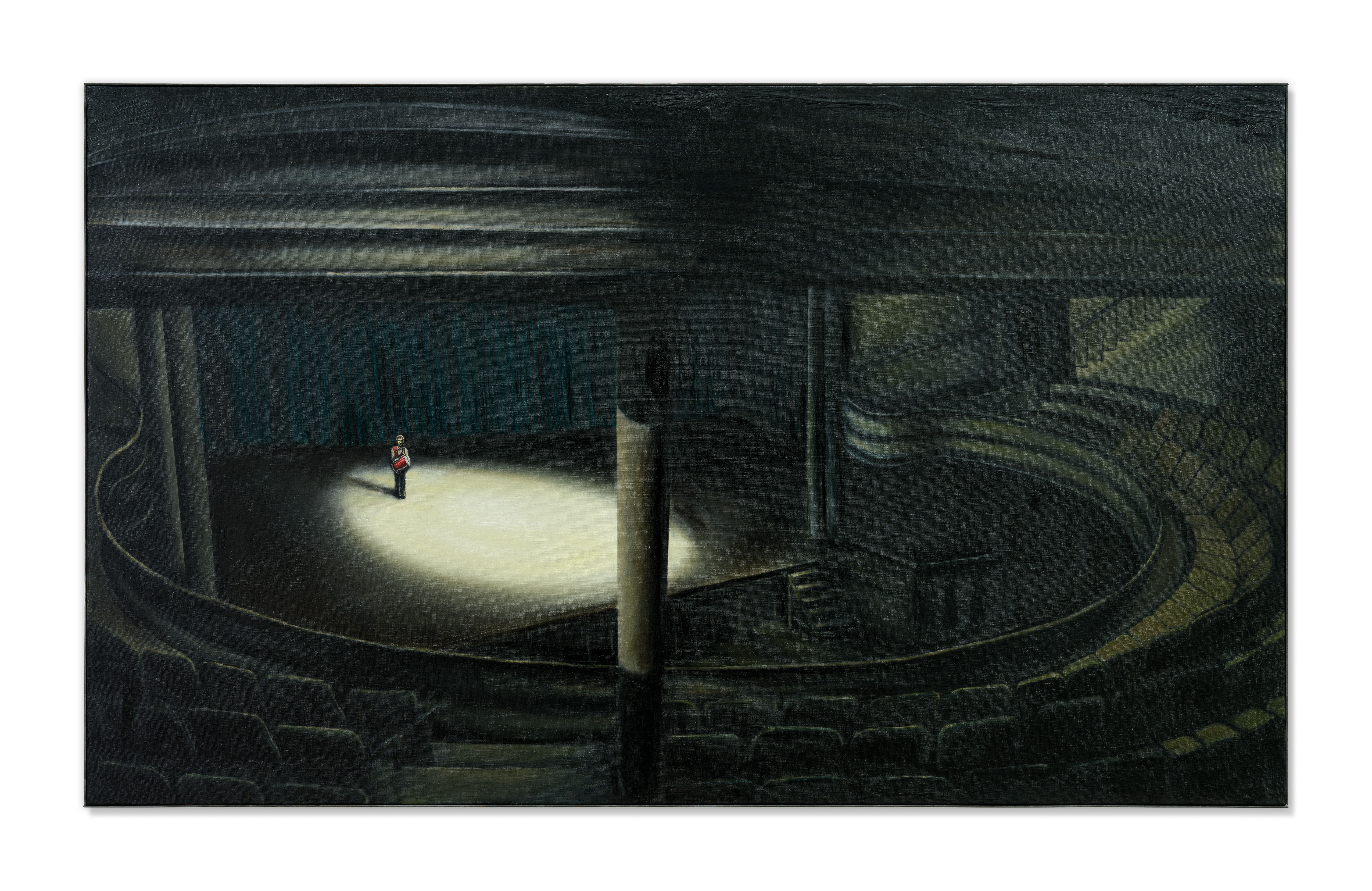
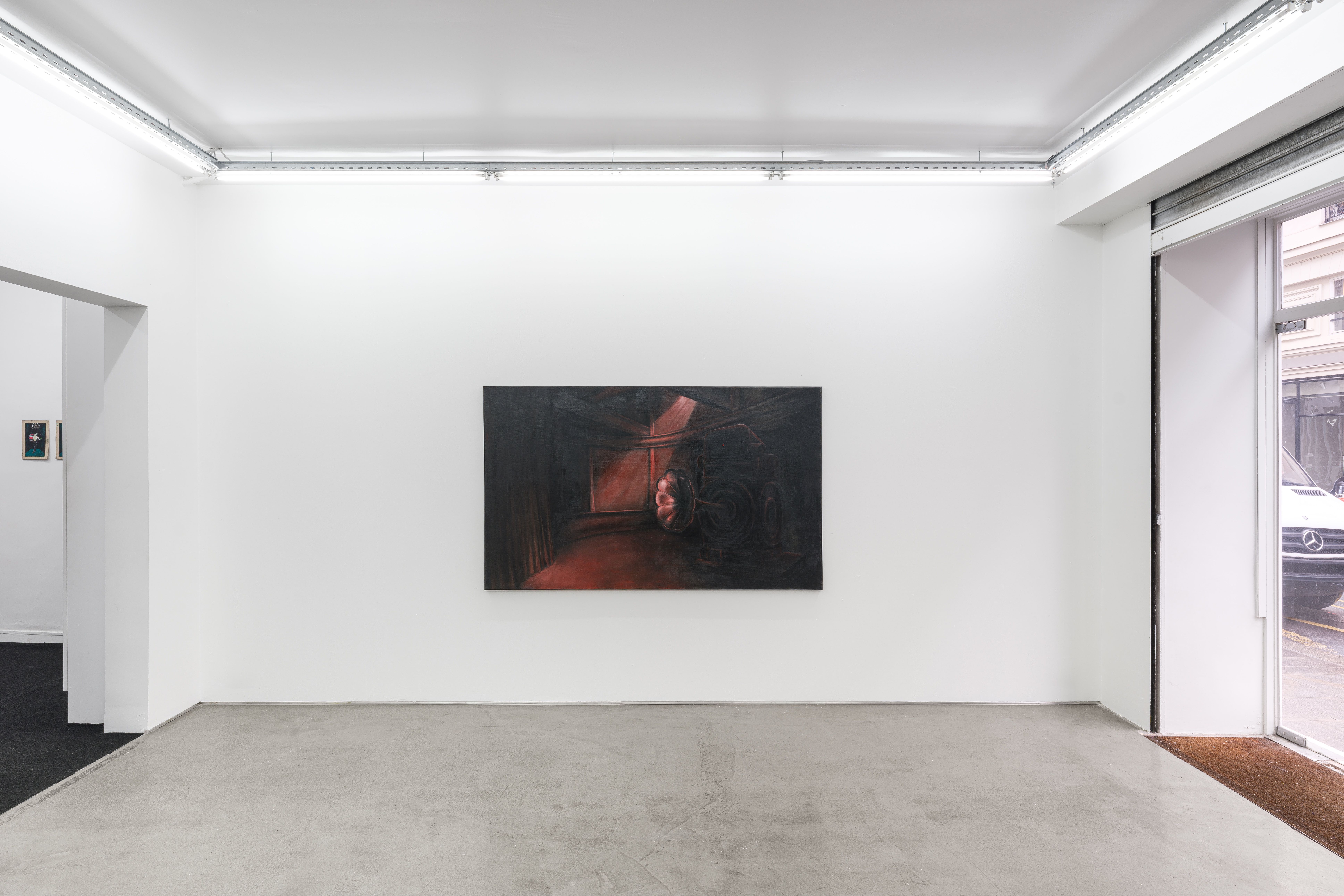
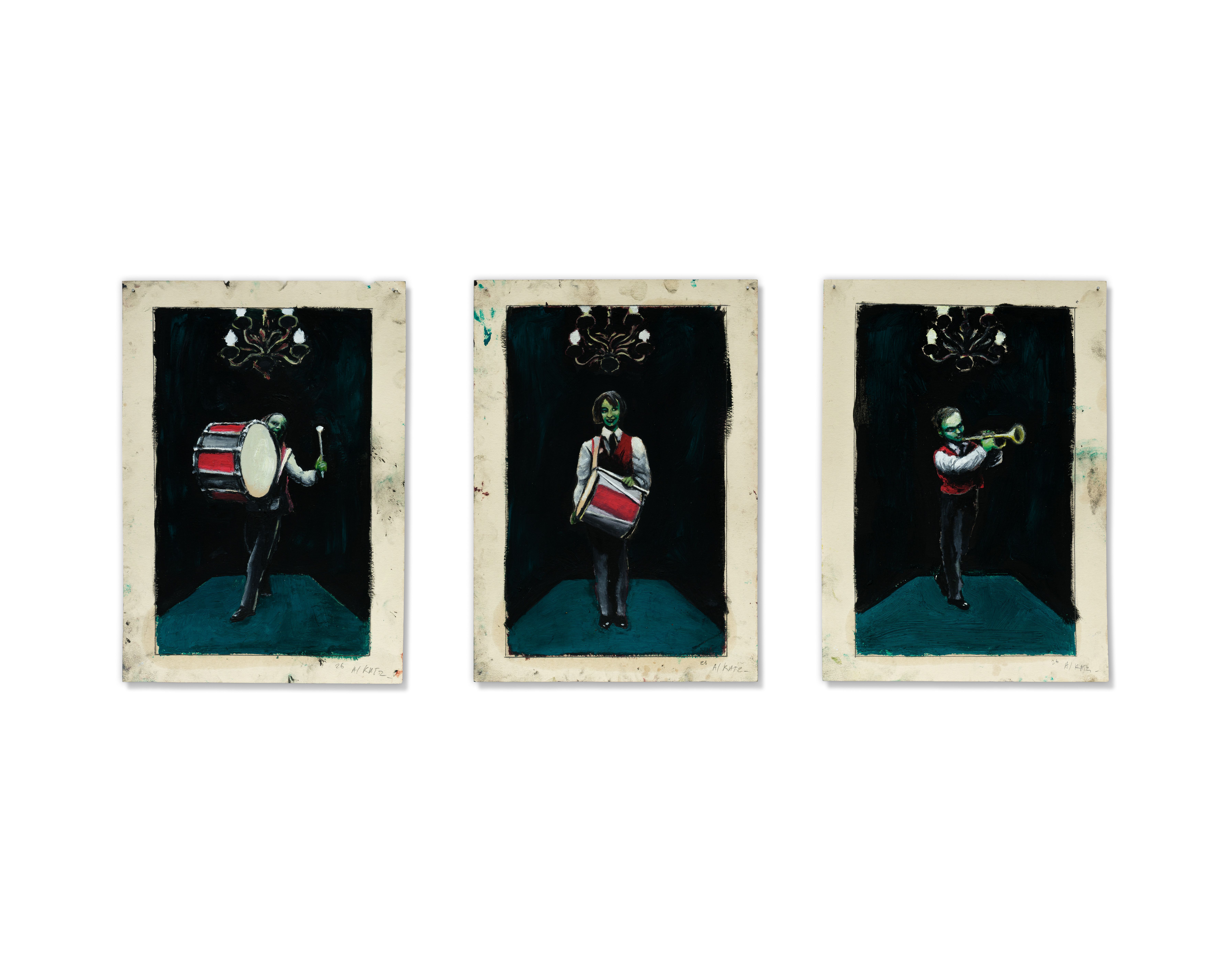
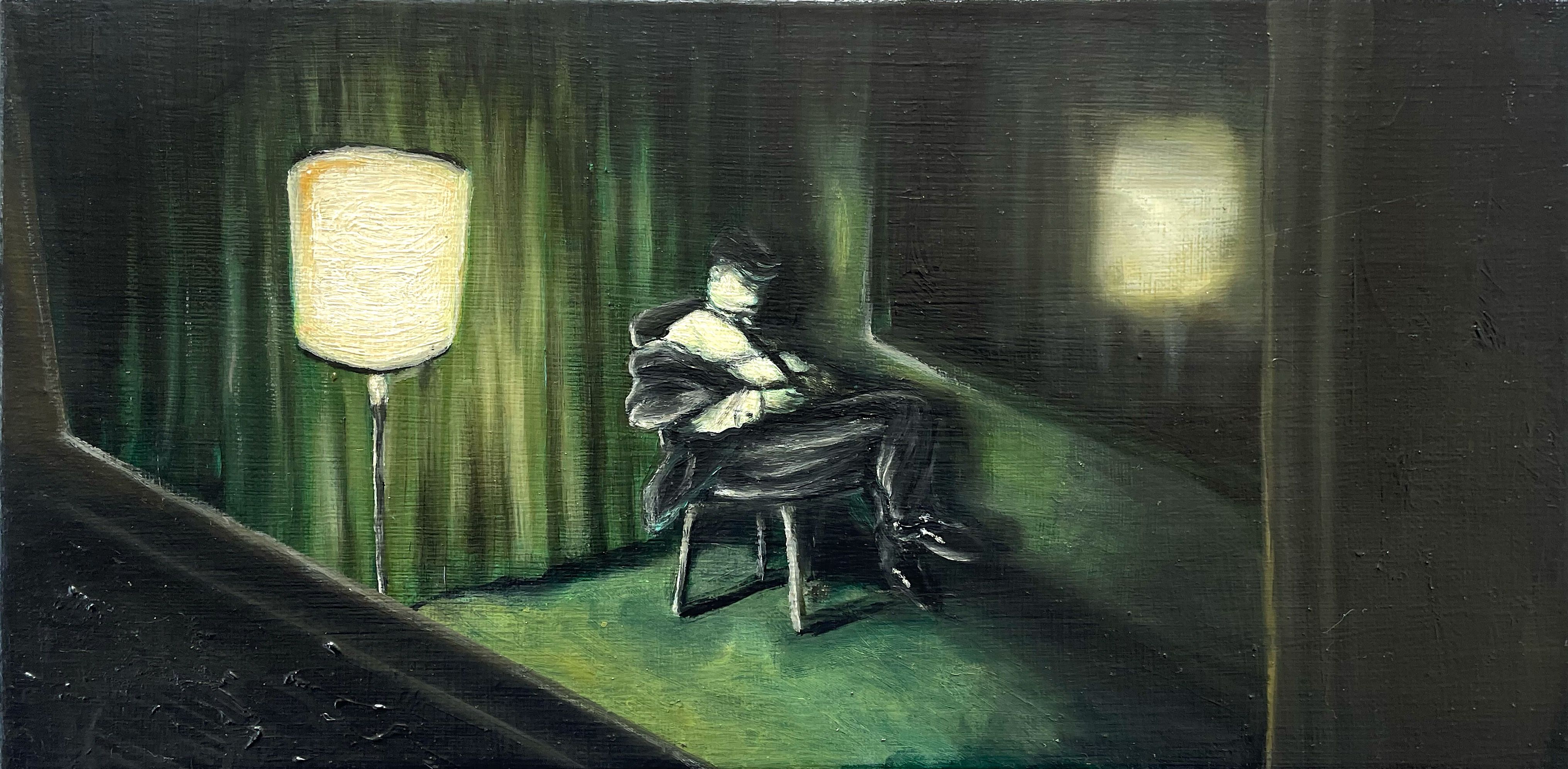
Augustin Katz
Augustin Katz (born 1995, France — lives and works in Paris) is a painter whose work explores the ways in which images function as structures of thought, shaping perception, memory and the experience of the unconscious. Through a figurative practice marked by distortion and spatial tension, he constructs compositions that operate as mental architectures in which psychic and perceptual states unfold.
His figures appear as the remnants of a narrative that has already taken place, suspended in an uncertain time where matter, memory and perception are in constant transformation. Moving between folklore, religious archetypes, popular imagery, altered bodies and fragments of narration, his paintings act as fixing chambers in which certain images seem to outlast their own disappearance.
William Basinski
William Basinski (b.1958) is a classically trained musician and composer who has been working in experimental media for nearly five decades in NYC and California. Employing obsolete technology and analogue tape loops, his haunting and melancholy soundscapes explore the temporal nature of life and resound with the reverberations of memory and the mystery of time. His epic 4-disc masterwork, The Disintegration Loops received international critical acclaim and was chosen as one of the top 50 albums of 2004 by Pitchfork Media. The Temporary Residence deluxe LP box-set reissue from 2012 was awarded best re-issue of the year and a score of 10 on Pitchfork.