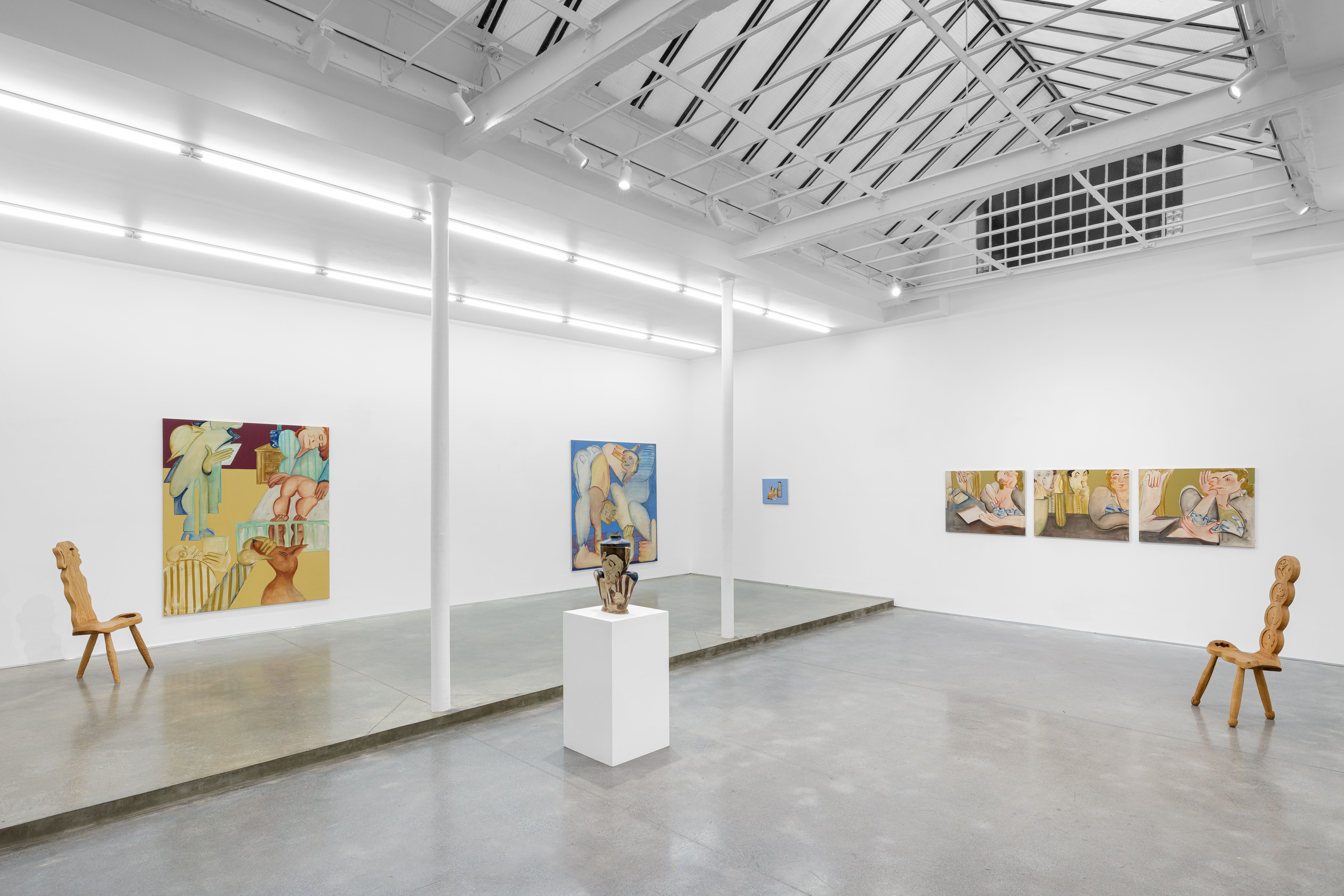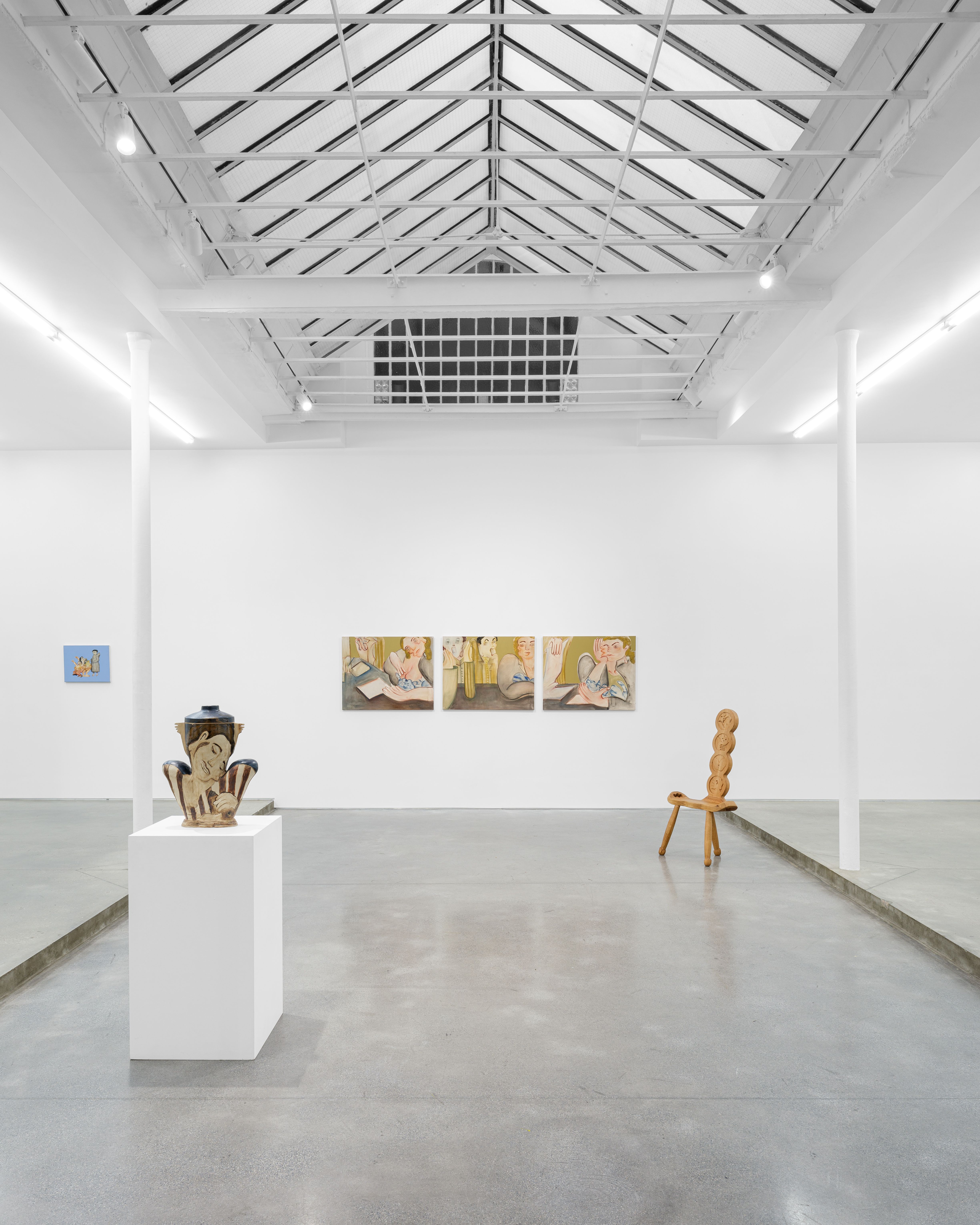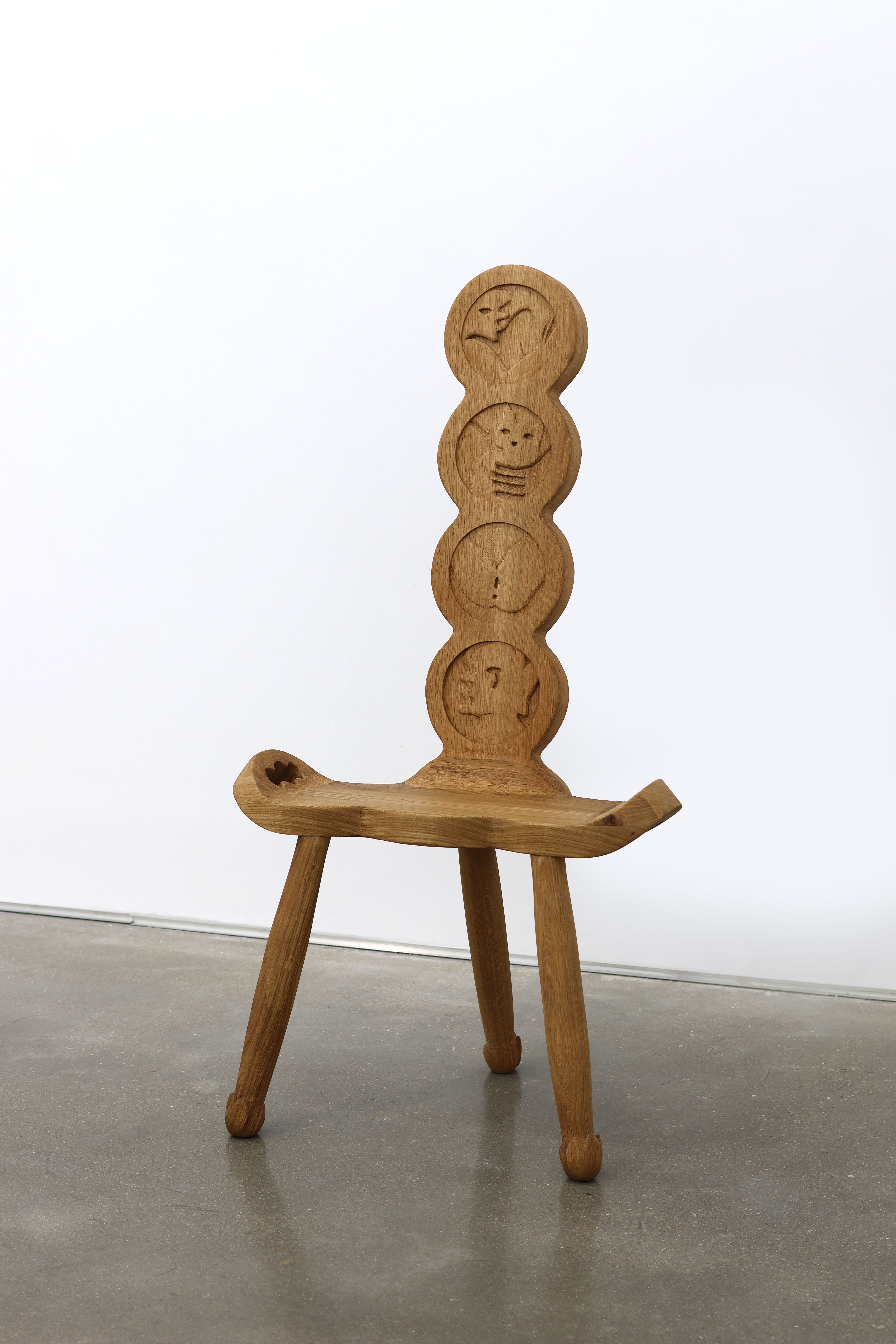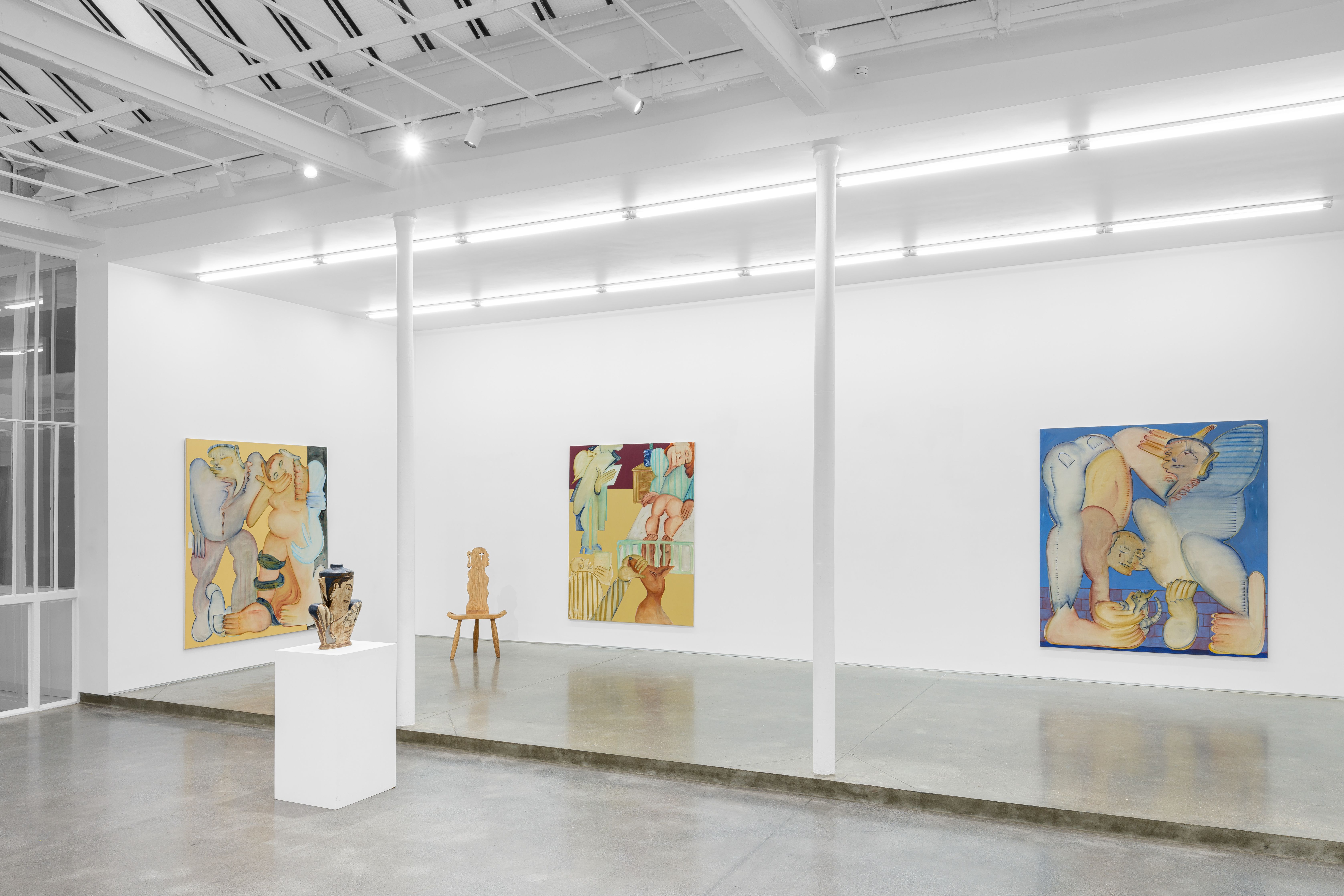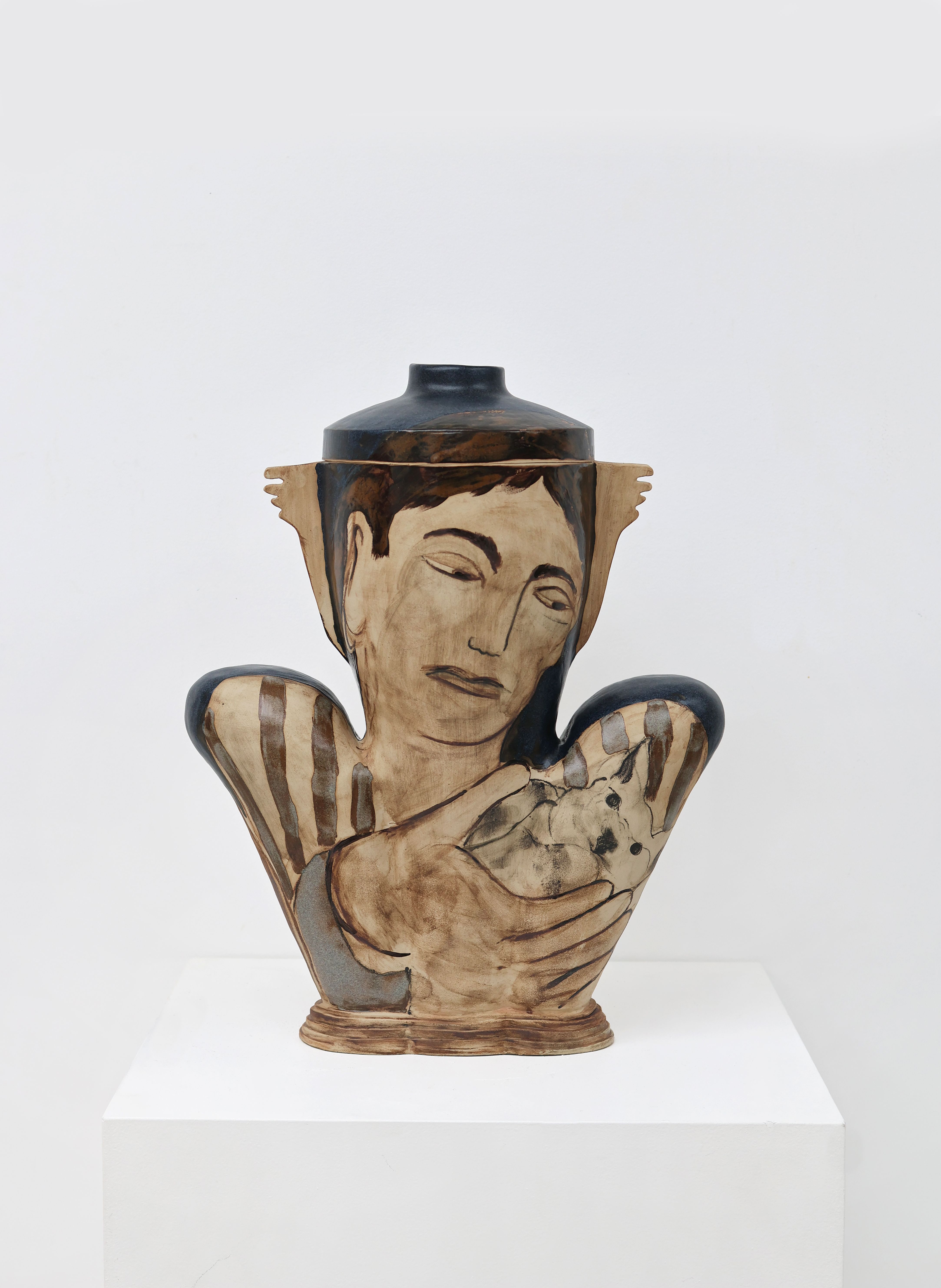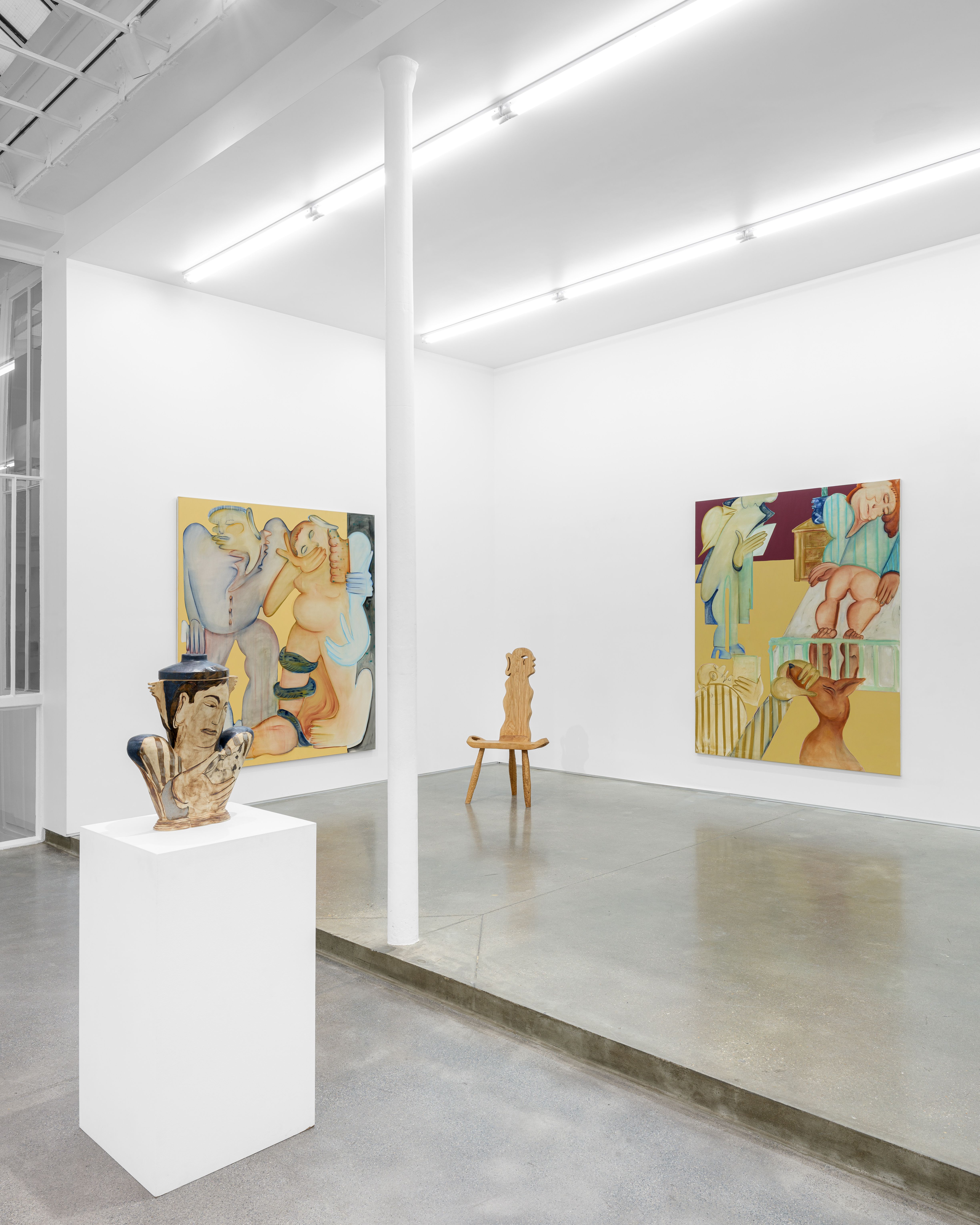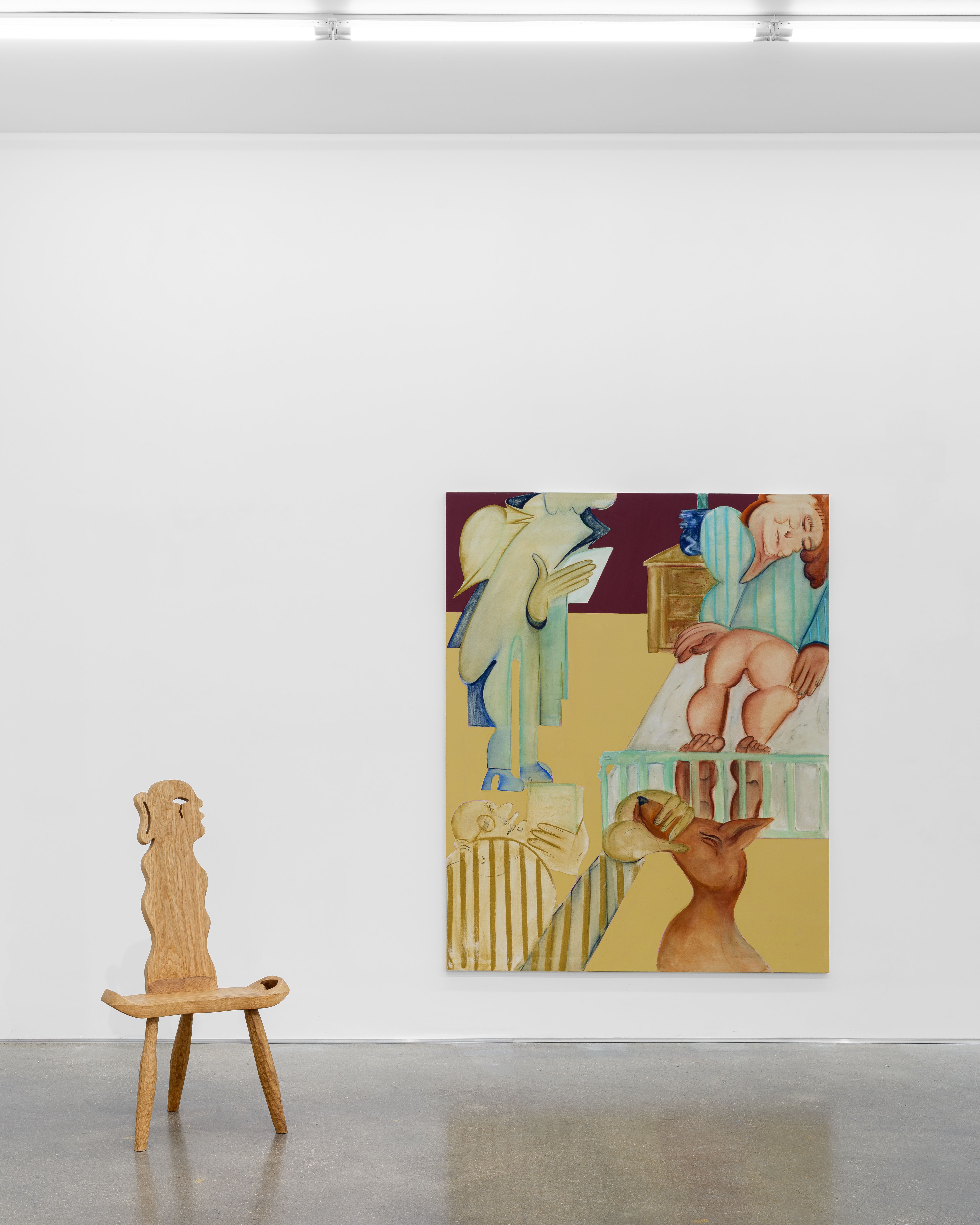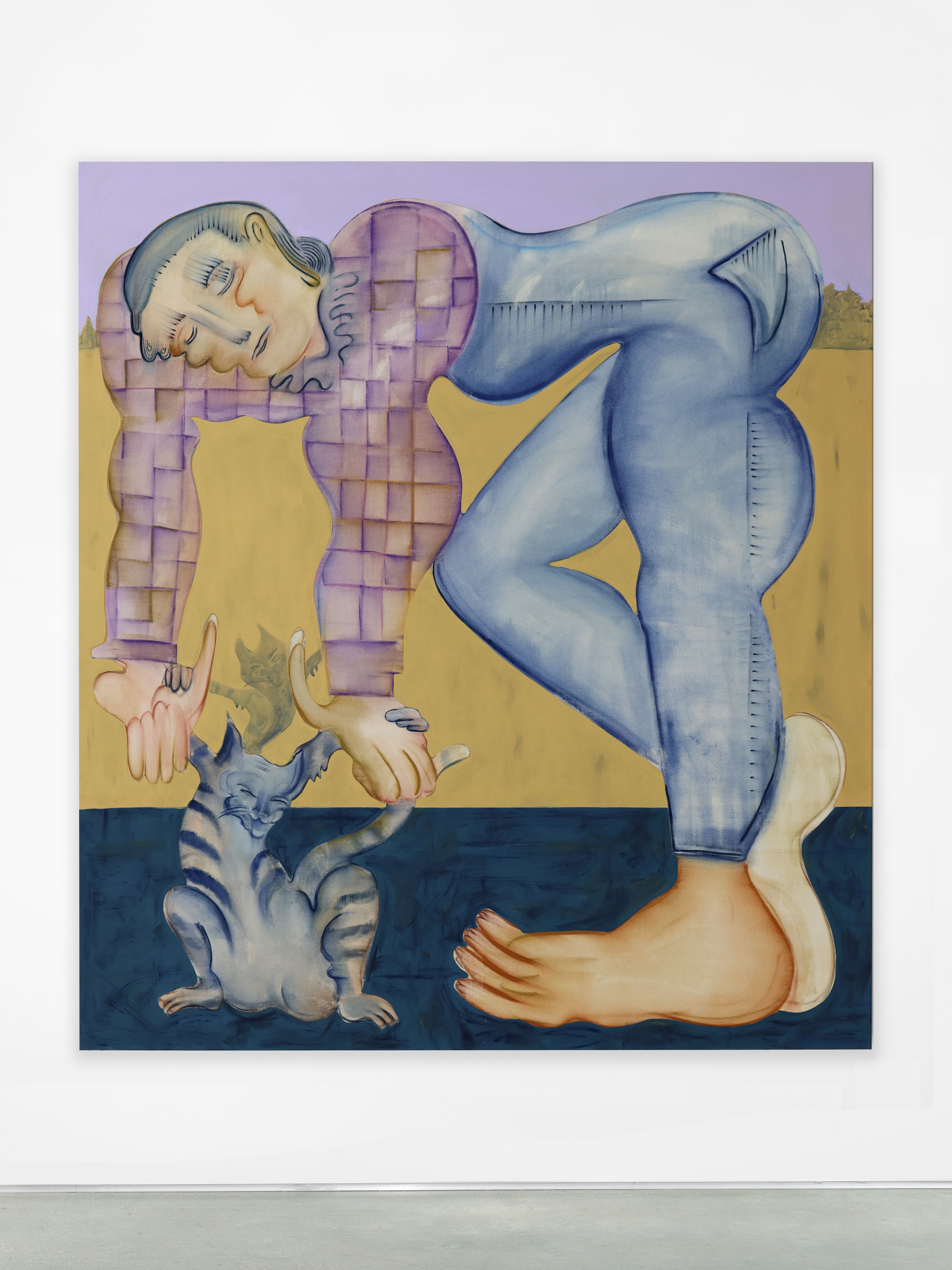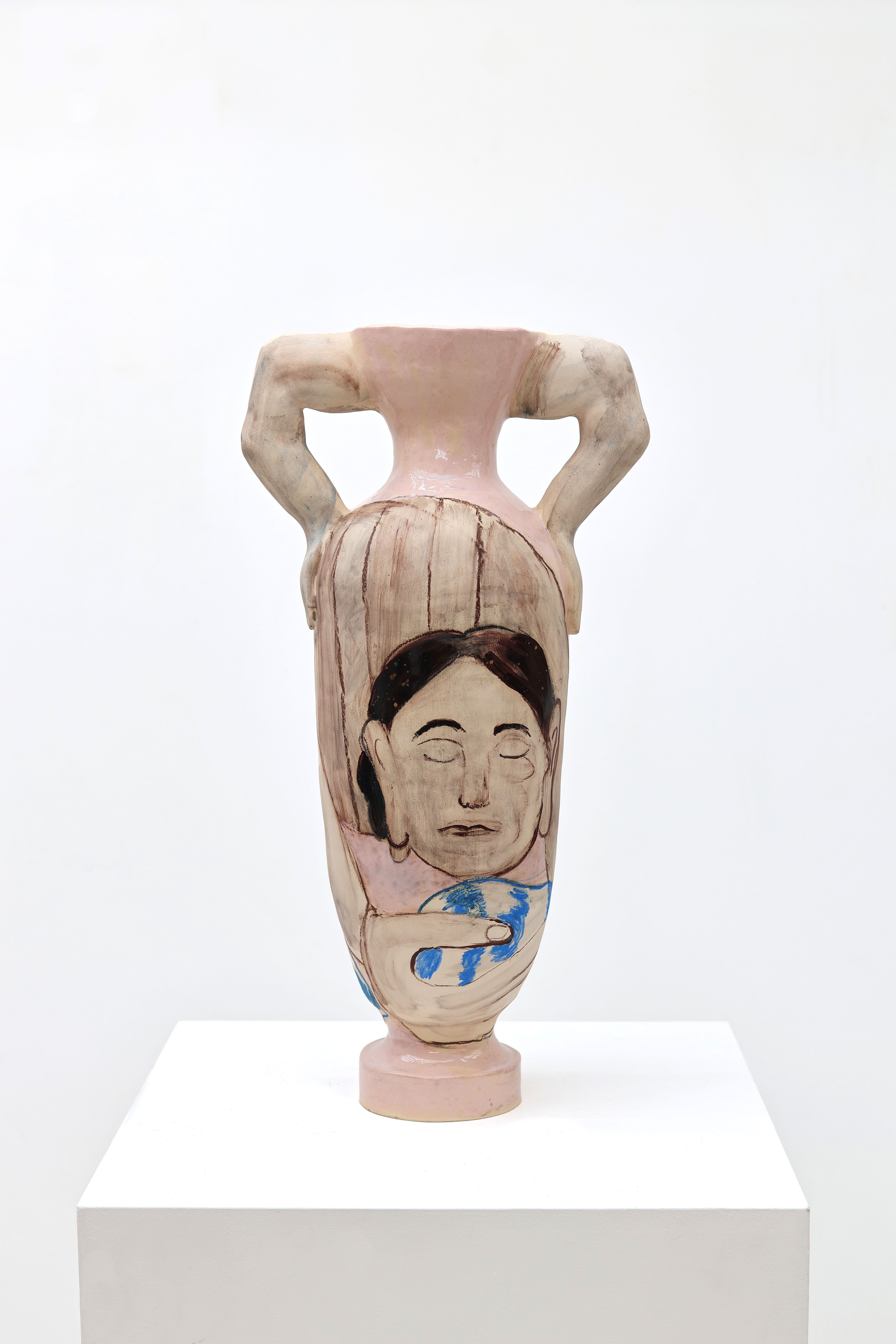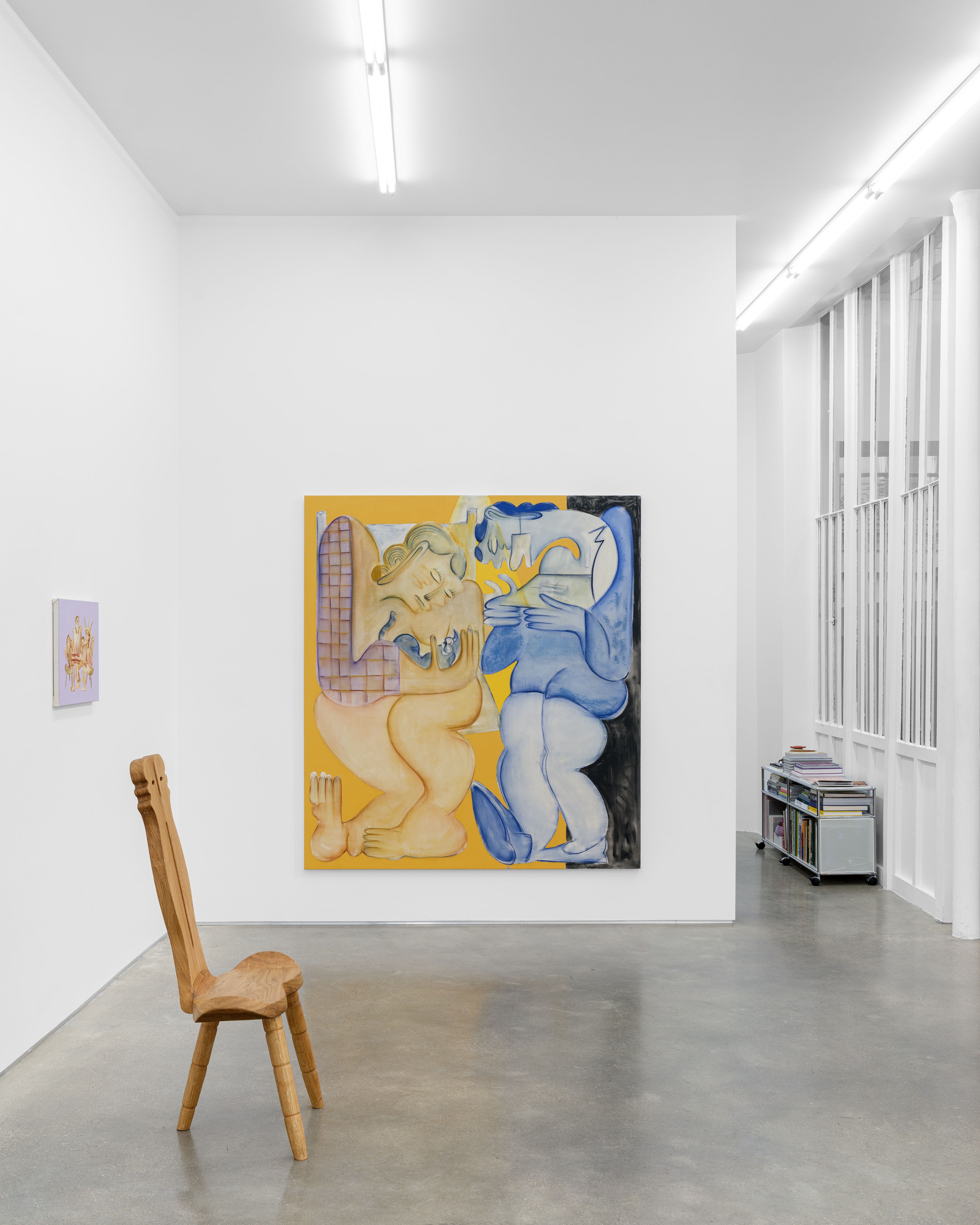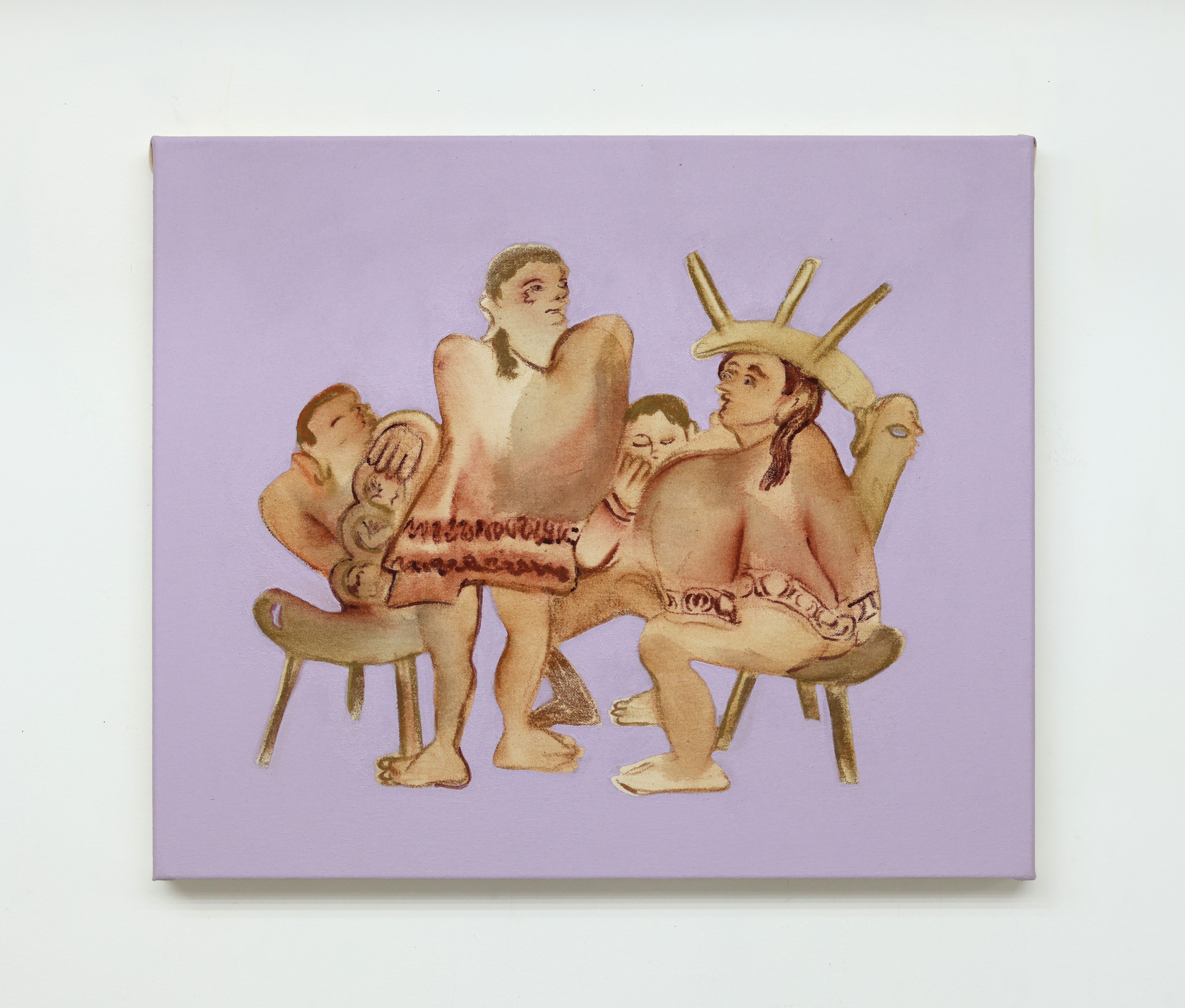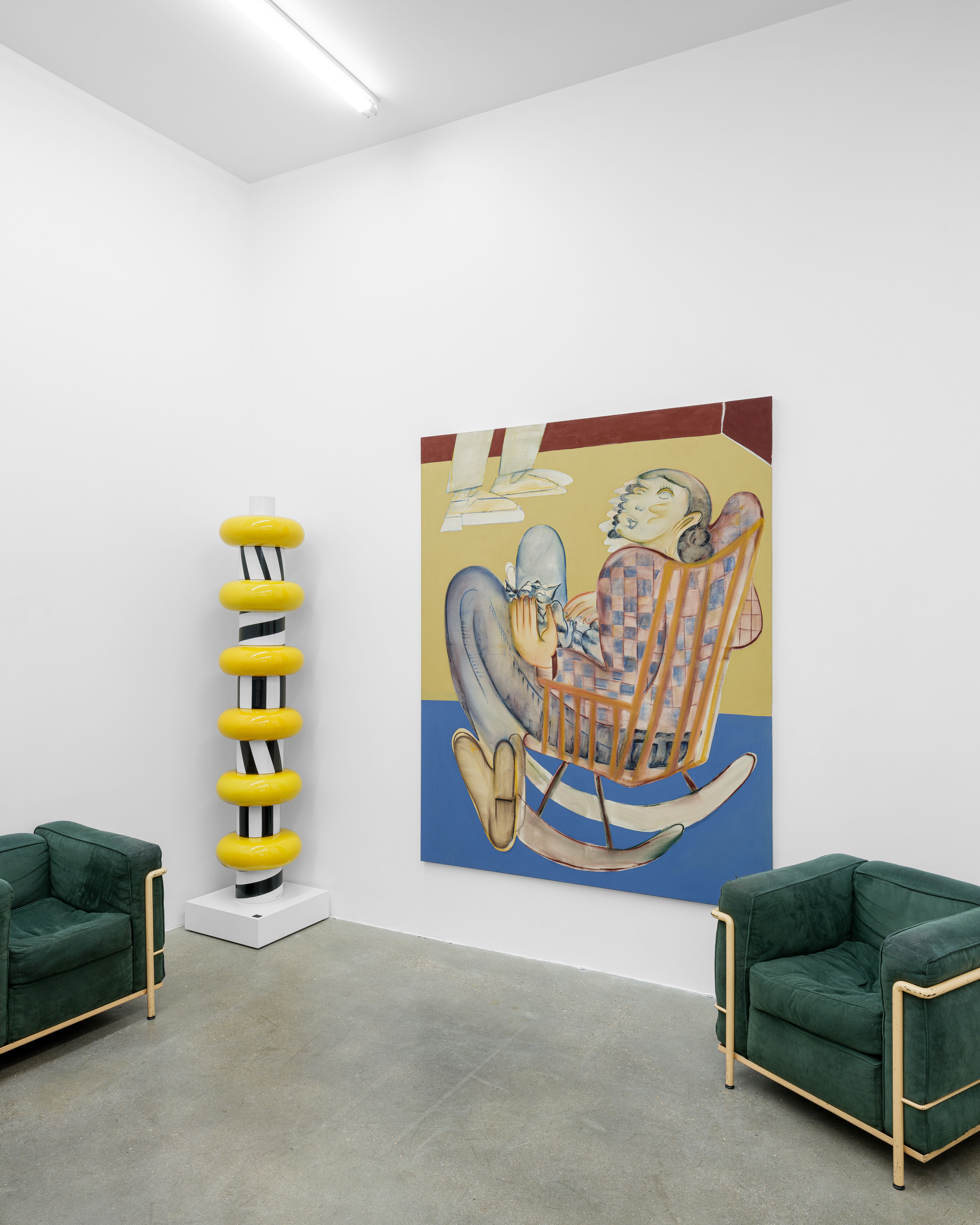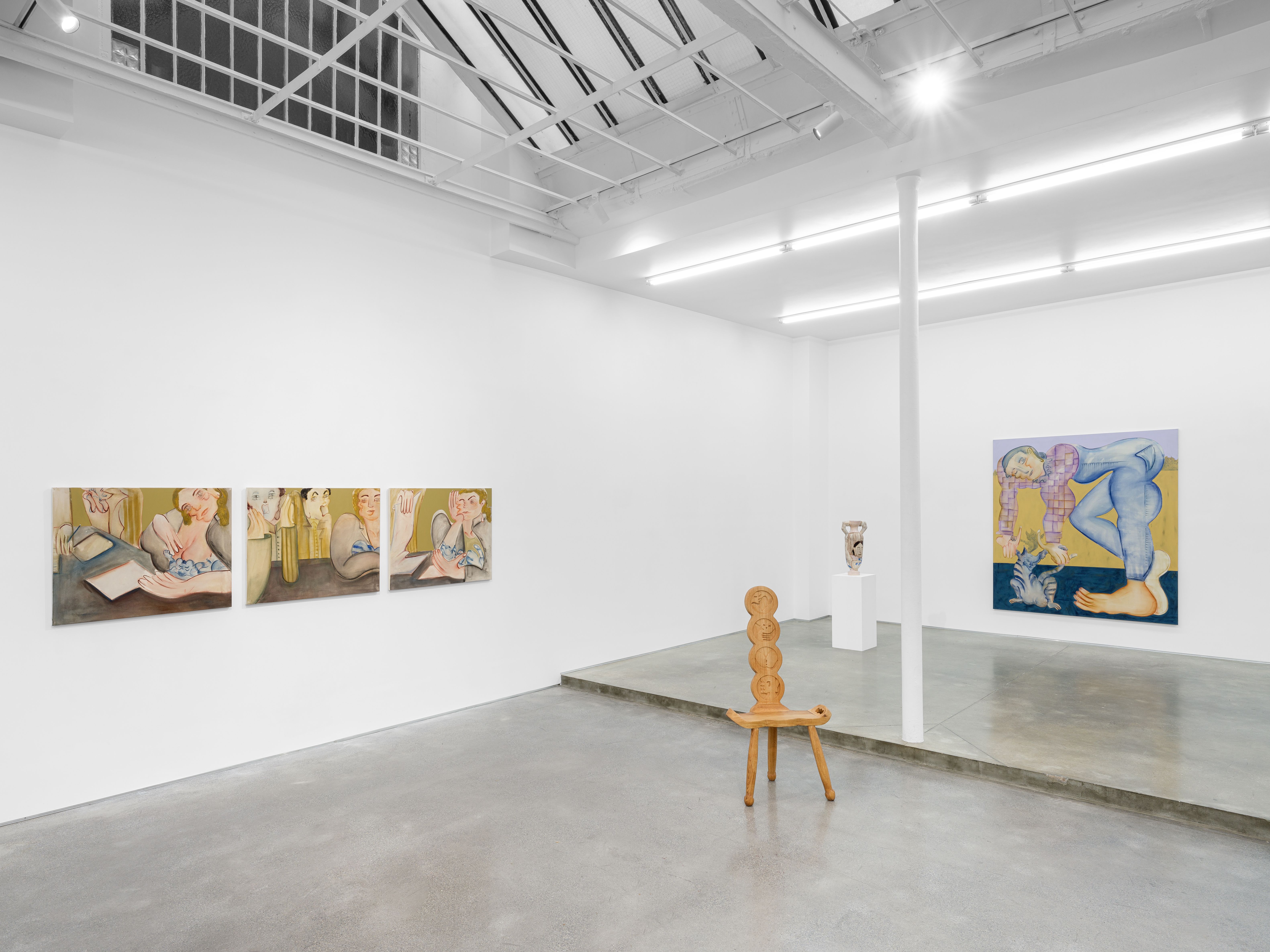
Anastasia Bay's new solo exhibition, “Night Mother,” brings together a collection of previously unseen works—paintings, ceramics, furniture—that immerse us in an intimate universe where she recounts an experience of motherhood that is still too rarely addressed.
Children
If she bends down a little, if she holds her breath, she can see them amongst the low branches, not far off, she can, yes, she can sense them breathing, she can see their ribs lifting the fine skin on their flanks, she can smell them, that familiar and disgusting stench. The creatures are prowling around the cabin, prowling here and there. She can see their eyes glimmer faintly in the darkness, like glass marbles, dull gemstones.
She must not breathe, no, barely breathe, yes, she can let her breath slip out between her teeth, that’s all, just a fine thread leaking out, hardly warming the icy air of the cabin. She tightens her grip on the child, it shall not wake, it shall not wave his hands, its five fingers, it shall not stick out its tongue to latch onto her breast; she wants the child to stay asleep, deeply asleep. “Sleep, baby, sleep,” she orders it silently: and the baby keeps still, continues to be still, not stirring. “Good baby, yes, thank you,” and again she is speaking silently, hoping that the beatings of her heart, pounding so close to its tiny ear, will not wake it.
On the wooden table lie her knife, a loaf of hard bread, a flashlight whose beam was fading earlier. Outside and all around, she can hear scratching in the thick layer of leaves lying on the ground, scratching against the door, and she can see them, the creatures, briefly rising onto their hind legs, stretching up with the full sinuous length of their lean bodies, and dropping heavily back down. In the distance, the moon is shining on uplifted backsides.
And then one front paw, and then two, and then three, appear on the fragile windowpane that separates them, the child and her, from the outside, the window which—just like the door, just like the walls—is protecting them from the creatures, the scrawny creatures circling their shelter.
And then she can see, she can clearly see the five fingers on each paw—yes, the paws have fingers —spreading, probing, drumming with the tip of their sharp nails, scratching, scratching the glass, pressing their flat palm against it; the dampness, the warmth of their bodies outlining their plump pads on the cold window; fingers splayed over the pane, tapping again, tapping, making it tremble; jingling, clattering, piercing her ears.
She can hear growling. Against her chest, the baby is twisting, its mouth contorts. The cabin door is shaking in its frame, the creatures have grasped that this is where they are, that they are hiding in this rickety cabin. The hard, calloused paws pound at the door, the handle turns, turns and rattles. “The child, the child,” they yowl in the forest.
And the child, yes, now the child is opening its eyes, moaning, thrusting its lips forward, and she can feel the pinch-like flow of milk flooding into the tips of her breasts, staining the filthy blouser weighed down by her teats.
She can see, looking through the other window, that out back, through the thicket, they can escape. They must escape, they must.
The baby bundled tight against her back, she rushes to the window, dragging a heavy chair behind her, clambers onto the windowsill, and, with a tremendous stride that almost sends her falling, with one great breath she finally lets out, she leaps outside; and behind her the door is broken down, and the creatures have burst into the cabin, with their too-long hind legs that give them the bizarre appearance that all parents have come to fear, and their pale, naked skins shimmer in the gloom, and their round mouths open onto too-short teeth. The creatures run around the room, their long fingers flatten against the floor, searching. They howl, wildly flinging the chair to the ground before scrambling up over the windowsill, plunging into skin-tearing brambles.
She is, yes, she is moving as best she can, but thorns and vines prevent her from gaining much ground. She can feel that near her feet, a kind of tunnel has been carved out by the movements of other animals through the tangled brambles. This is what she should slip down into—if she dared— but she knows all too well what that would mean. And she can hear the pack drawing nearer, and the creatures, who from deep within their throats cough out as best they can the few words they still know: “No fear, yes, no fear,” and then, whispering, almost, breathless: “Come.” Are they calling her, or the baby?
They are galloping now, the creatures, they are galloping freely through the thorns, they are smaller, more limber, and the blood gleams and runs along their ribs.
They are drawing closer, they stretch their strange nailed paws towards her, towards the child.
A hand has caught hold of her clothes, ripping it with its pointy nails, and she wriggles away dizzily, and the hands now reach for the child, pawing at it as it lets out an acid, bird-like shriek, and now she is haphazardly swinging the knife behind her, and the knife slips from her hand and falls onto the leaves without a sound, and she keeps running on two legs as long as she can, but it’s over now, it’s nearly over, and then, with a howl, she drops onto her hands, and she keeps running, she is still running, running on all fours into the bramble-tunnel of brambles, on all fours into the night, like a beast, like a baby, on all fours, she is.
Phœbe Hadjimarkos Clarke